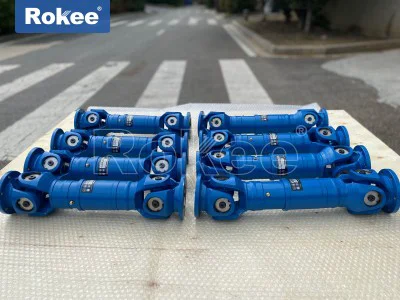
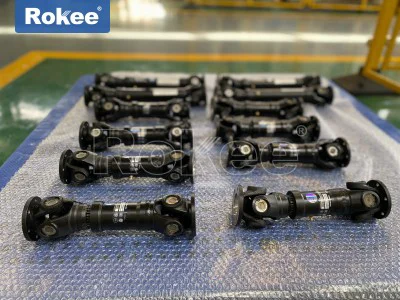
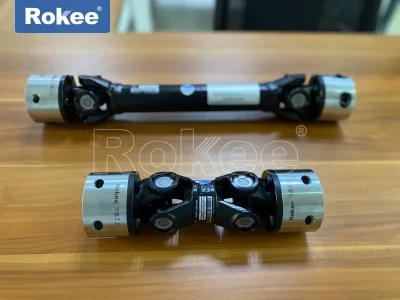
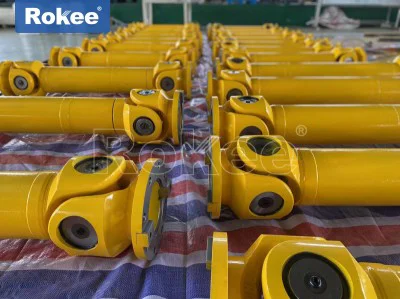
Universal Shaft Coupling Supplier

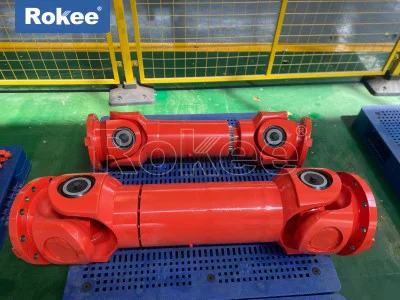
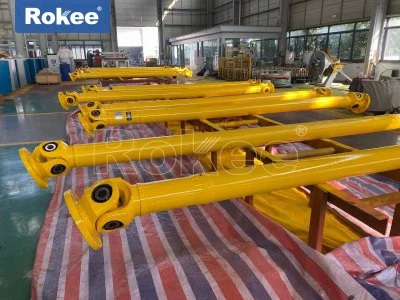
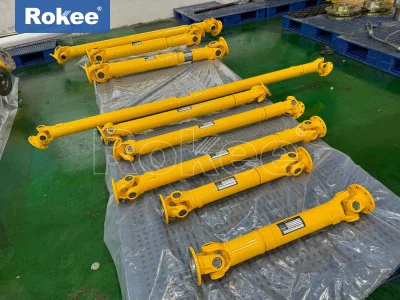
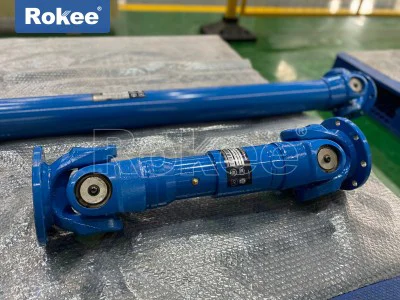
Universal shaft couplings, also commonly known as universal joints or cardan couplings, are fundamental mechanical transmission components widely adopted in modern industrial and mechanical systems. Primarily designed to transmit rotational torque and power between two non-coaxial shafts, these specialized couplings stand out from rigid connecting parts due to their exceptional flexible compensation performance. In real engineering scenarios, perfect shaft alignment is nearly unattainable due to installation deviations, equipment vibration, material thermal expansion, and dynamic structural displacement during operation. Universal shaft couplings effectively resolve this core mechanical challenge by accommodating angular, axial, and radial misalignments while maintaining continuous and stable power transmission. With a compact structural layout, high transmission efficiency, and strong environmental adaptability, they serve as indispensable connecting units for diverse mechanical equipment, ranging from light-duty precision machinery to heavy industrial transmission systems, ensuring the smooth and reliable operation of entire power transmission assemblies.
The core operational principle of universal shaft couplings lies in their unique spatial mechanical structure that enables adaptive motion conversion between misaligned driving and driven shafts. Built with a cross-shaped central spindle and paired fork-shaped joint heads, the structure allows flexible rotational deflection within a certain angle range during continuous operation. Unlike rigid couplings that require precise coaxial positioning and cannot tolerate any shaft displacement, universal shaft couplings can adapt to dynamic angular deviations generated during equipment startup, operation, and load switching. This structural flexibility does not compromise transmission stability; instead, it buffers the mechanical stress caused by shaft misalignment and avoids rigid friction and impact between connected components. In long-term continuous operation, this stress buffering effect effectively reduces localized mechanical fatigue and component abrasion. Additionally, the optimized structural design minimizes power loss during torque transmission, delivering extremely high transmission efficiency that remains consistent even under frequent dynamic displacement conditions, laying a solid foundation for the stable long-term operation of mechanical transmission systems.
Versatile adaptability to complex working conditions is one of the most prominent advantages of universal shaft couplings, making them applicable across a vast range of mechanical scenarios. These couplings perform excellently in both static installation deviation compensation and dynamic operational displacement adjustment. In fixed industrial equipment, they offset minor alignment errors generated during assembly and installation, lowering the precision requirements for equipment mounting and simplifying overall debugging workflows. In mobile and operating machinery, they adapt to real-time shaft position changes caused by vibration, component wear, and structural deformation during equipment movement. Whether in low-speed heavy-torque transmission scenarios or high-speed precision rotation systems, universal shaft couplings can maintain stable working performance. Their structural compatibility also allows them to be matched with various shaft diameters and transmission forms, enabling flexible configuration according to different equipment design needs. This wide scenario adaptability makes them a preferred connecting component for most mechanical transmission designers in conventional and complex working environments.
Durability and low maintenance characteristics further enhance the practical value of universal couplings in industrial applications. Most universal shaft couplings adopt high-strength metal materials with optimized surface treatment processes, delivering outstanding wear resistance, structural rigidity, and anti-deformation capabilities. These material and process advantages allow the couplings to withstand instantaneous torque impact, frequent load changes, and continuous cyclic operation without structural damage or performance attenuation. In harsh working environments involving dust, dry heat, and conventional mechanical friction, the treated surface effectively resists abrasion and oxidation, extending the service life of core components. Moreover, the integrated and streamlined structural design reduces the number of vulnerable parts and eliminates complex assembly structures that are prone to failure. Under normal operating conditions, the couplings require no frequent lubrication or regular disassembly maintenance, greatly reducing daily equipment operation and maintenance costs, lowering downtime risks caused by component failure, and improving the overall operational continuity of mechanical systems.
Universal shaft couplings play a vital role in optimizing mechanical system stability and protecting core equipment components. During the operation of mechanical transmission systems, sudden startup, load fluctuation, and external impact often generate instantaneous alternating stress that spreads along the transmission shaft. Rigid transmission structures directly transfer these impact forces to motors, reducers, and other core equipment, easily causing internal component fatigue, gear wear, and even structural damage. As a flexible transmission medium, universal shaft couplings effectively absorb and buffer instantaneous impact stress through their deflectable structural characteristics, isolating abnormal vibration and impact force in the transmission process. This buffering effect protects precision core components from excessive mechanical impact, reduces system vibration and operating noise, and optimizes the overall operating smoothness of mechanical equipment. By mitigating abnormal mechanical stress in the transmission chain, the couplings also reduce the probability of equipment failure, extend the overall service life of mechanical systems, and improve the operational safety and stability of industrial production lines.
The structural scalability and customized flexibility of universal shaft couplings enable them to meet differentiated industrial design demands. With the continuous upgrading of modern mechanical equipment towards diversification and specialization, standard mechanical components can no longer fully adapt to personalized transmission needs of special equipment. Universal shaft couplings feature a highly modular structural design, where core parameters such as deflection angle range, torque bearing capacity, structural size, and connection forms can be flexibly adjusted and optimized according to actual working conditions. For special scenarios requiring ultra-large angle compensation, enhanced structural configurations can be adopted to expand the adaptive deflection range. For high-precision low-vibration equipment, optimized friction matching and structural calibration can reduce transmission jitter. For limited installation space, compact integrated structural designs are available to meet space-saving layout requirements. This strong customized scalability allows the couplings to adapt to various specialized mechanical equipment, covering differentiated needs from precision light machinery to heavy-duty industrial transmission equipment.
In the context of continuous industrial upgrading and mechanical intelligence iteration, universal shaft couplings are evolving toward higher precision, higher efficiency, and stronger environmental adaptability. Modern mechanical systems put forward stricter requirements for transmission stability, energy efficiency, and long-term reliability, driving continuous optimization in the structural design and manufacturing technology of universal shaft couplings. Advanced manufacturing processes improve structural dimensional accuracy, reducing transmission clearance and further enhancing the stability of high-speed operation. Optimized material formulas enhance fatigue resistance and environmental adaptability, enabling the couplings to work stably in high-temperature, low-temperature, and high-dust harsh environments. Meanwhile, lightweight structural optimization reduces the self-weight of components without sacrificing bearing capacity, lowering the extra load of mechanical operation and improving overall energy utilization efficiency. These technological iterations enable traditional universal shaft couplings to adapt to the development needs of modern intelligent mechanical equipment, maintaining their irreplaceable core status in mechanical transmission systems.
As a classic and mature mechanical transmission component, universal shaft couplings will continue to occupy an important position in industrial mechanical design and equipment manufacturing in the long term. Their unique flexible compensation performance, reliable transmission capacity, wide scenario adaptability, and low maintenance cost form comprehensive application advantages that many other connecting components cannot match. From traditional industrial manufacturing and transportation machinery to emerging intelligent equipment and automated production lines, the demand for high-performance universal shaft couplings remains stable and growing. With the continuous progress of processing and manufacturing technology, the comprehensive performance of universal shaft couplings will be further improved, and their application boundaries will continue to expand. They will always serve as a key basic guarantee for the stable, efficient, and safe operation of various mechanical transmission systems, providing solid technical support for the continuous development of the modern mechanical industry.