Cardan Coupling for Mills
Cardan couplings, also widely known as universal joint couplings, are core mechanical transmission components tailored for mill equipment, serving as a vital link between driving power units and working rollers in various milling and rolling systems. Designed to resolve the common mechanical challenges of shaft misalignment, variable operating angles, and dynamic load fluctuations in mill operations, these flexible couplings enable stable and efficient torque and rotational motion transmission under harsh industrial working conditions. Unlike rigid coupling structures that require precise shaft alignment, cardan couplings feature a flexible cross-joint structure that adapts to angular, axial, and radial displacements generated during mill operation. They effectively buffer instantaneous impact loads, reduce mechanical vibration, and avoid transmission failures caused by shaft position deviations. In continuous milling production, their reliable operation directly guarantees equipment stability, improves processing consistency of milled products, and extends the overall service life of transmission systems, making them an irreplaceable component in modern industrial milling machinery.
The fundamental working principle of cardan couplings for mills centers on the flexible rotation of the cross-shaped spider component, which connects two independent shaft yokes to form a freely adjustable transmission structure. This unique structural design allows the driving shaft and driven shaft of mill equipment to maintain effective power transmission even when they form a certain intersection angle, overcoming the inherent limitations of rigid transmission structures. During the operation of milling machines, frequent mechanical adjustments such as roller gap fine-tuning and equipment position calibration will inevitably cause real-time changes in the relative angle between the power input shaft and output shaft. The cardan coupling can flexibly adapt to these dynamic angle variations without interrupting power transmission or causing excessive mechanical resistance. Although the single-section cardan structure produces slight periodic speed fluctuation during rotation, this minor fluctuation can be completely offset by the symmetrical double-joint layout commonly adopted in mill configurations, ensuring constant and synchronized rotational speed of the working rollers. This stable transmission principle lays a solid foundation for the continuous and high-precision operation of various milling production lines.
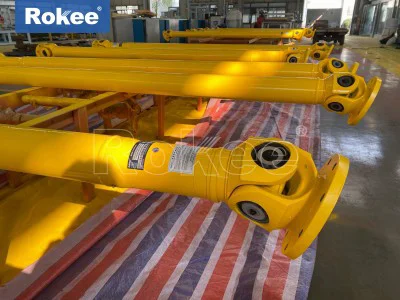
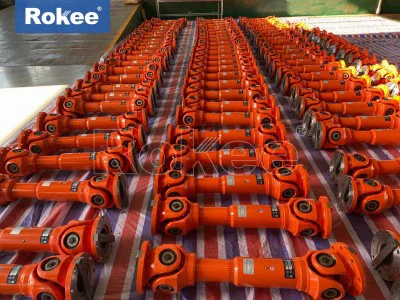
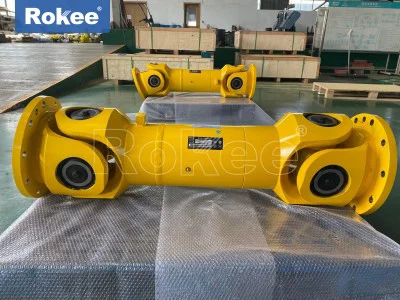
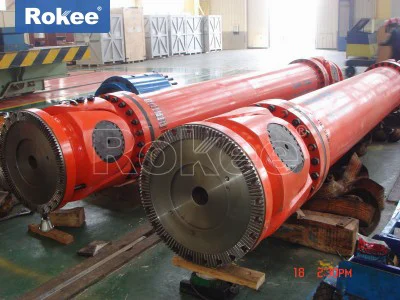
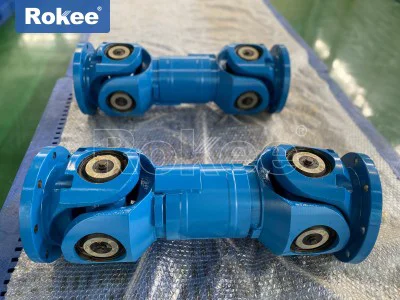
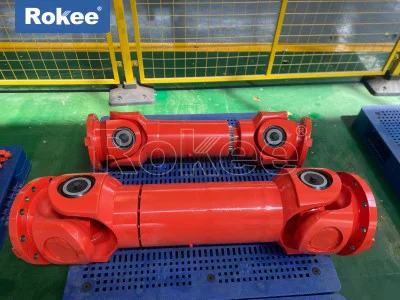
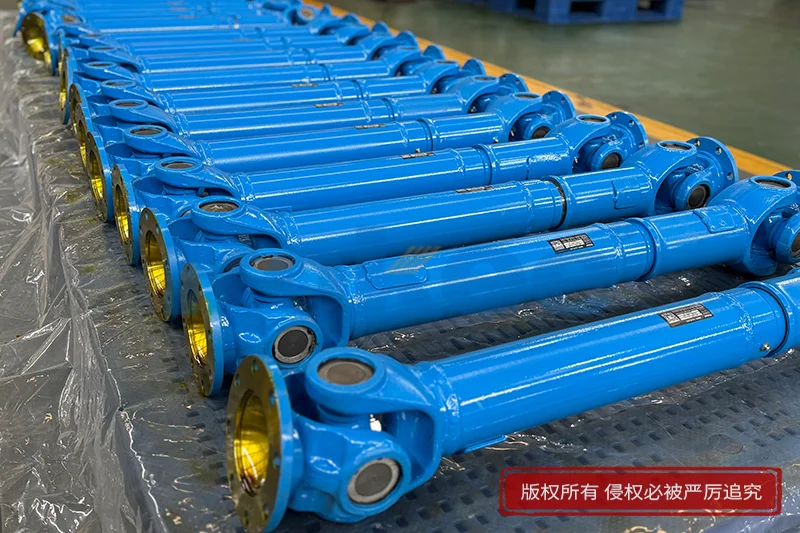
The structural composition of mill-specific cardan couplings is optimized and upgraded based on basic universal joint structures to adapt to heavy-load and long-duration industrial milling scenarios. The core load-bearing parts include high-strength cross spiders, precision-machined shaft yokes, wear-resistant bearing assemblies, and telescopic spline shafts, all of which are crafted with rigorous processing techniques to withstand extreme working conditions. The cross spider, as the key force-transmitting component, bears alternating torque and impact forces during mill operation, so it is usually made of high-toughness alloy materials with anti-fatigue and anti-deformation properties. The bearing assemblies are designed with enhanced sealing and wear resistance to resist dust, metal debris, and high-temperature heat radiation generated in milling workshops, preventing internal component abrasion and lubricant failure. The telescopic spline shaft structure endows the coupling with excellent axial displacement compensation capability, which can adapt to the axial distance changes of mill shafts caused by equipment thermal expansion and mechanical debugging, ensuring long-term stable fitting and transmission efficiency of the overall structure.
Cardan couplings possess unparalleled application advantages in mill equipment compared with other types of transmission couplings, making them the preferred choice for heavy-duty milling transmission systems. First and foremost, their outstanding misalignment tolerance allows them to adapt to complex shaft position changes in mill operation, eliminating the frequent equipment shutdown and debugging work required by rigid couplings due to slight shaft deviation. Secondly, these couplings have excellent heavy-load resistance, capable of sustaining the huge instantaneous torque and continuous alternating loads generated during metal rolling, material crushing, and other milling processes, avoiding structural fracture and transmission failure. In addition, the flexible connection structure can effectively absorb mechanical vibration and impact energy generated during equipment start-up, shutdown, and material processing, reducing the vibration amplitude of the entire mill system. This not only improves the processing precision of milled workpieces but also reduces the wear of other mechanical parts, lowering the overall operation failure rate of milling equipment.
The service performance of cardan couplings directly affects the operational efficiency and product quality of mill production lines, and their stable operation is crucial for standardized milling processing. In metal rolling mills, the precise and consistent torque transmission of cardan couplings ensures uniform rotational speed of each rolling roller, enabling even stress distribution on metal materials during rolling and effectively avoiding product defects such as uneven thickness and surface wrinkles. For large-scale continuous milling equipment that runs around the clock, the high durability and fatigue resistance of cardan couplings reduce frequent component replacement and equipment maintenance downtime, greatly improving the continuous production capacity of the production line. Moreover, the vibration buffering effect of the coupling optimizes the operating environment of the mill transmission system, reduces noise generated by mechanical friction and collision, and improves the overall operational stability of the equipment. Long-term stable transmission performance also helps maintain consistent processing accuracy of the mill, ensuring batch consistency of industrial products and improving overall production quality.
To maintain the long-term stable performance of cardan couplings in mill working environments, standardized daily maintenance and scientific operation management are essential. The core of maintenance work focuses on lubrication management, as high-load and high-frequency operation of mill couplings will cause friction loss of internal bearings and cross joints. Regular replacement of high-temperature and wear-resistant lubricants can effectively reduce component friction, prevent dry wear and mechanical jamming, and extend the service life of key parts. It is also necessary to conduct regular visual and disassembly inspections to check for component wear, structural deformation, loose connection gaps, and sealing damage, timely replacing severely worn parts to avoid hidden transmission risks. In terms of operation, excessive overload start-up and sudden speed change of mill equipment should be avoided, as instantaneous extreme loads will cause irreversible fatigue damage to the coupling structure. Scientific maintenance and standardized operation can maximize the working performance of cardan couplings and reduce the comprehensive operating cost of mill equipment.
With the continuous upgrading of modern industrial milling technology, the structural design and performance of cardan couplings for mills are also constantly optimized to adapt to more sophisticated and high-efficiency production requirements. Traditional cardan coupling structures are being iterated and upgraded in terms of material selection and structural optimization, with new high-strength, wear-resistant, and heat-resistant alloy materials gradually replacing traditional materials, further improving the load resistance and environmental adaptability of couplings. In terms of structural design, compact and integrated optimization is realized on the premise of ensuring transmission performance, reducing the overall occupied space of the coupling, and adapting to the miniaturization and integrated development trend of modern mill equipment. At the same time, the optimized sealing structure further enhances the dust-proof and anti-pollution ability of the coupling, adapting to the harsh working environments of high dust and high temperature in milling workshops. These technological optimizations enable cardan couplings to meet the high-precision, high-load, and long-cycle operation needs of new-generation milling equipment.
Looking ahead, cardan couplings will continue to occupy an irreplaceable core position in the field of mill transmission systems with their unique flexible transmission advantages and wide environmental adaptability. As industrial milling production moves toward intelligent, high-efficiency, and low-consumption development, the matching performance requirements for supporting transmission components will continue to improve, which will further drive the technological innovation of cardan couplings. Future research and development directions will focus on improving the intelligent monitoring performance of couplings, realizing real-time perception of operating load, component wear, and operating temperature, and providing data support for predictive maintenance of mill equipment. In addition, further breakthroughs in lightweight design, fatigue resistance, and energy-saving transmission efficiency will make cardan couplings more adaptable to diversified and high-standard milling production scenarios, continuously empowering the stable and efficient operation of modern industrial milling machinery.