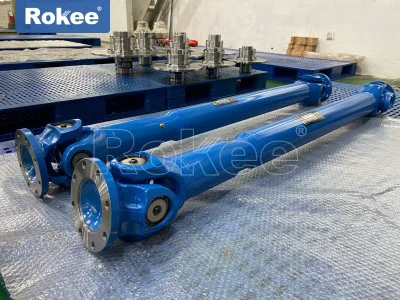
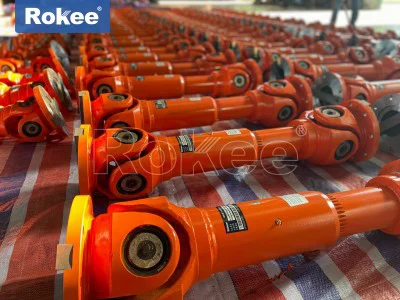
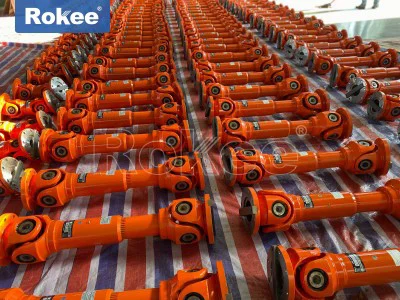
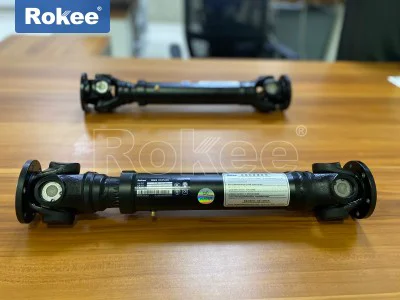
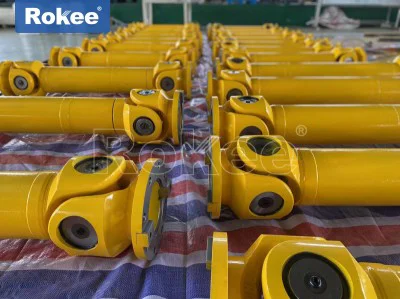
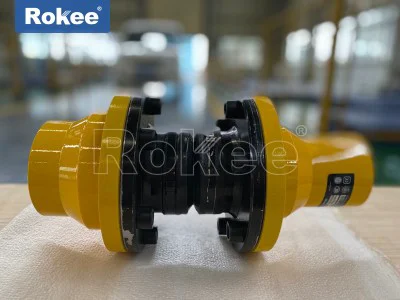
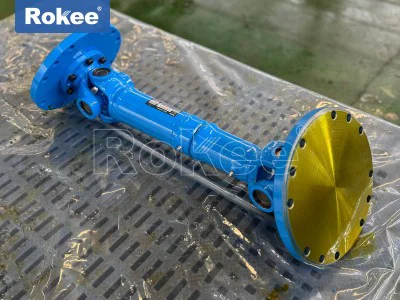
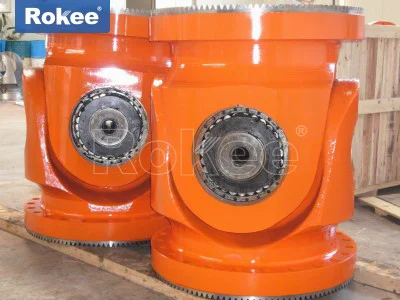
Universal Shaft Manufacturer
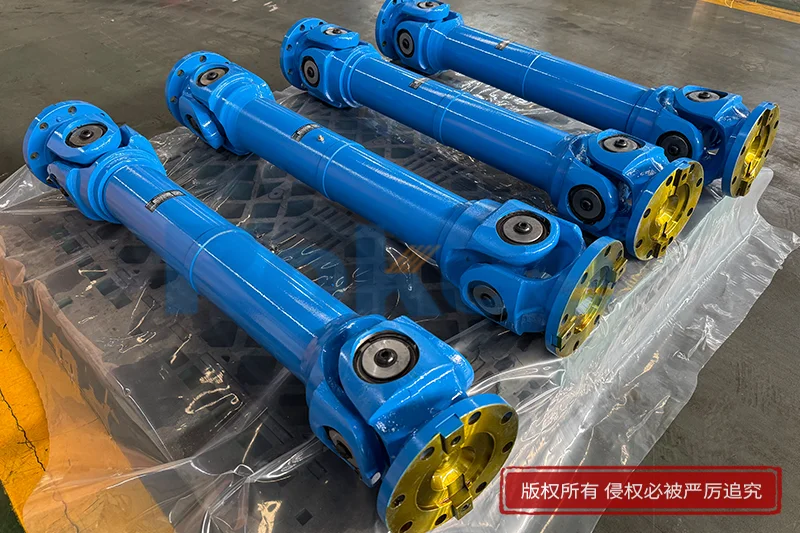
Universal shafts, also commonly recognized as cardan shafts in industrial engineering fields, are indispensable mechanical transmission components that enable flexible and stable torque transfer between misaligned rotating shafts in diverse mechanical systems. As a core manufacturer focusing on universal shaft research, development and production, we dedicate ourselves to crafting high-performance transmission parts that adapt to complex operating environments, including angular deviation, axial displacement and variable-speed operation scenarios. These components serve as critical connecting units for mechanical power transmission, widely applied in industrial manufacturing, transportation equipment, engineering machinery and other core fields. The value of premium universal shafts lies in their reliable structural stability, efficient power transmission capacity and long-term operational durability, which directly determines the overall operating efficiency and service life of complete mechanical equipment. Modern industrial upgrading puts forward higher requirements for transmission component precision, wear resistance and adaptability, driving continuous technological innovation and process optimization in universal shaft manufacturing to meet diversified and high-standard industrial application demands.
The foundation of high-quality universal shaft manufacturing lies in scientific material selection and rigorous raw material processing, which lays a solid foundation for the overall performance and service life of finished products. Professional universal shaft manufacturers always prioritize material performance matching, selecting high-strength alloy steels with excellent mechanical properties as the core raw materials for shaft bodies, cross joints and key load-bearing components. These alloy materials feature outstanding tensile strength, fatigue resistance and impact resistance, which can withstand long-term high-load torque transmission and frequent mechanical friction in complex working conditions. Before formal processing, all raw materials undergo strict preliminary screening and homogenization treatment to eliminate internal material defects and ensure consistent material performance across all components. Different from ordinary mechanical parts processing, universal shaft raw materials need targeted thermal pretreatment to optimize internal metal fiber distribution, making the material structure more compact and uniform. This refined raw material processing mode effectively avoids structural deformation, premature wear and fatigue damage of components in subsequent high-intensity operation, fundamentally improving the overall structural reliability of universal shafts and adapting to long-cycle continuous industrial production scenarios.
Precision forging and forming technology is a core processing link that determines the structural stability and mechanical performance of universal shafts, representing the core manufacturing strength of professional producers. Advanced precision forging processes are adopted for key components such as cross shaft joints and main shaft tubes, replacing traditional simple casting processing methods to achieve integrated forming of core structures. The precision forging process enables the internal metal fibers of parts to be continuously distributed along the force-bearing direction, effectively eliminating internal pores, shrinkage cavities and micro-cracks that easily occur in traditional processing. This optimized structural forming greatly enhances the overall strength, toughness and fatigue resistance of universal shaft components, allowing the products to maintain stable mechanical performance under high torque and frequent alternating load conditions. During the forging process, manufacturers strictly control processing temperature, forging pressure and forming parameters through intelligent equipment to ensure consistent structural dimensions and mechanical properties of each batch of products. After forging forming, preliminary shaping and deburring treatments are carried out to remove surface excess materials and preliminary processing defects, creating precise and stable structural foundations for subsequent finishing and precision machining procedures.
CNC precision machining is a key procedure to realize the dimensional accuracy and operational flexibility of universal shafts, directly affecting the smoothness and stability of power transmission. After forging and preliminary shaping, all core components of universal shafts enter high-precision CNC machining links, covering fine processing of shaft body straightness, spline matching size, joint hinge clearance and assembly positioning dimensions. Professional manufacturers adopt multi-axis CNC machining equipment to achieve one-time precision forming of key dimensions, avoiding dimensional errors caused by repeated clamping and secondary processing. Strict dimensional tolerance control is implemented in the machining process to ensure that the matching gaps between moving parts are kept within a reasonable range, effectively preventing transmission jitter, power loss and abnormal wear caused by excessive or uneven gaps. For telescopic spline structures, professional fine grinding and finishing processes are adopted to ensure smooth telescopic movement while maintaining precise rotational synchronization. High-precision machining not only improves the assembly accuracy of finished universal shafts, but also optimizes the overall dynamic balance performance of products, reducing vibration and noise during high-speed operation and improving the stability and efficiency of mechanical power transmission.
Professional heat treatment and surface finishing processes are essential to enhance the wear resistance, corrosion resistance and service life of universal shafts, realizing performance upgrading of finished products. After precision machining, core components undergo targeted heat treatment processes including quenching and tempering, which adjust the internal hardness and toughness of materials in a balanced manner. The tempering treatment optimizes the core toughness of components to resist impact load and structural deformation, while local quenching improves the surface hardness of friction parts, effectively enhancing wear resistance and pressure resistance. For spline surfaces and hinge contact parts that bear frequent friction and extrusion, induction hardening technology is adopted to form a high-hardness wear-resistant layer on the surface without damaging the internal toughness of components. In terms of surface finishing, professional anti-rust and anti-corrosion treatments are carried out according to different application environments, including surface oxidation treatment, coating protection and other processes. These surface treatments isolate components from external humid, dusty and corrosive working media, effectively slowing down metal oxidation and corrosion, ensuring that universal shafts can maintain stable performance in harsh industrial environments and extend the overall service cycle of products.
Dynamic balance testing and fine calibration are indispensable final processing procedures to ensure the high-speed operational stability of universal shafts, especially critical for high-speed and continuous production equipment. After the assembly of semi-finished universal shafts, professional dynamic balance detection equipment is used to conduct full-range rotating balance tests on the overall structure. During the test, professional equipment accurately captures the unbalanced points and radial runout data of the rotating shaft body under different rotating speeds. According to the test data, workers carry out precise grinding and correction on unbalanced parts to control the overall unbalanced quantity and radial runout within a precise range. This fine calibration process effectively eliminates vibration and mechanical resonance caused by unbalanced rotation during the operation of universal shafts, reduces equipment operation noise and mechanical loss, and ensures the smooth and stable transmission of torque. For products applied in high-precision and high-speed transmission scenarios, multiple rounds of repeated testing and calibration are required to meet ultra-high stability requirements, avoiding equipment jitter and transmission failure caused by subtle balance errors in long-term operation.
Customized production capability is an important symbol of mature universal shaft manufacturing strength, enabling products to adapt to diversified and personalized industrial application scenarios. Different industrial equipment has distinct requirements for universal shaft installation space, transmission angle, torque range and structural form due to different operating mechanisms and working conditions. Professional manufacturers rely on mature technical accumulation and flexible production systems to provide personalized customized solutions according to actual equipment parameters and application demands. The customization service covers structural size adjustment, torque performance optimization, special environment adaptation improvement and structural function upgrading, including non-standard shaft body length, special-angle joint structure, enhanced wear-resistant structure and other personalized designs. In the customized development process, the technical team conducts in-depth analysis of customer equipment operating conditions, simulates actual stress and operation state of components, and optimizes product structure and processing technology in a targeted manner. This user-centered customized production mode breaks the limitations of standardized products, solves the transmission matching problems of special equipment and complex working conditions, and provides more accurate and reliable transmission component support for various industrial production scenarios.
Strict full-process quality inspection and perfect after-sales service system guarantee the comprehensive quality and stable application of universal shaft products, building long-term product reliability. In the whole manufacturing process, multi-level quality inspection links are set up, including raw material incoming inspection, semi-finished product processing inspection, finished product performance test and factory full inspection. The inspection items cover material performance, dimensional accuracy, structural stability, dynamic balance performance, wear resistance and assembly flexibility, ensuring that every finished product meets high-performance manufacturing standards. Unqualified products are strictly screened and reprocessed to prevent defective products from entering the market. In addition to quality control in the production process, professional manufacturers also provide comprehensive technical support and after-sales service, including installation guidance, operation debugging, daily maintenance guidance and fault solution support. Through standardized quality management and thoughtful service system, manufacturers ensure that universal shaft products maintain stable and efficient operation in long-term industrial application, create lasting value for user equipment operation, and win long-term market recognition with reliable quality and professional service.