Cardan Coupling Angular Misalignment
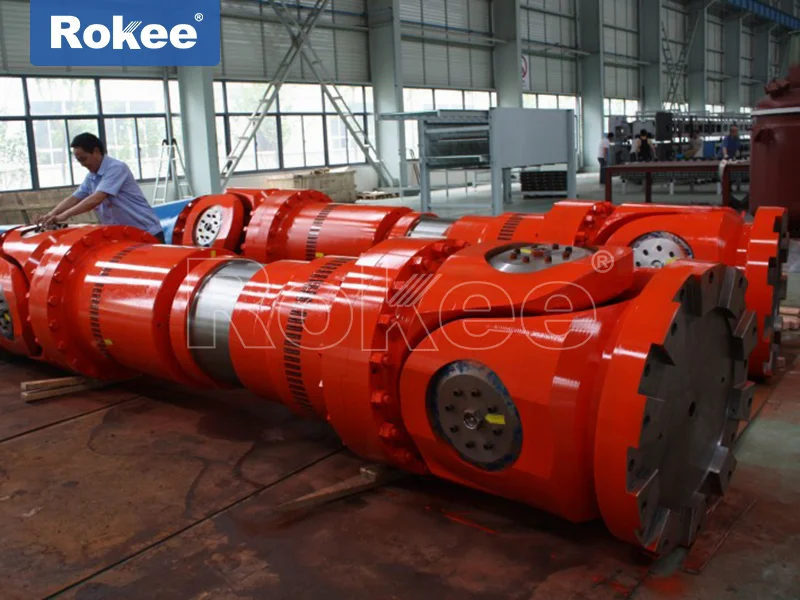
Cardan coupling angular misalignment refers to the angular deviation between driving and driven shafts during the operation of universal joint transmission systems, a core working state that distinguishes cardan couplings from rigid transmission components. As a flexible transmission structure widely adopted in mechanical power systems, the cardan coupling relies on its unique cross-joint and yoke structure to tolerate non-coaxial shaft arrangement, enabling stable torque transmission even when two connected shafts form a certain included angle. This angular offset is inevitable in most mechanical applications due to installation deviations, structural deformation under load, and dynamic operational displacement. While moderate angular misalignment is the fundamental working condition that cardan couplings are designed to accommodate, excessive or unregulated angular deviation will trigger a series of mechanical problems, including unstable torque output, intensified component vibration, and accelerated wear of core parts. Understanding the mechanical mechanism, operational impacts, and control strategies of cardan coupling angular misalignment is essential to optimize transmission efficiency, extend equipment service life, and ensure the reliable operation of various mechanical transmission systems.
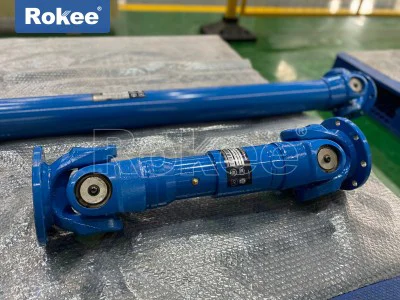
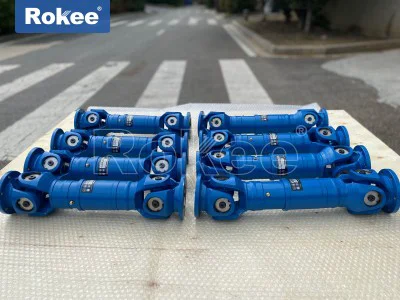
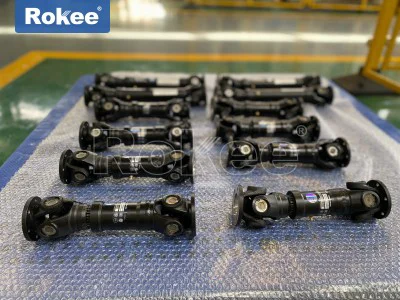
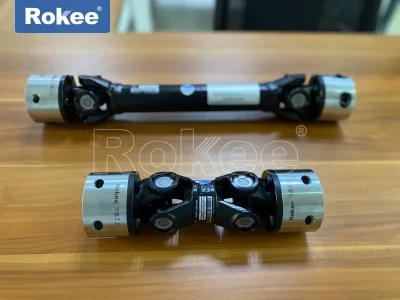
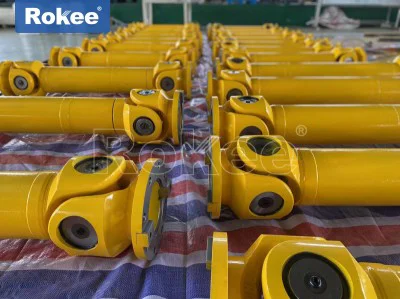
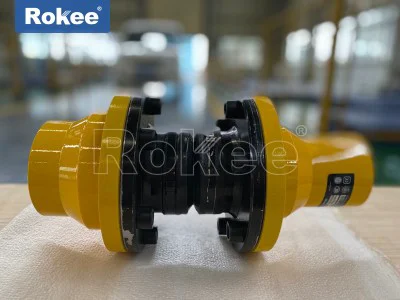
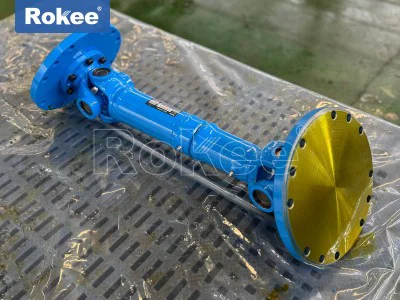
The structural characteristics of cardan couplings lay the mechanical foundation for their adaptation to angular misalignment, differentiating their flexible transmission performance from traditional rigid couplings. A typical cardan coupling consists of two shaft yokes and a central cross spindle, with the cross spindle connecting the two yokes through precision bearings to form a freely articulated rotating structure. This structural design abandons the strict coaxiality requirement of rigid transmission parts, allowing the driving shaft and driven shaft to produce a certain angular deflection in the spatial plane during operation. Unlike elastic couplings that rely on material deformation to compensate for misalignment, cardan couplings achieve angular offset adaptation through pure mechanical rotation of rigid components, which enables them to bear higher torque loads while maintaining stable misalignment compensation capability. The bearing assembly between the cross spindle and yokes further reduces friction resistance during angular deflection, ensuring continuous power transmission even with persistent angular misalignment. The inherent structural flexibility makes cardan couplings uniquely suitable for mechanical systems where shaft coaxiality cannot be permanently maintained, covering various dynamic working scenarios with unavoidable angular deviations.
The formation of cardan coupling angular misalignment stems from multiple static and dynamic factors throughout equipment installation and operation processes. Static misalignment mainly occurs during equipment assembly, caused by minor positioning deviations in shaft installation, structural assembly errors of mechanical frames, and inherent dimensional tolerances of mechanical components. These static deviations form a fixed initial angular offset between the two shafts, which exists stably in the static state of the equipment. Dynamic angular misalignment is more complex and variable, generated during equipment operation under working loads. When mechanical systems bear torque impact, gravity load, or alternating operating force, the supporting structure of the transmission shaft will produce slight elastic deformation, driving the connected shafts to deflect dynamically. In addition, long-term operational fatigue of mechanical components, minor wear of supporting parts, and thermal deformation caused by equipment temperature rise will continuously change the shaft spatial position, resulting in real-time fluctuation of angular misalignment angles. The superposition of static initial deviation and dynamic variable offset constitutes the full working state of cardan coupling angular misalignment in actual mechanical operation.
Moderate angular misalignment is a normal and beneficial working state for cardan coupling transmission systems, giving full play to the structural advantages of flexible transmission. Within a reasonable angular range, shaft angular deviation can be completely compensated by the articulated structure of the cardan coupling, without affecting the continuity and stability of torque and motion transmission. This compensation capability effectively offsets the adverse effects of installation errors and minor structural deformations, avoiding the assembly limitations of rigid transmission systems and improving the environmental adaptability of mechanical equipment. Moreover, appropriate angular misalignment can buffer part of the alternating impact load generated during equipment start-up, shutdown, and variable-speed operation. The flexible deflection of the coupling structure disperses instantaneous torque impact, reduces rigid stress concentration on transmission shafts and connecting parts, and protects the overall transmission system from instantaneous load damage. For complex mechanical systems with multi-angle power transmission requirements, controlled angular misalignment also realizes flexible steering and offset transmission of power, expanding the application scope of mechanical transmission structures.
Excessive angular misalignment beyond the reasonable tolerance range will induce obvious performance degradation and mechanical failures in cardan coupling transmission systems. The most direct impact is unstable torque transmission, where the geometric deflection of the coupling structure causes periodic fluctuation of output torque during shaft rotation. This torque fluctuation leads to inconsistent operating speed of the driven shaft, resulting in jitter and unsmooth operation of mechanical equipment. Meanwhile, excessive angular offset will significantly amplify the vibration amplitude of the transmission system. Relevant mechanical operation laws show that the increase of angular misalignment will linearly enhance lateral and torsional vibration of the shaft system, and the vibration amplification effect becomes more prominent under high-load and high-speed working conditions. Long-term severe vibration will cause loose connection of assembly parts, structural fatigue of mechanical components, and abnormal noise during equipment operation, seriously reducing the operating accuracy and stability of the entire mechanical system.
Sustained excessive angular misalignment will accelerate the wear and aging of cardan coupling core components, greatly shortening the service life of transmission parts. The cross spindle and bearing assembly, as the core movable structure for misalignment compensation, will bear increased friction and alternating shear stress under large angular deflection conditions. The periodic deflection and rotation of the coupling will cause uneven wear on the bearing contact surface and the spindle friction area, leading to increased bearing clearance and reduced rotational precision over time. In severe cases, abnormal friction heat will accumulate during high-speed operation, damaging the lubrication state of the bearing system and causing early aging and failure of lubricating grease. In addition, long-term alternating stress generated by excessive angular misalignment will induce micro-fatigue cracks on the surface of the yoke and spindle, gradually expanding with continuous operation and finally leading to component deformation or fracture. This progressive wear and failure process not only increases equipment maintenance frequency but also may cause sudden shutdown accidents of mechanical equipment.
Effective detection and evaluation of cardan coupling angular misalignment is the prerequisite for realizing precise control of transmission system operation. In actual mechanical maintenance and operation management, real-time monitoring and regular detection of shaft angular offset can be carried out through mechanical displacement measurement and operational vibration analysis technologies. By collecting vibration frequency, amplitude fluctuation data and torque operation parameters of the transmission system, staff can indirectly judge the current angular misalignment state of the coupling and identify excessive offset problems in a timely manner. Static detection can accurately measure the initial angular deviation of shaft assembly during equipment shutdown, while dynamic monitoring can capture real-time changes of angular misalignment under different load and speed conditions. Through long-term data accumulation and comparative analysis, the variation rule of angular misalignment in the full life cycle of equipment operation can be summarized, providing data support for formulating targeted maintenance and adjustment plans, and realizing predictive maintenance of transmission systems.
Scientific adjustment and optimized control strategies can effectively suppress adverse effects caused by cardan coupling angular misalignment and improve the comprehensive performance of transmission systems. In the equipment installation stage, precise shaft positioning and assembly calibration can minimize static initial angular deviation, reducing the basic misalignment value of the coupling working state. For dynamic angular misalignment generated during operation, optimizing equipment load matching and avoiding long-term overload and impact operation can reduce structural deformation and shaft deflection caused by excessive load. Regular maintenance work including lubrication renewal, bearing inspection and structural fastening can maintain the flexible rotation performance of the coupling core structure and ensure stable misalignment compensation capability. In addition, optimizing the structural layout of the transmission system and improving the rigidity of shaft supporting components can effectively limit dynamic spatial displacement of the shaft, inhibit excessive fluctuation of angular misalignment. Through systematic whole-process control from installation, operation to maintenance, the cardan coupling can always work within the optimal angular misalignment range, maximizing transmission efficiency and operational stability while delaying component wear and reducing equipment operating costs.