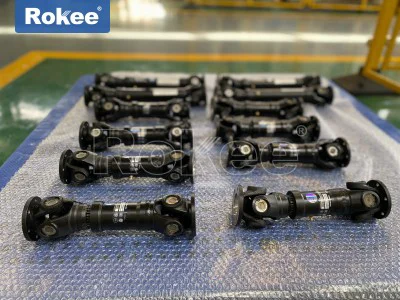
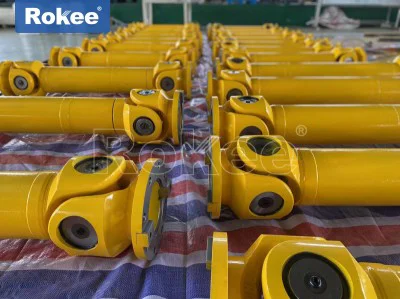
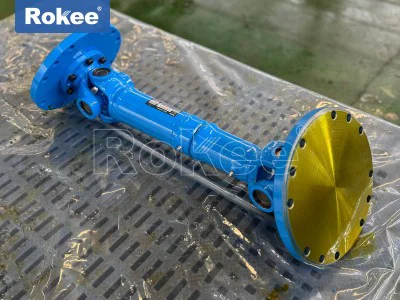
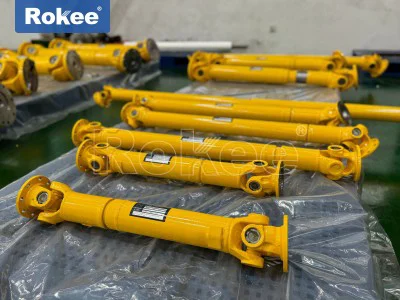
Long Cardan Drive Shaft
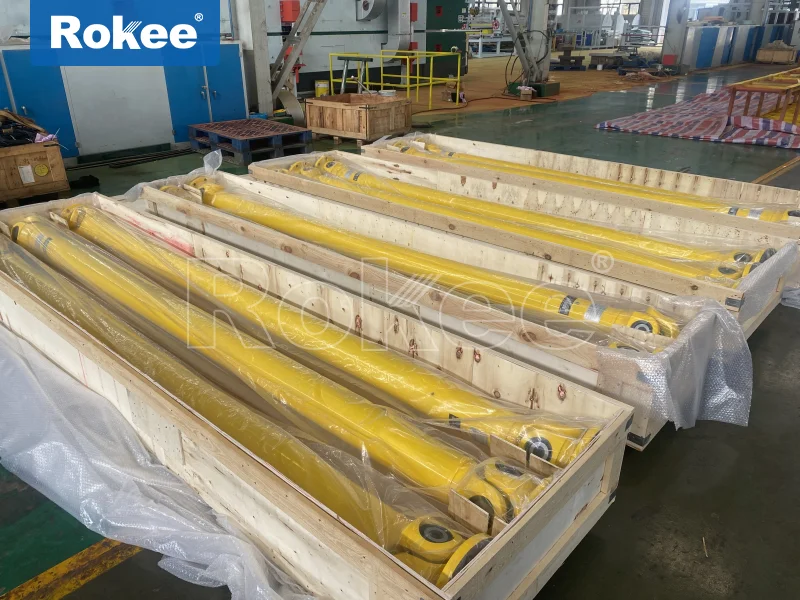
Long cardan drive shafts are essential mechanical transmission components widely applied in heavy machinery, transportation equipment and industrial transmission systems, serving as a core bridge for torque and rotational power transmission between separated power sources and execution components. Differing from ordinary short cardan shafts, the extended structural design of long cardan drive shafts enables them to adapt to long-distance power transmission scenarios while retaining the unique advantages of universal joint transmission, including flexible angular deviation compensation and axial displacement adaptation. This mechanical device effectively solves the power transmission difficulties caused by equipment installation gaps, structural deformation and dynamic operation displacement. With a modular structure composed of universal joint assemblies, telescopic spline mechanisms and integrated shaft bodies, it can maintain stable and efficient power output under complex working conditions. Its reliable mechanical performance and strong environmental adaptability make it an indispensable basic component in modern industrial transmission systems, supporting the stable operation of various large and medium-sized mechanical equipment.
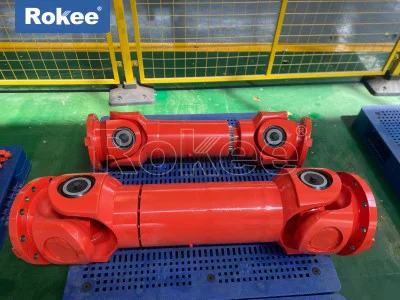
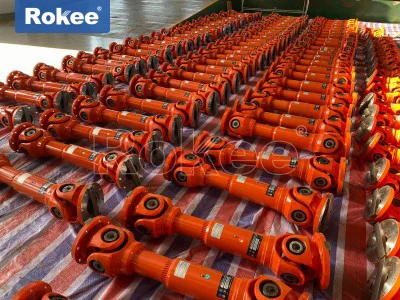
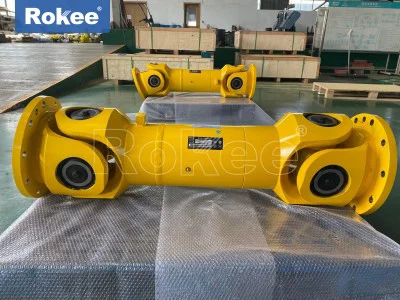
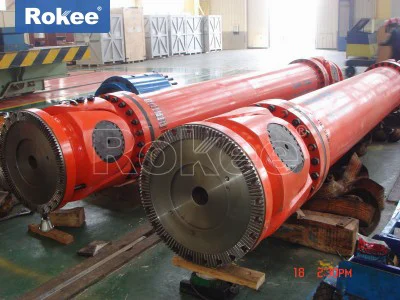
The structural composition of long cardan drive shafts follows a scientific and modular design logic, with each core component cooperating closely to realize efficient and stable power transmission functions. The whole assembly mainly consists of double universal joint assemblies, a long tubular shaft body, precision telescopic spline pairs and reinforced end connection structures. The universal joint assembly, as the core functional unit, adopts a classic cross-shaft fork structure, where the central cross journal connects two symmetric fork yokes, allowing the shaft to realize multi-directional angular deflection during operation. The long shaft body usually adopts a hollow tubular structure, which effectively reduces the overall weight while ensuring structural rigidity and torsional resistance, avoiding the vibration and deformation problems easily occurring in long-distance transmission of solid shafts. The built-in telescopic spline mechanism is responsible for axial length adjustment, which can automatically compensate the distance change between the power end and the load end caused by equipment operation vibration, structural expansion and contraction, and installation errors. All matching components are processed with high-precision manufacturing technology to ensure the fit clearance and coordination accuracy between parts, laying a solid foundation for the long-term stable operation of the whole equipment.
The working principle of long cardan driveshafts is based on the cardan transmission mechanism, realizing continuous and stable torque transmission under non-coaxial and dynamically changing working conditions. When the power source drives the input end of the drive shaft to rotate, the cross-shaft universal joint converts the single-direction rotational power into flexible multi-angle transmission power, breaking the limitation of linear power transmission of ordinary rigid shafts. In the working process, the double universal joint structure can effectively offset the speed fluctuation generated by single universal joint deflection, ensuring the constant and uniform rotational speed of the output end and avoiding power loss and mechanical impact caused by speed difference. The telescopic spline pair moves synchronously with the rotation of the shaft body, freely stretching and contracting within the allowable stroke range to adapt to the axial displacement of the equipment. Whether the equipment generates small angular deviation, radial offset or axial distance change during static installation or dynamic operation, the long cardan drive shaft can automatically complete compensation adjustment, always maintaining the effective connection of the transmission system. This flexible transmission principle enables the equipment to adapt to complex and changeable working environments and greatly improves the stability of mechanical power output.
Long cardan drive shafts possess unique performance advantages that distinguish them from traditional transmission shafts, making them suitable for high-load and long-distance transmission scenarios. First of all, their outstanding deflection compensation capability allows them to work normally within a wide angular deviation range, solving the transmission failure problem caused by installation misalignment and equipment operation offset that plagues rigid transmission structures. Secondly, the optimized long tubular shaft body structure achieves a perfect balance between high torsional strength and light weight, which not only bears large torque load without deformation, but also reduces the overall inertial resistance of the transmission system and improves transmission efficiency. In addition, the integrated telescopic structure eliminates the need for additional adjustment parts, realizing automatic axial distance adaptation, which greatly simplifies the equipment installation process and reduces later debugging costs. Moreover, the overall structural design has good vibration resistance and impact resistance, which can buffer the mechanical vibration and instantaneous impact load generated during equipment operation, protect the power source and load equipment from damage, and extend the service life of the entire transmission system.
The application scope of long cardan drive shafts covers multiple industrial fields involving long-distance power transmission, showing strong scene adaptability. In engineering machinery, they are applied to large cranes, excavators and bulldozers, undertaking the power transmission task between the engine and walking or working components, adapting to the position changes and angular deviations of mechanical arms and walking structures during operation. In commercial transportation equipment, they serve in special vehicles and large transport machinery, realizing stable power transmission between the power cabin and rear drive components, coping with the frame deformation and position offset caused by vehicle driving on complex road conditions. In industrial production equipment, they are used in large conveyor lines, metallurgical machinery and mining equipment, solving the power transmission problem of long-distance distributed equipment, ensuring the synchronous operation of multi-section transmission structures. In addition, they also play an important role in agricultural machinery and port handling equipment, adapting to harsh working environments such as dust, vibration and variable load, and providing reliable power guarantee for the continuous operation of various mechanical equipment.
Material selection and manufacturing technology are key factors determining the comprehensive performance and service life of long cardan drive shafts, and the whole production process follows strict precision processing standards. The main shaft body is usually made of high-strength alloy materials with excellent torsional resistance, fatigue resistance and impact resistance, which can maintain stable mechanical properties under long-term high-load operation and extreme working conditions. The core components such as cross shafts and splines adopt high-precision alloy steel after quenching and tempering heat treatment, which improves surface hardness and wear resistance, reduces friction loss during long-term operation, and avoids component wear and failure. The surface of key parts is treated with anti-corrosion and wear-resistant coating to adapt to humid, dusty and corrosive working environments and prevent rust and abrasion damage. In terms of processing technology, numerical control precision machining is adopted for all matching surfaces to ensure ultra-high dimensional accuracy and fit tolerance. The overall assembly process strictly controls the coaxiality and dynamic balance of the shaft body, eliminating unbalanced vibration problems during high-speed operation and ensuring the smooth and efficient operation of the long cardan drive shaft in various working states.
Daily maintenance and scientific operation management are crucial to maintaining the stable performance and extending the service life of long cardan drive shafts. In routine use, regular inspection of the operating state of the universal joint assembly is required, focusing on checking for abnormal jitter, noise and jamming during rotation, so as to judge the wear state of internal bearings and cross shaft components. The telescopic spline pair needs regular lubrication maintenance to ensure sufficient lubricating oil film between matching surfaces, reduce friction and wear during stretching and rotating movement, and prevent clamping failure caused by dry friction. It is necessary to regularly check the fastening state of the end connection structure to avoid loose connection caused by long-term vibration, which leads to transmission power attenuation and equipment failure. In addition, excessive overload operation and long-term high-frequency impact work should be avoided in daily operation, so as to prevent irreversible deformation and fatigue damage of the shaft body structure. Timely cleaning of surface dust and dirt and regular performance detection can effectively eliminate potential faults, ensure that the long cardan drive shaft always maintains optimal transmission performance, and reduce equipment failure rate and operation and maintenance costs.
With the continuous upgrading of modern industrial machinery towards high efficiency, high precision and high load, the technological development of long cardan drive shafts is also advancing continuously, showing diversified optimization trends. In terms of structural optimization, the design tends to be more lightweight and integrated, further reducing the overall weight on the premise of ensuring structural strength, improving transmission response speed and mechanical operation efficiency. In terms of performance upgrading, new wear-resistant and high-temperature resistant alloy materials and composite coating technologies are continuously applied, greatly improving the adaptability of products to extreme working conditions such as high temperature, low temperature and strong corrosion. In terms of precision improvement, intelligent dynamic balance calibration and precise matching technology are adopted to further reduce transmission vibration and power loss and improve the stability and accuracy of long-distance power transmission. In the future, with the development of intelligent manufacturing and high-end mechanical equipment, long cardan drive shafts will develop towards intelligent monitoring and adaptive adjustment, realizing real-time monitoring of operating state and automatic compensation of working parameters, and providing more reliable and efficient transmission support for modern industrial mechanical systems.