Short Universal Shaft Coupling

Short universal shaft coupling is a compact and high-efficiency mechanical transmission component designed for limited installation spaces and stable torque transmission scenarios. Differing from conventional long-type universal couplings, this shortened structural iteration abandons redundant intermediate tubular structures, retaining only core transmission assemblies to minimize overall dimensions while preserving the fundamental misalignment compensation capability of universal joints. It primarily serves to connect two misaligned rotating shafts, stably transmitting rotational motion and torque under angular deflection conditions, and effectively adapts to minor axis deviations generated by mechanical operation, installation errors, and equipment vibration. Featuring low rotational inertia, high structural rigidity, and compact layout advantages, it avoids the loose transmission and energy loss issues common to oversized couplings in narrow mechanical systems. Widely applied in precision industrial machinery, lightweight transmission equipment, and compact power assembly systems, it balances installation convenience, operational stability, and service durability, becoming a key connecting component for modern miniaturized and refined mechanical transmission designs.
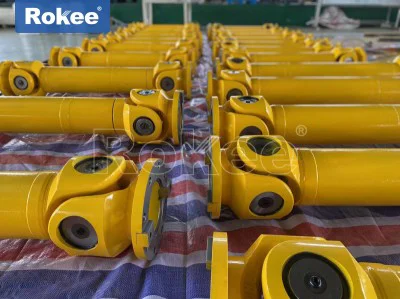
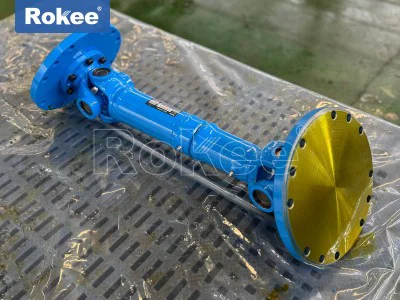
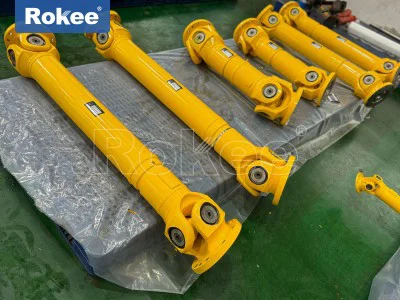
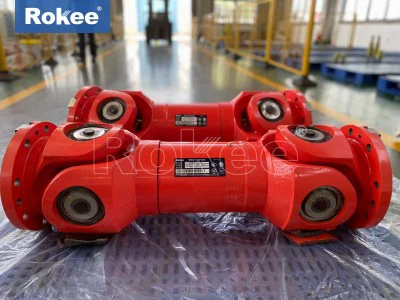
The structural design of short universal shaft coupling focuses on compact integration and mechanical stability, optimizing the traditional universal joint structure to suit space-constrained working environments. Its core assembly consists of two symmetrical fork-shaped yokes, a central cross spider, and precision rolling bearings, removing the telescopic intermediate sleeve and extended pipe sections of standard universal couplings to achieve an ultra-short overall length. The two end yokes are machined with high-precision mounting holes for shaft connection, ensuring tight fitting with driving and driven shafts to eliminate idle rotation during operation. The central cross spider with four perpendicular trunnions acts as the pivotal transmission core, enabling flexible angular deflection between the two yokes while maintaining synchronous rotation. Needle roller bearings embedded at each trunnion effectively reduce friction resistance during rotational movement, supporting continuous high-speed operation without excessive heat generation. The integrated solid structure enhances overall rigidity, preventing structural deformation under medium and high torque loads, and the simplified assembly design also reduces internal gap accumulation, laying a foundation for stable and precise power transmission in narrow installation spaces.
Functional characteristics distinguish short universal shaft coupling from ordinary coupling products, making it uniquely adaptable to compact transmission systems. The most prominent advantage is its excellent angular compensation performance, which allows stable torque transmission within a reasonable deflection angle range without reducing transmission efficiency or generating rotational jitter. Although the shortened structure cancels axial telescopic function, it delivers higher structural stability and lower motion inertia, effectively suppressing vibration and noise during high-speed operation. Compared with flexible couplings, it features stronger load-bearing capacity and torsional rigidity, avoiding elastic deformation and power loss under heavy load conditions. Meanwhile, its rigid integrated structure ensures consistent transmission accuracy, with no cumulative displacement errors during long-term cyclic operation. The optimized internal friction structure enables smooth operation across different speed ranges, adapting to both low-speed high-torque heavy-duty scenarios and high-speed precision transmission working conditions. These comprehensive functional advantages make it perfectly suited for mechanical equipment that requires both compact installation size and stable power output.
Material selection directly determines the service performance and service life of short universal shaft coupling, with high-strength metal materials dominating mainstream manufacturing. High-quality alloy steel is the primary material for core components such as cross spiders and yokes, which undergoes standardized forging and heat treatment processes to achieve high tensile strength, good toughness, and strong fatigue resistance. This material processing method effectively resists torsional impact, mechanical wear, and cyclic load damage during long-term operation, avoiding fracture or deformation under continuous working conditions. Matching precision bearings adopt high-hardness bearing steel, which maintains low friction coefficient and high wear resistance under high-speed rotation and frequent deflection movements. Some surface parts are treated with anti-corrosion and anti-oxidation processes to adapt to complex working environments with humidity, dust, and minor corrosive substances. The scientific material matching scheme balances hardness and toughness, ensuring the coupling maintains stable mechanical performance in long-term continuous operation while reducing wear loss and extending overall service cycle.
The installation and matching characteristics of short universal shaft coupling highlight its practicability in modular mechanical assembly. Benefiting from its ultra-compact size and simplified structure, it adapts to narrow installation spaces where conventional long universal couplings cannot be deployed, greatly improving the space utilization rate of mechanical transmission systems. The standardized end connection structure supports quick docking with various shaft diameters, realizing convenient assembly and disassembly without complex auxiliary tools, which improves equipment assembly and later maintenance efficiency. During installation, it allows reasonable reserved angular misalignment, tolerating minor installation errors without affecting transmission performance, reducing the precision requirements for shaft alignment. Its low-inertia structural design reduces the starting and stopping load of power equipment, enabling more sensitive and accurate response of the transmission system. In modular mechanical design, it can be flexibly matched with various power components and execution mechanisms, providing reliable connection solutions for diversified compact mechanical transmission systems.
Operational performance advantages of short universal coupling are fully reflected in actual industrial operation scenarios. In high-speed operating conditions, its streamlined compact structure effectively reduces wind resistance and rotational inertia, avoiding excessive energy consumption and amplitude vibration caused by oversized structural parts. The precise coordination between internal bearings and cross spiders ensures uniform torque transmission, eliminating the speed difference and power fluctuation that easily occur in ordinary universal couplings during angular deflection operation. Under cyclic variable load working conditions, the high-rigidity structure can effectively buffer instantaneous torsional impact, protecting connected shafts and power components from impact damage. Additionally, the closed and compact structural design reduces the contact area between internal moving parts and external dust and impurities, lowering the probability of abrasive wear and operational failure. Long-term operational practice shows that this coupling maintains stable transmission accuracy and mechanical performance under continuous working conditions, with low failure rate and reliable operational safety.
Maintenance and fault prevention of short universal shaft coupling are simple and efficient, adapting to the long-term continuous operation needs of industrial equipment. Thanks to its simplified internal structure with fewer vulnerable parts, it avoids complex fault points such as telescopic sleeve jamming and intermediate pipe deformation in long-type couplings. Daily maintenance mainly includes regular inspection of connection tightness and bearing lubrication status, with no complicated maintenance procedures required. Timely supplementary lubrication of internal bearings can effectively reduce friction wear, maintain flexible deflection and stable rotation, and avoid abnormal noise and heating faults caused by dry friction. Regular visual inspection of component surface integrity helps timely discover minor wear and micro-deformation, preventing small faults from evolving into equipment shutdown failures. The high wear-resistant and anti-fatigue material properties reduce the frequency of parts replacement, lowering the daily maintenance cost and downtime loss of mechanical equipment, and improving the overall operational efficiency of the transmission system.
With the continuous upgrading of modern mechanical equipment towards miniaturization, high precision and high efficiency, the application prospect of short universal shaft coupling is increasingly broad. It is widely used in various compact industrial transmission equipment, including precision automation machinery, light industrial transmission devices, and special mechanical power assemblies with limited installation space. In mechanical systems that require stable torque transmission and limited structural size, it has gradually replaced traditional bulky coupling products, becoming the preferred connecting component for refined mechanical design. With the continuous progress of material processing and precision manufacturing technology, the structural optimization of short universal shaft coupling is further deepened, with higher transmission accuracy, stronger load adaptability and longer service life. Its unique advantages of compact structure, stable performance and convenient maintenance make it play an increasingly important role in modern intelligent manufacturing and precision mechanical transmission fields, with great market promotion and application value.