Universal Shaft Coupling For Industrial Machinery

Universal shaft couplings stand as indispensable mechanical components in modern industrial transmission systems, serving as a critical bridge between disjointed drive and driven shafts across diverse industrial machinery. Designed to address the common challenges of shaft misalignment, angular deviation, and axial displacement during equipment operation, these specialized couplings enable stable, efficient torque and rotational motion transmission even when connected shafts fail to maintain perfect collinearity. Unlike rigid coupling structures that rely on precise shaft alignment, universal shaft couplings feature flexible mechanical structures that adapt to dynamic operational deviations, effectively buffering mechanical vibration and impact generated during equipment startup, operation, and load changes. Widely deployed in heavy mining equipment, metallurgical rolling mills, precision machine tools, automated production lines, and marine power systems, they lay a solid foundation for the continuous and reliable operation of industrial machinery. Their combination of structural flexibility, high transmission efficiency, and strong load adaptability makes them a core guarantee for reducing mechanical failure rates and extending equipment service life in complex industrial working environments.
The core operational value of universal shaft couplings lies in their exceptional misalignment compensation capability, a feature that distinguishes them from traditional rigid transmission accessories and suits the variable working conditions of industrial machinery. In actual industrial production, long-term equipment operation, thermal deformation of metal components, minor installation errors, and mechanical wear will inevitably lead to angular, radial, and axial displacement between connected shafts. Rigid transmission parts cannot adapt to such deviations, which easily trigger excessive mechanical friction, transmission jitter, and even structural fatigue damage over time. Universal shaft couplings solve this problem through their unique movable joint structure, allowing a wide range of angular deflection between shafts while maintaining uninterrupted power transmission. This adaptive compensation performance effectively eliminates additional mechanical stress caused by shaft misalignment, stabilizes the transmission state of machinery and equipment, and avoids abnormal wear of bearings, gears, and other core components. Whether in high-temperature operating environments of metallurgical equipment or vibration-intensive working scenarios of mining machinery, the coupling can always maintain stable transmission performance, greatly improving the overall operational stability of industrial systems.
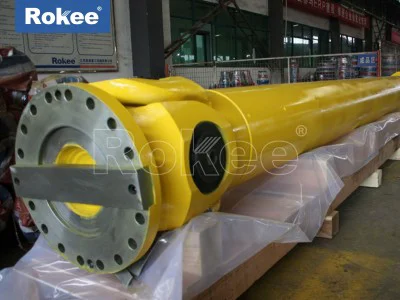
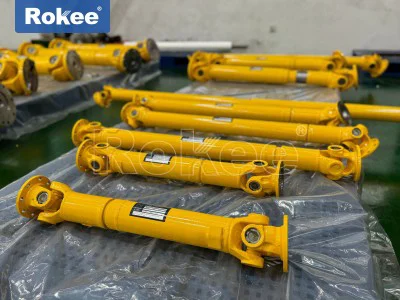
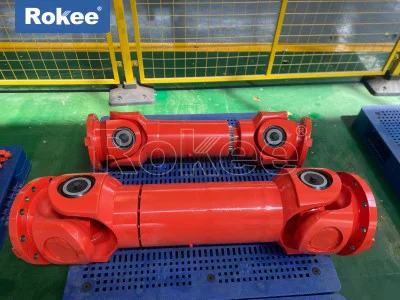
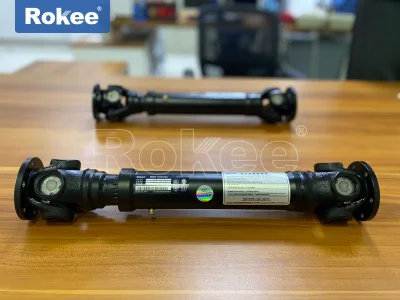
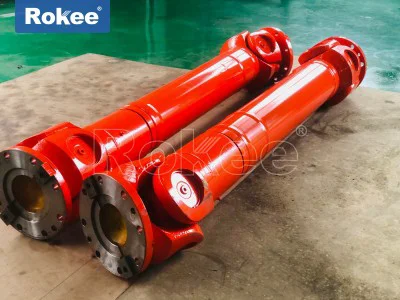
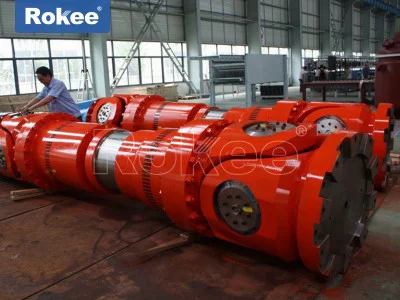
Structural design diversity enables universal couplings to match the differentiated load and operation requirements of various industrial machinery types. The most widely applied cross-shaft universal coupling adopts a combination of double fork joints and intermediate cross shaft components, with a simple and robust structure that bears heavy torque loads, making it suitable for heavy-duty industrial equipment such as rolling mills, crushers, and large lifting machinery. Another mainstream ball-cage universal coupling utilizes precision steel ball limit structures to realize synchronous transmission, featuring lower operation vibration and noise, which is more applicable to high-speed and high-precision transmission scenarios including industrial robots and precision machining tools. In addition, telescopic universal couplings integrate sliding spline structures inside the intermediate shaft, which can automatically adapt to axial distance changes between shafts during equipment operation, perfectly fitting machinery with frequent linear displacement and telescopic operation. All structural designs prioritize mechanical toughness and operational flexibility, with precisely machined movable gaps and transmission components ensuring no power loss or transmission delay while adapting to various displacement deviations.
Material selection and manufacturing craftsmanship determine the durability and environmental adaptability of universal shaft couplings in harsh industrial scenarios. Most high-performance industrial universal couplings are forged from high-grade heat-treated alloy steel, which undergoes strict quenching and tempering processes to enhance overall structural strength, surface hardness, and fatigue resistance. This material treatment enables the coupling to withstand long-term high-load operation, frequent impact loads, and continuous mechanical friction without deformation or damage. For industrial equipment operating in humid, dusty, or corrosive environments, the coupling surface is usually equipped with anti-corrosion and wear-resistant protective layers, which isolate external environmental erosion and prevent rust and component aging. Precision machining technologies such as CNC finishing and fine grinding are adopted for key movable parts to ensure the matching accuracy of joints and transmission components. Excellent material performance and exquisite manufacturing processes enable universal shaft couplings to maintain stable working performance in long-cycle industrial production, reduce frequent replacement and maintenance caused by component damage, and effectively lower the comprehensive operation cost of industrial machinery.
Efficient power transmission performance is a key advantage of universal shaft couplings that drives their widespread application in modern industrial machinery. In industrial power transmission systems, any structural mismatch or component resistance will lead to energy loss and reduced equipment operation efficiency. Universal shaft couplings optimize the transmission path through scientific structural design, minimizing mechanical resistance during torque and rotation transmission. Well-processed universal couplings can maintain a high transmission efficiency of over 98% in conventional operating environments, ensuring that most of the power output by power equipment is accurately transmitted to the execution end without invalid loss. Meanwhile, their flexible joint structure can absorb and weaken mechanical vibration and impact generated during equipment startup, shutdown, and load mutation, avoiding instantaneous torque impact on the transmission system. This stable and efficient transmission characteristic not only improves the working efficiency of industrial machinery but also optimizes the operating state of the entire transmission system, reducing the energy consumption and mechanical loss of equipment during long-term continuous operation.
Universal shaft couplings play a vital role in equipment fault reduction and service life extension for industrial machinery. In the absence of effective misalignment compensation components, slight shaft deviation will continuously generate alternating stress on transmission components, leading to accelerated wear of bearings, shafts, and gear sets, and even causing mechanical jamming and equipment shutdown in severe cases. As a buffer and compensation core component, the universal shaft coupling bears most of the displacement stress and vibration impact generated during equipment operation, protecting other precision and core mechanical parts from abnormal damage. Its flexible movable structure can self-adjust according to the real-time operating state of the equipment, offsetting mechanical errors caused by equipment aging and component wear. Long-term application practice shows that matching high-quality universal shaft couplings can significantly reduce the failure rate of industrial transmission systems, extend the overall service life of machinery and equipment, and ensure the continuity and stability of industrial production. For continuous production industrial scenarios such as automated assembly lines and processing production lines, this fault prevention and protection effect is particularly important.
With the continuous upgrading of modern industrial machinery towards high speed, high precision, and heavy load, the performance design of universal shaft couplings is also constantly optimized and iterated. Traditional single-function couplings can no longer fully meet the complex transmission requirements of emerging intelligent and high-precision industrial equipment. Modern optimized universal shaft couplings integrate multiple performance advantages such as larger angle compensation range, higher dynamic balance accuracy, and lower operational noise, adapting to high-speed rotation and precision transmission scenarios of intelligent machinery and industrial automation equipment. At the same time, lightweight and compact structural optimization design makes the couplings applicable to miniature precision industrial equipment while retaining high load-bearing capacity, expanding their application coverage in the industrial field. The iterative upgrade of processing technology and structural design also improves the adaptability of couplings to extreme working conditions, enabling them to operate stably in high-temperature, low-temperature, high-dust, and high-corrosion industrial environments. This continuous technological progress makes universal shaft couplings always adapt to the development pace of modern industrial machinery.
Reasonable selection and daily maintenance of universal shaft couplings are crucial to maximizing the operational efficiency and service life of industrial machinery. In the selection process, it is necessary to comprehensively match the coupling type and structural specification according to the actual working parameters of the equipment, including operating speed, load magnitude, shaft displacement range, and working environment conditions. Heavy-load machinery needs to adopt high-strength cross-shaft couplings with strong load-bearing capacity, while high-precision equipment is suitable for low-vibration ball-cage synchronous couplings. In daily industrial equipment maintenance, regular inspection of the wear degree of coupling movable joints, bearing components, and protective structures is required, with timely lubrication treatment for friction parts to reduce operational wear. Damaged or aging couplings need to be replaced in a timely manner to avoid potential mechanical failures caused by reduced compensation and transmission performance. Scientific selection and standardized maintenance can fully exert the performance advantages of universal shaft couplings, ensure the long-term stable operation of industrial machinery, and create more stable operational benefits for industrial production.