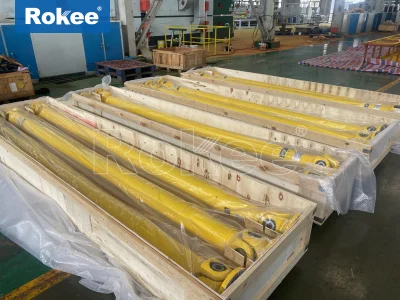
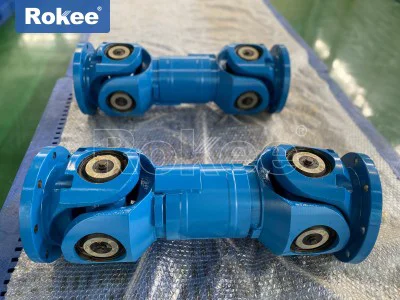
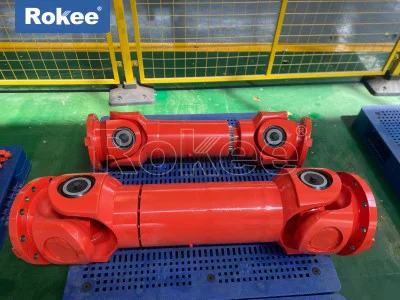
Universal Joint Coupling For Construction Machinery
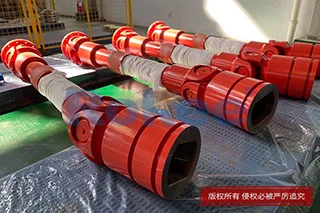
Universal joint couplings stand as core adaptive transmission components widely applied in modern construction machinery, serving as a vital connecting link for power transmission between misaligned rotating shafts. Unlike rigid coupling structures that require precise shaft alignment and lack deformation adaptability, this mechanical part can stably transmit torque and rotational motion while accommodating angular deviation, axial displacement and radial offset between driving and driven shafts. Construction machinery such as excavators, loaders, pavers and cranes often operates in complex and harsh working scenarios, with frequent mechanical vibration, equipment deformation and position offset during operation, which puts forward high requirements for the flexibility and stability of transmission systems. Universal joint couplings effectively solve the transmission failure problems caused by shaft misalignment, buffer mechanical impact and vibration in operation, reduce additional wear on key equipment parts, and ensure continuous and efficient power output of engineering equipment. With flexible spatial movement capability and reliable load-bearing performance, they have become an indispensable basic component to guarantee the stable operation and extended service life of various construction machinery.
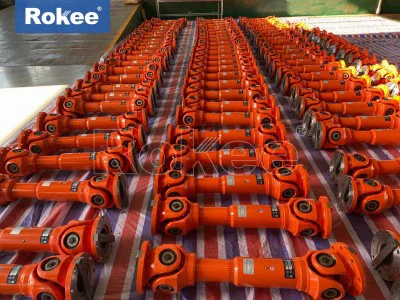
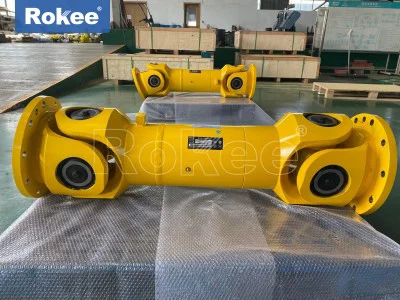
The structural design of universal joint couplings is tailored to the complex operating characteristics of construction machinery, with a core configuration centered on cross shaft and roller bearing assemblies that support multi-directional flexible movement. The classic cross-shaped spindle structure enables the coupling to realize independent rotational adjustment in two mutually perpendicular planes, which is the key to its ability to adapt to angular misalignment during equipment operation. Each end of the cross spindle is equipped with precision rolling bearings, which can reduce friction resistance during rotational transmission and avoid rigid friction loss caused by frequent angle changes. Matched with flange and spline connection structures, the coupling can not only realize stable torque transmission, but also compensate for large-range axial displacement generated by mechanical shaking and component deformation in construction work. In actual engineering operation, construction machinery will produce continuous slight deformation under heavy load and bumpy working conditions, and traditional fixed connection structures are prone to transmission jamming and component fatigue damage. The flexible structural characteristics of universal joint couplings can well adapt to these dynamic changes, maintain the consistency of power transmission efficiency, and effectively avoid shutdown failures caused by transmission system dislocation. Meanwhile, the integrated structural design enhances the overall rigidity of the coupling, ensuring that it can bear heavy torque load without deformation during long-term high-intensity operation of construction machinery.
The core working principle of universal joint couplings lies in converting irregular offset motion between shafts into stable continuous rotational motion, realizing loss-reducing power transmission under non-coaxial conditions. When construction machinery is working, the relative position of the power shaft and execution shaft often changes dynamically due to chassis vibration, working arm expansion and ground unevenness, resulting in real-time angular and axial misalignment between connected shafts. The cross spindle of the universal joint coupling can rotate freely with the shaft angle change, and the rolling bearings can flexibly adjust the stress direction, so that the torque can be evenly transmitted from the driving shaft to the driven shaft without being affected by shaft offset. For dual universal joint structures commonly used in large construction machinery, the symmetric arrangement of two single joints can offset the instantaneous speed difference generated by single-angle transmission, realizing constant-speed and stable power output. This working principle fundamentally makes up for the defects of rigid transmission structures, which are only suitable for fixed coaxial operation. In high-frequency and high-load engineering scenarios, this adaptive transmission mode can effectively disperse concentrated mechanical stress, reduce the impact load on the transmission system at the moment of equipment start, stop and steering, and greatly improve the operational stability of construction machinery in complex working environments.
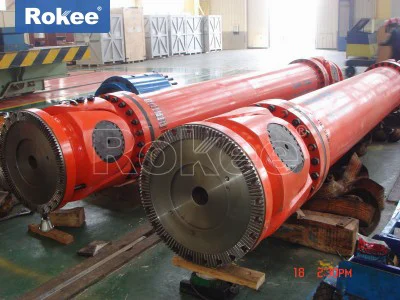
Universal joint couplings possess unique performance advantages that make them highly compatible with the extreme working conditions of construction machinery, covering load-bearing capacity, environmental adaptability and operational stability. In terms of load performance, the optimized cross shaft and bearing structure enables the coupling to withstand large instantaneous torque and continuous heavy load, fully adapting to the high-power output demand of large engineering equipment. Different from ordinary industrial couplings with limited bearing capacity, professional construction machinery universal joint couplings adopt thickened structural parts and optimized stress distribution design, which can maintain stable transmission performance under long-term heavy-load operation without plastic deformation or structural damage. In terms of environmental adaptability, the sealed structural design can effectively block dust, gravel, muddy water and other external impurities on construction sites, preventing internal bearing wear and lubricant failure caused by foreign matter invasion. It can also adapt to wide temperature changes in outdoor construction environments, avoiding performance attenuation caused by high-temperature aging or low-temperature embrittlement of components. In addition, the coupling has excellent vibration and impact resistance, which can buffer the violent mechanical vibration generated by equipment excavation, hoisting and walking, reduce the resonance phenomenon of the transmission system, and protect the engine, gearbox and other core equipment from impact damage.
The application scenarios of universal joint couplings cover almost all mainstream types of construction machinery, playing a pivotal role in different functional equipment. In earth-moving machinery such as excavators and loaders, universal joint couplings are applied to the walking transmission system and working arm power transmission structure, adapting to the frequent angle changes of the chassis and working arms during excavation and loading operations, ensuring continuous power output during flexible movement of equipment. In road construction machinery including pavers and road rollers, the couplings undertake the power transmission task of walking and compaction systems, adapting to the slight deformation of the fuselage during long-distance paving and rolling, avoiding transmission interruption that affects construction flatness and efficiency. In hoisting machinery such as truck cranes and tower cranes, they are used in the rotation and lifting power transmission links, stably transmitting torque under the condition of large-angle rotation and variable load, and ensuring the safety and stability of hoisting operations. In addition, they are also widely used in mixing machinery, piling machinery and other engineering equipment, adapting to the diversified and complex working states of different construction machinery, providing reliable transmission guarantee for all links of engineering construction, and effectively improving the overall operational efficiency and construction reliability of mechanical equipment.
Daily maintenance and scientific use of universal joint couplings are key factors to prolong their service life and maintain the stable performance of construction machinery. In the daily operation of construction equipment, the coupling will be affected by long-term load friction, external impact and environmental erosion, so regular maintenance is essential to avoid premature failure. The core maintenance work includes regular inspection of the sealing state of the coupling to ensure that the internal lubrication system is well sealed and prevent lubricant leakage and impurity infiltration. Timely replacement of special lubricating grease for engineering machinery can reduce the friction loss of internal bearings and cross shafts, and avoid dry friction damage under high-speed operation. It is also necessary to regularly check the tightness of connecting fasteners to prevent bolt loosening caused by long-term vibration, which leads to transmission deviation and component wear. In the process of equipment use, abnormal overload operation and long-term continuous high-intensity work should be avoided, so as to prevent the coupling from bearing excessive instantaneous torque and causing structural fatigue. Regular cleaning of surface dust and sediment can reduce external corrosion and wear. Scientific maintenance can not only maintain the efficient transmission performance of universal joint couplings, but also reduce the failure rate of construction machinery transmission systems, lower equipment maintenance costs, and ensure the continuous and stable operation of engineering construction.
With the continuous upgrading and iteration of construction machinery technology, the research and development and manufacturing technology of universal joint couplings are also constantly optimized, promoting the overall performance improvement of modern engineering equipment. In recent years, with the continuous development of large-scale, intelligent and high-efficiency construction machinery, the performance requirements for supporting transmission components have been further improved. Modern universal joint couplings for construction machinery adopt high-strength alloy materials and precision forging processes, which greatly improve structural strength, wear resistance and fatigue resistance compared with traditional products, and can adapt to more severe high-load and long-cycle working conditions. The optimized structural design further reduces the volume and weight of the coupling while improving load-bearing performance, which helps reduce the overall self-weight of construction machinery, reduce equipment energy consumption, and improve construction energy efficiency. At the same time, the improved sealing and lubricating structure realizes longer maintenance cycles, reduces the downtime loss caused by equipment maintenance, and improves the continuous operation capacity of engineering machinery. In the future, with the development of intelligent manufacturing technology, universal joint couplings will develop towards higher precision, stronger adaptability and longer service life, providing more reliable core support for the intelligent and high-efficiency development of the construction machinery industry.
As an indispensable core transmission component of construction machinery, universal joint couplings undertake the important task of stabilizing power transmission and adapting to complex working conditions, and their performance directly determines the operational stability and service life of engineering equipment. Throughout the whole process of equipment operation, from power output to execution action, universal joint couplings always play a role in buffering vibration, compensating displacement and stabilizing torque transmission, solving various transmission problems caused by complex working environments and dynamic mechanical changes on construction sites. Its unique flexible transmission performance, excellent environmental adaptability and durable load-bearing capacity make it irreplaceable in the field of construction machinery. With the continuous progress of mechanical manufacturing technology and the upgrading of engineering equipment, universal joint couplings will continue to complete technical optimization and performance innovation, better adapt to the diversified and high-standard construction operation needs, and provide solid technical support for the efficient, safe and stable development of modern engineering construction industry.