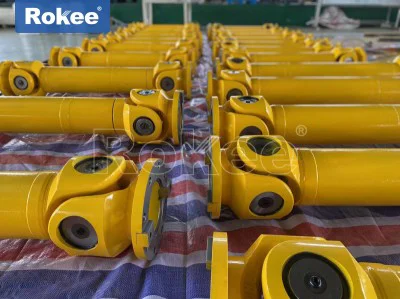
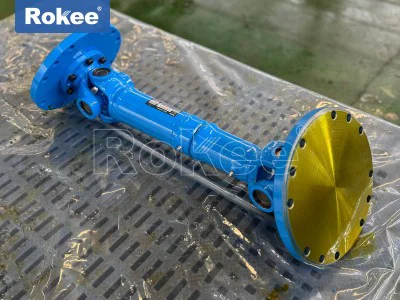
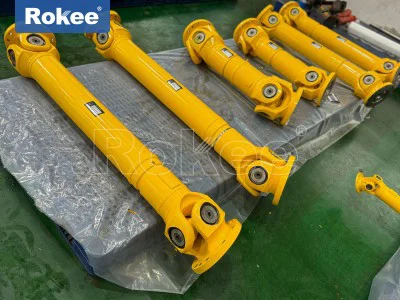
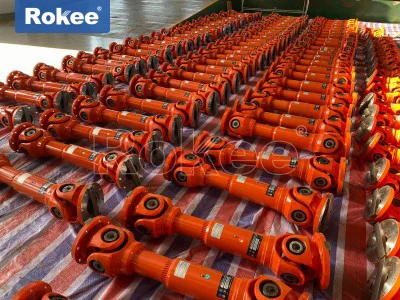
Universal Joint Coupling For Marine Equipment
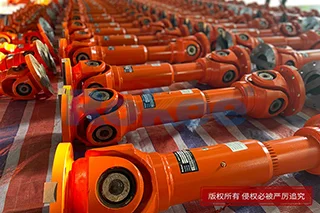
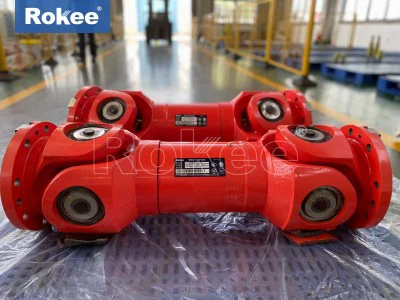
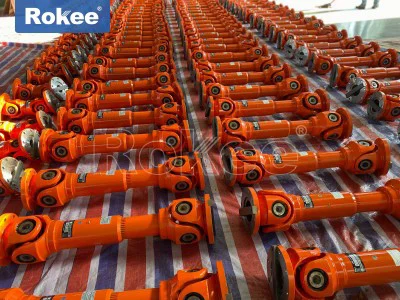
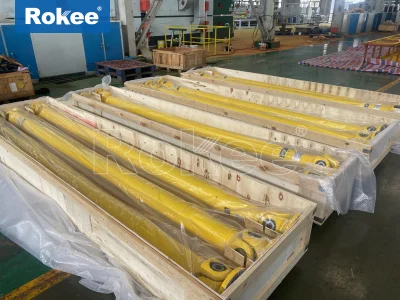
Universal joint couplings serve as core flexible transmission components for all types of marine equipment, undertaking the critical task of stably transmitting torque and rotational motion between misaligned shafts in complex marine working environments. Unlike rigid transmission parts that require precise coaxial alignment, these specialized couplings can adapt to angular deviation, axial displacement and spatial offset between connected shafts, perfectly solving the transmission instability problem caused by hull deformation, equipment vibration and wave-induced jitter during vessel navigation. Operating constantly in high-humidity, salt-laden and dynamically changing marine conditions, marine universal joint couplings are structurally optimized with enhanced durability, corrosion resistance and shock resistance compared with ordinary industrial couplings. They are widely applied in ship propulsion systems, auxiliary power devices, offshore operation equipment and marine steering mechanisms, ensuring continuous and efficient power transmission for marine mechanical systems. As a key guarantee for the stable operation of marine equipment, their performance directly affects the navigation safety, working efficiency and service life of marine mechanical systems.
The fundamental working principle of marine universal joint couplings lies in their unique cross-bearing and flexible hinge structure, which enables free angle adjustment and torque transmission between two connected shafts. The core structure consists of cross shaft components, sealed bearing assemblies and connecting flanges, where the cross shaft acts as the central rotating medium to connect the two sets of shaft ends. When the marine equipment is running and shaft misalignment occurs due to hull shaking or mechanical vibration, the flexible hinge structure can automatically compensate for angular and axial displacement without interrupting power transmission or causing excessive torque loss. This flexible compensation capability is particularly crucial for marine scenarios, as vessels inevitably produce subtle structural deformation under the impact of waves and ocean currents, and long-term engine operation will also lead to slight displacement of fixed equipment. Rigid transmission structures are prone to wear, vibration and even structural fracture under such dynamic misalignment conditions, while universal joint couplings can buffer mechanical stress and disperse load impact through structural flexibility. Additionally, the symmetrical structural design ensures balanced torque output during high-speed rotation, effectively avoiding power jitter that may affect the stable operation of marine propulsion and auxiliary equipment.
Material selection for marine universal joint couplings is strictly tailored to the harsh characteristics of marine working environments, forming a core foundation for their long-term reliable operation. Different from conventional universal joints used in land industrial equipment, marine-grade products prioritize corrosion resistance, oxidation resistance and fatigue resistance while ensuring high mechanical strength. High-strength alloy steel with special heat treatment is commonly adopted for main structural components, which effectively improves the overall rigidity and load-bearing capacity of the coupling to adapt to heavy-load operation of marine equipment. The surface of key parts is processed with anti-corrosion treatments such as passivation and coating, which can resist the erosion of seawater splash, salt fog and humid marine air, avoiding rust, peeling and structural performance degradation caused by long-term marine exposure. Bearing parts are equipped with fully sealed waterproof structures and wear-resistant lubricating materials to prevent seawater and sediment from entering the moving gap, reducing friction loss and avoiding bearing jamming. In addition, auxiliary rubber and sealing accessories use aging-resistant and seawater-resistant materials, which can maintain stable sealing and buffering performance under long-term alternating temperature and vibration conditions, greatly extending the overall service cycle of the coupling.
Marine universal joint couplings cover a wide range of application scenarios in marine mechanical systems, with propulsion systems being the most typical and core application field. In various ship propulsion devices, they connect ship engines or gearboxes with propeller shafts, stably transmitting power generated by the engine to the propeller while compensating for shaft misalignment caused by hull floating and vibration. This connection mode effectively avoids mechanical damage and power transmission failure caused by inconsistent operation postures of power components and execution components. Beyond main propulsion systems, the couplings are also widely used in marine auxiliary equipment, including ship ventilation systems, hydraulic power devices, deck mechanical transmission structures and offshore platform mechanical equipment. These auxiliary devices operate frequently during vessel navigation and offshore operations, and their frequent start-stop and variable-load operation will produce continuous mechanical displacement and vibration. The flexible transmission performance of universal joint couplings can well adapt to such variable working conditions, ensuring the stable operation of auxiliary mechanical systems. Moreover, they are also applied in marine steering transmission mechanisms, accurately transmitting operating torque while buffering external impact force, improving the flexibility and stability of ship steering control.
The unique performance advantages of marine universal joint couplings make them irreplaceable in marine mechanical transmission systems compared with other flexible coupling products. First of all, they have excellent multi-dimensional displacement compensation capability, which can simultaneously adapt to angular deviation, axial offset and radial displacement of shafts, covering various misalignment states easily generated during marine equipment operation, far exceeding the single compensation effect of ordinary elastic couplings. Secondly, they feature high torque transmission efficiency and stable high-speed operation performance, with no obvious power loss during long-term heavy-load and high-speed rotation, meeting the high-power operation requirements of large marine vessels and offshore equipment. In terms of environmental adaptability, their optimized sealed and anti-corrosion structure enables them to work stably in high-salt, high-humidity and strong-vibration marine environments for a long time, with stronger environmental tolerance than ordinary industrial couplings. In addition, the structural design of marine universal joint couplings is simple and compact, which saves the limited installation space of marine equipment, and has good shock absorption and noise reduction effects, effectively reducing mechanical vibration and operating noise during ship navigation, optimizing the overall operating state of marine mechanical systems.
Routine maintenance and scientific inspection are key links to maintain the long-term stable performance of marine universal joint couplings and extend their service life. Affected by the harsh marine environment and frequent variable-load operation, the couplings will inevitably produce normal wear and structural aging during long-term operation, so regular targeted maintenance is essential. Daily inspections mainly focus on checking the sealing integrity of bearing parts, observing whether there is seawater leakage, lubricant deterioration or sediment accumulation, and timely cleaning surface salt fog attachments and marine dirt to avoid long-term corrosive erosion. Regular maintenance includes supplementing and replacing special marine lubricants to ensure sufficient lubrication of cross shafts and bearings, reducing friction and wear of moving parts. It is also necessary to regularly check the connection tightness of flanges and structural deformation of key components, timely fastening loose parts and replacing aging or severely worn accessories. In addition, during the ship’s regular docking maintenance, professional detection of coupling fatigue wear and internal structural damage should be carried out to eliminate potential hidden dangers. Scientific maintenance can effectively avoid sudden failure of the coupling during navigation, reduce equipment failure rates, and ensure the continuous and reliable operation of marine mechanical transmission systems.
With the continuous upgrading of marine equipment manufacturing technology and the increasing requirements for marine operation safety and efficiency, the technical optimization direction of marine universal joint couplings is constantly evolving. Modern marine engineering puts forward higher standards for equipment lightweight, high efficiency and long service life, promoting the continuous innovation of coupling structure and technology. On the structural side, optimized integrated design is gradually adopted to reduce the overall weight of the coupling while ensuring mechanical strength, helping reduce the overall load of marine equipment and improve navigation energy efficiency. In terms of material technology, new composite anti-corrosion and high-strength materials are being applied to replace traditional materials, further enhancing the coupling’s resistance to marine corrosion and fatigue vibration. At the same time, the sealing structure is continuously upgraded to achieve higher-level waterproof and dustproof performance, adapting to deeper and more complex marine operation scenarios. In addition, with the development of intelligent marine equipment, some optimized couplings are equipped with wearable monitoring structures, which can feedback the operating state of the transmission component in real time, facilitating staff to grasp equipment operation information and realize predictive maintenance.
As an indispensable basic transmission component of marine equipment, universal joint couplings play a pivotal role in ensuring the stable operation, navigation safety and efficient work of various marine mechanical systems. Their unique flexible compensation performance, excellent marine environmental adaptability and stable power transmission capacity solve many pain points of mechanical transmission in complex marine working conditions, providing reliable basic support for the normal operation of ship propulsion, auxiliary equipment and offshore operation devices. With the continuous development of the marine industry and the continuous progress of mechanical manufacturing technology, marine universal joint couplings will continue to realize technical iteration and performance upgrading, adapting to more diversified and high-standard marine operation requirements. In the future, lightweight, intelligent, high-corrosion resistance and ultra-long service life will become the main development trends of marine universal joint couplings, continuously empowering the safe and efficient operation of modern marine engineering equipment and promoting the steady development of the global marine industry.