Welded Cardan Drive Shaft
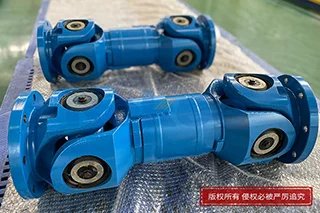
Welded cardan drive shafts are indispensable mechanical transmission components widely adopted in modern industrial and mechanical power systems, serving as a core solution for torque and rotational power transmission between misaligned shaft systems. Differing from integrally formed and bolted cardan shafts, this type of drive shaft adopts professional welding technology to integrate tubular shaft bodies, universal joint yokes, spline structures and connecting accessories into a unified whole, balancing structural compactness and transmission stability. It is specially designed to adapt to angular, axial and radial misalignment between power input and output ends, effectively solving the power transmission obstacles caused by equipment vibration, structural deformation and installation deviation during mechanical operation. With outstanding structural rigidity, reliable load-bearing performance and strong environmental adaptability, welded cardan drive shafts have become a preferred transmission part for various heavy-duty and continuous operating mechanical equipment, delivering stable and efficient power output for complex working condition scenarios.
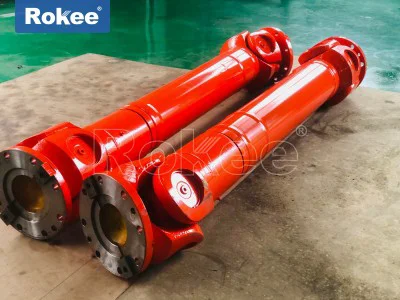
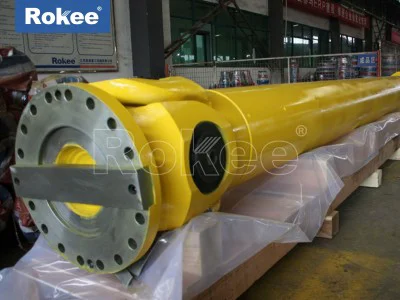
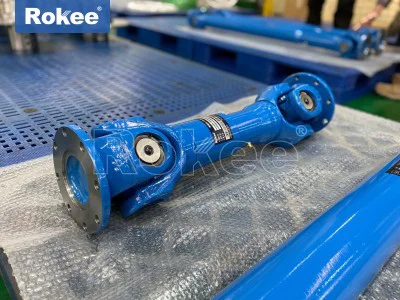
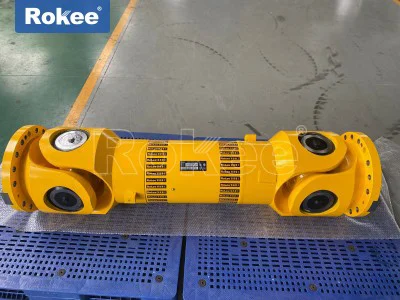
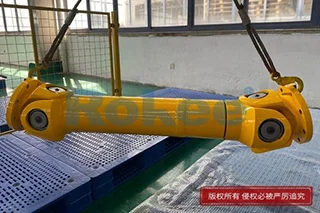
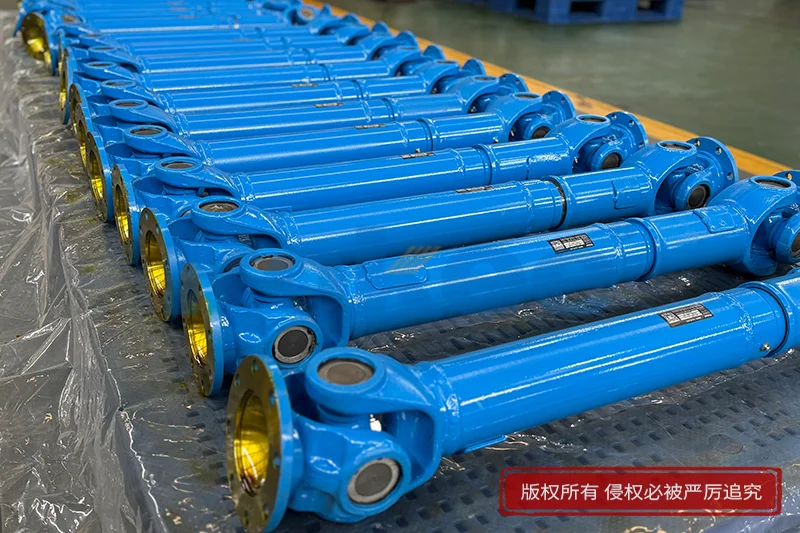
The overall structural composition of welded cardan shafts follows a scientific and integrated design logic, with each functional component closely matched and coordinated to form a complete power transmission system. The main body of the drive shaft is usually made of high-strength hollow tubular materials, which effectively reduces the overall weight while ensuring structural toughness, avoiding the excessive inertia problem of solid shaft bodies during high-speed operation. Both ends of the tubular main body are firmly connected with precision-machined universal joint yokes through integrated welding processes, and the cross-shaped spider component equipped inside the yokes acts as the core rotating connection structure, enabling flexible angle adjustment between the two ends of the drive shaft. In addition, the built-in spline telescopic structure is an essential functional part of the welded cardan drive shaft, which can automatically compensate for axial distance changes between power components caused by equipment operation displacement and thermal expansion and contraction. All welded joints are polished and reinforced after welding to eliminate structural gaps, ensuring the overall consistency and integrity of the drive shaft, and laying a solid structural foundation for long-term stable power transmission.
The working principle of welded cardan drive shafts is based on the flexible transmission mechanism of cross-axis universal joints, realizing continuous and stable torque transmission under multi-dimensional misalignment conditions. When the power source drives one end of the drive shaft to rotate, the cross spider inside the universal joint can synchronously drive the yoke and shaft body at the other end to rotate through flexible rotational coordination, even if there is a certain angular deviation between the input and output shafts. During the operation process, the spline structure can freely stretch and retract according to the operating state of the equipment, offsetting the axial displacement generated by mechanical vibration and component movement, and preventing transmission jamming or shaft body deformation caused by position changes. Different from traditional rigid transmission shafts that are only suitable for coaxial operation, the flexible compensation capability of welded cardan drive shafts allows them to adapt to dynamic changes in working conditions. The integrated welding structure ensures that each component will not produce relative displacement during torque transmission, avoiding power loss caused by loose connections, and maintaining high-efficiency power transmission efficiency throughout the full rotation cycle of mechanical equipment.
The welding molding process is the core technological advantage that distinguishes welded cardan shafts from other types of cardan shafts, and the standardized welding process endows the product with superior structural performance. The manufacturing process starts with precision cutting and finishing of raw materials, ensuring that the dimensional accuracy of tubular shaft bodies, yokes and spline accessories meets the assembly matching requirements. In the formal welding link, high-precision fusion welding technology is adopted to realize deep integration between components, avoiding the defects of virtual welding and missing welding that easily occur in ordinary welding processes. After welding, the drive shaft will undergo multiple processes such as stress relief annealing and surface finishing to eliminate welding residual stress, prevent structural deformation and crack generation in subsequent high-load operation. Meanwhile, the welded joints are treated with smooth polishing and anti-oxidation treatment to reduce surface friction resistance and improve corrosion resistance. This integrated welding and post-processing process makes the connection between components more firm and stable than bolted assembly structures, effectively resisting torsion and shear forces generated during high-power transmission.
Welded cardan drive shafts exhibit excellent comprehensive mechanical performance in actual operation, adapting to diverse and harsh working condition environments. In terms of load-bearing performance, the integrated welding structure improves the overall structural rigidity of the drive shaft, enabling it to withstand large torque and impact loads, and maintain stable operation during frequent start-stop and variable-load working processes. In terms of motion performance, the optimized universal joint structure achieves a large-angle compensation capability, which can cope with the angle deviation generated by equipment operation and structural changes, ensuring no dead angle in power transmission. The hollow lightweight design effectively reduces rotational inertia, making the drive shaft respond more sensitively during high-speed operation and improving the dynamic coordination of the mechanical system. In addition, through reasonable material selection and surface treatment, the drive shaft has good wear resistance and fatigue resistance, which can resist long-term mechanical friction and alternating load impact, avoid premature aging and damage of components, and greatly extend the overall service life of the transmission system in continuous working scenarios.
Compared with bolted and integrally cast cardan drive shafts, welded cardan drive shafts possess unique application advantages and cost-performance characteristics in industrial transmission scenarios. First of all, its integrated welding structure eliminates assembly gaps between discrete components, effectively reducing vibration and noise during equipment operation, and improving the overall stability and comfort of mechanical operation. Secondly, the welding molding process has higher structural flexibility, which can be adjusted and optimized according to different mechanical installation spaces and transmission requirements, realizing personalized matching of shaft body length and connection specifications. In terms of maintenance, the integrated structure reduces vulnerable loose parts, avoiding frequent fastening and replacement of accessories required by bolted structures, and greatly reducing daily maintenance workload and operating costs. Moreover, the welded cardan drive shaft has a lower overall production cost than integral forging and casting products on the premise of ensuring equivalent mechanical performance, making it more suitable for large-scale industrial supporting applications and batch equipment upgrading and transformation.
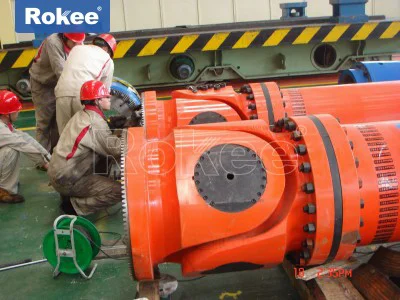
Welded cardan drive shafts are widely applied in various industrial machinery and special mechanical equipment that require flexible power transmission, covering multiple core industrial fields. In engineering and construction machinery, they serve as key transmission components for power systems of heavy equipment, adapting to the violent vibration and variable-load operation characteristics of construction machinery to ensure stable power output during equipment walking and operation. In industrial manufacturing equipment, they are applied to transmission systems of production machinery such as papermaking equipment, textile machinery and conveying equipment, solving the power transmission problems caused by equipment installation errors and operational displacement. In addition, they also play an important role in test bench equipment, hydraulic machinery and general industrial transmission systems. Whether it is continuous stable operation under conventional working conditions or adaptive operation under complex and variable working conditions, welded cardan drive shafts can maintain efficient and reliable transmission performance, providing stable power support for the normal operation of various mechanical systems.
Scientific daily maintenance and standardized operation are key to ensuring the long-term stable performance and extended service life of welded cardan drive shafts. In daily use, regular inspection of the welding joints and surface structure of the drive shaft is required to check for surface wear, oxidation corrosion and tiny crack defects, so as to discover potential structural hazards in a timely manner. It is necessary to regularly replenish lubricating grease for the universal joint and spline telescopic structure to reduce internal friction and wear of moving parts and avoid transmission efficiency reduction and component damage caused by dry friction. During equipment operation, overload and long-term high-speed extreme operation should be avoided to prevent excessive torque impact from causing structural deformation of the welded shaft body and failure of flexible compensation function. Meanwhile, the working environment of the drive shaft should be kept clean to reduce the erosion of dust, moisture and corrosive substances on the surface and internal components. Standardized maintenance can effectively maintain the mechanical performance of the welded cardan drive shaft, reduce failure rates, and ensure the long-term stable and efficient operation of the mechanical transmission system.