Cardan Drive Shaft For Paper Mill
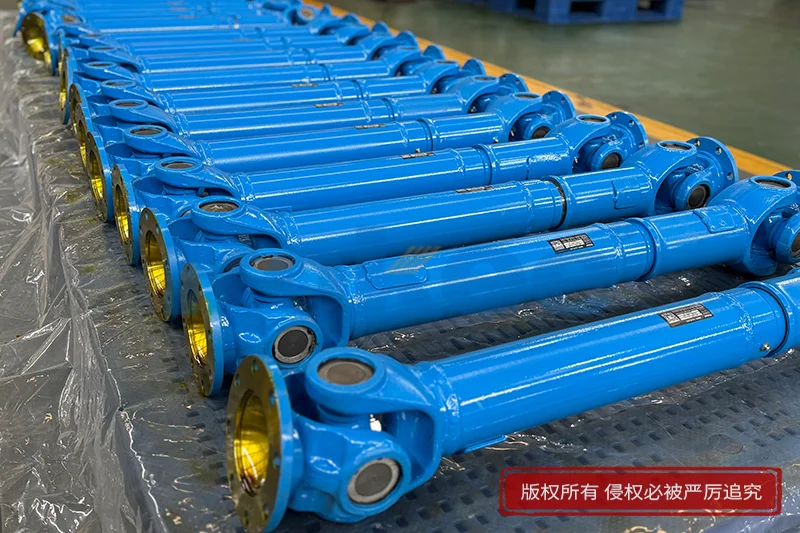
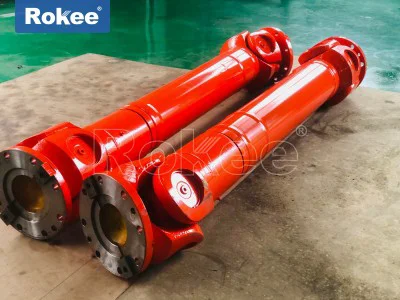
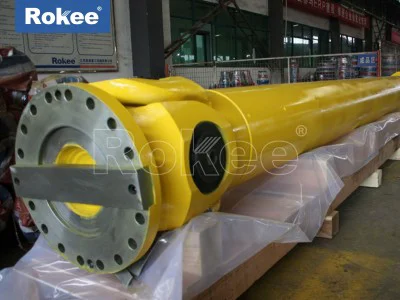
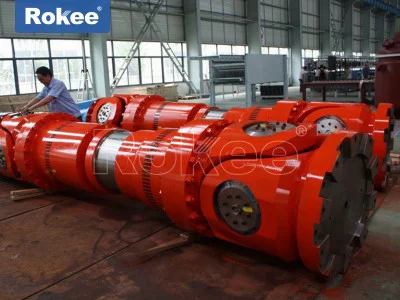
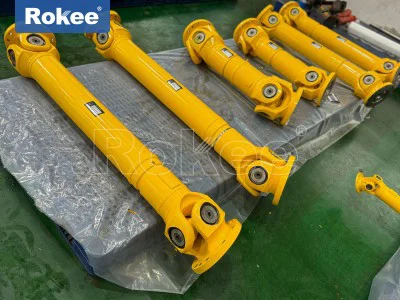
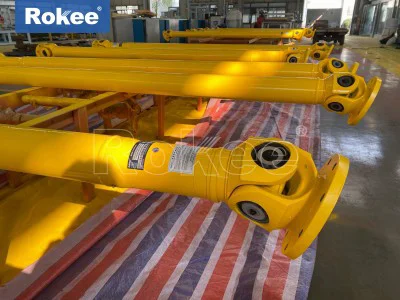
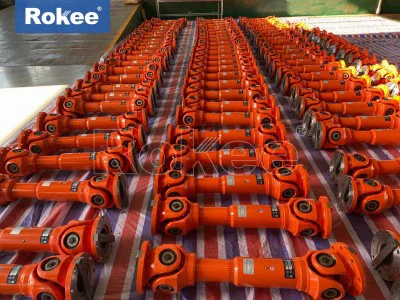
Cardan drive shafts stand as indispensable mechanical transmission components in modern paper mill production lines, serving as the core link for power delivery between driving devices and paper-making equipment. Unlike ordinary transmission shafts, these specialized shafts are uniquely engineered to adapt to the harsh and complex operating environments of paper manufacturing, featuring flexible angle adjustment, high torque transmission capacity, and strong resistance to adverse working conditions. Paper mill operations involve continuous high-load production, with equipment often facing positional deviation, vibration, and exposure to moisture, oil stains, and corrosive substances during long-term operation. Cardan drive shafts effectively solve the power transmission problems caused by equipment misalignment and variable operating conditions, ensuring stable and consistent power output for key processes including pulping, papermaking, drying, and winding.
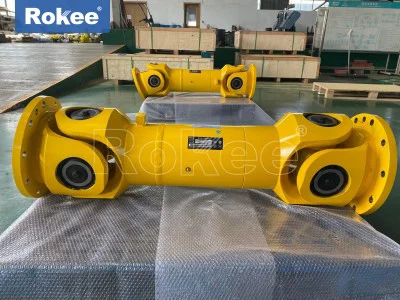
The basic working principle of cardan drive shafts for paper mills centers on the universal joint structure, which enables efficient power transmission under variable angles and spatial displacements, a core function that perfectly matches the operational characteristics of paper mill machinery. Traditional fixed transmission shafts are only suitable for equipment with precise alignment and static installation positions, while paper mill production equipment will inevitably produce slight positional offset and angle deviation due to long-term vibration, equipment aging, and thermal expansion and contraction during continuous operation. Built with multi-directional universal joint components, the cardan drive shaft can flexibly adapt to horizontal, vertical, and angular position changes between the driving end and the driven end, maintaining uninterrupted torque transmission without reducing power efficiency. In the daily operation of paper machines, the running speed of rollers, dryers, and winding mechanisms fluctuates slightly with production load changes, and the universal joint structure of the cardan shaft can buffer instantaneous load impacts, avoiding rigid friction and torque loss caused by equipment misalignment. This flexible transmission mode fundamentally improves the stability of mechanical operation, eliminates frequent equipment jitters and shutdown failures caused by poor power connection, and lays a solid foundation for the long-term continuous production of paper mills.
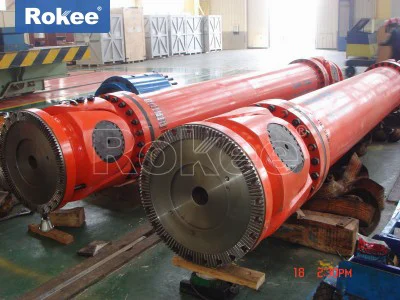
Adaptability to harsh working environments is one of the most prominent advantages of cardan drive shafts designed for paper mill applications, distinguishing them from ordinary industrial transmission shafts. Paper mill workshops are characterized by high humidity, frequent water splashing, residual pulp adhesion, and occasional oil contamination, all of which pose strict challenges to the durability and operational stability of mechanical parts. Professional cardan drive shafts for paper mills adopt high-strength alloy materials and specialized surface treatment processes, possessing excellent corrosion resistance, wear resistance, and high-temperature resistance. These structural upgrades allow the shafts to operate stably for a long time in humid and corrosive atmospheres without rusting, aging, or structural deformation. Additionally, paper manufacturing belongs to continuous heavy-load production, and the equipment often bears alternating variable loads during start-up, operation, and shutdown. The optimized internal structure of the cardan drive shaft can withstand low-speed and high-torque operating states, effectively dispersing concentrated mechanical pressure and avoiding structural fracture or component damage caused by long-term heavy-load operation. Whether in the high-temperature drying section of paper machines or the humid pulping and forming section, the drive shaft can maintain consistent transmission performance and adapt to diverse working condition changes across the entire production line.
The unique structural design of paper mill cardan drive shafts integrates compactness, high strength, and convenient assembly, fully meeting the efficient production and daily maintenance needs of paper manufacturing enterprises. The overall structure abandons the bulky and rigid design of traditional transmission components, adopting a modular combined structure composed of universal joints, shaft bodies, and connecting end components. This compact structural layout saves valuable installation space inside dense paper mill production equipment, realizing precise power transmission in limited mechanical spaces. Meanwhile, the integrated forging process adopted for the core components greatly improves the overall structural rigidity, ensuring that the shaft body will not deform or vibrate abnormally under long-term high-torque operation. In terms of assembly and disassembly, the standardized connecting structure enables workers to complete installation, disassembly, and replacement operations efficiently without complex professional tools or lengthy construction processes. This convenient structural design greatly reduces the time cost of equipment maintenance and fault repair. Moreover, the adjustable length and angle design of the shaft body allows it to be flexibly matched with different types of paper-making equipment, adapting to the structural differences of pulping machines, paper forming machines, drying cylinders, and winding machines, achieving strong universal compatibility in paper mill production lines.
Cardan drive shafts cover the core application links of the entire paper mill production process, becoming a key guarantee for the normal operation of each production section. In the pulping stage, the drive shaft provides stable power transmission for pulping stirring equipment and grinding machinery, ensuring uniform stirring and full crushing of pulp raw materials, avoiding uneven pulping caused by unstable power output. In the paper forming stage, it drives the operation of forming nets and pressing rollers, maintaining synchronous and stable operation of transmission components to ensure the flatness and uniformity of wet paper sheets, which directly affects the basic quality of finished paper. In the high-temperature drying stage, the drive shaft adapts to the high-temperature operating environment of the drying cylinder equipment, maintaining continuous power output to ensure the consistent running speed of the drying system and avoid paper wrinkling or cracking caused by speed fluctuation. In the final winding and slitting stage, the high-precision torque transmission performance of the cardan shaft ensures uniform winding tension and accurate slitting size, improving the yield rate of finished paper products. Throughout the whole production process, the stable operation of the cardan drive shaft connects discrete mechanical units into an integrated efficient production system, realizing the seamless connection of each production link.
Scientific and standardized daily maintenance is crucial to extending the service life and maintaining stable performance of cardan drive shafts for paper mills, forming a complete set of operational management specifications suitable for paper mill working conditions. Due to the long-term operation in humid and dusty workshop environments, the universal joint gaps and connecting parts of the drive shaft are prone to accumulating pulp residues, dust, and moisture, which will accelerate component wear and rust if not cleaned in time. Regular surface cleaning and gap dredging can effectively remove residual pollutants and keep the movable parts flexible. Lubrication maintenance is another core link; regular filling of special high-temperature and wear-resistant lubricating grease for the universal joint and rotating parts can reduce mechanical friction loss, buffer operating vibration, and avoid abnormal noise and jitter during equipment operation. In addition, regular inspection of shaft body deformation, connecting bolt tightness, and universal joint flexibility is required to timely discover potential hidden dangers such as component aging and loose assembly. For parts with slight wear, targeted adjustment and maintenance can be carried out in advance, while severely worn components need to be replaced in a timely manner. Systematic maintenance can not only extend the service life of the drive shaft but also avoid unplanned equipment shutdowns caused by component failure, ensuring the continuity of paper mill production.
The application of high-performance cardan drive shafts brings significant economic and operational value to paper mill production, helping enterprises improve production efficiency and reduce comprehensive operating costs. In terms of production efficiency, the stable power transmission performance of the drive shaft eliminates equipment jitter, speed fluctuation, and intermittent shutdown faults caused by poor power connection, ensuring the continuous and stable operation of the paper production line. Long-term stable operation greatly improves the effective operating rate of production equipment, increases the daily output of paper products, and optimizes the overall production efficiency of the enterprise. In terms of cost control, the high durability and wear resistance of qualified cardan drive shafts reduce the frequency of component replacement and equipment maintenance, lowering the procurement cost of spare parts and the labor cost of maintenance work. At the same time, stable mechanical operation effectively reduces the defective rate of paper products caused by equipment failure, avoiding raw material waste and production loss caused by unqualified products. In addition, the excellent vibration damping performance of the drive shaft reduces the operating vibration and noise of production equipment, improving the on-site production environment and reducing mechanical fatigue loss of other supporting equipment, realizing the overall optimization of equipment group operation.
With the continuous upgrading of paper mill intelligent and high-efficiency production, the research and application of cardan drive shafts for paper mills are also evolving towards high precision, intelligence, and stronger environmental adaptability. Modern paper manufacturing is developing in the direction of high-speed operation, refined production, and energy-saving and environmental protection, putting forward higher requirements for the transmission accuracy, energy efficiency, and intelligent monitoring performance of drive components. The new generation of cardan drive shafts adopts optimized structural design and new high-performance materials, further improving torque transmission efficiency and environmental corrosion resistance, and can adapt to higher-speed and higher-precision paper production lines. At the same time, combined with modern mechanical monitoring technology, some upgraded drive shaft structures can cooperate with equipment monitoring systems to realize real-time feedback of operating status, including operating temperature, vibration frequency, and load changes, helping production personnel grasp equipment operation information in real time and realize predictive maintenance. In the future, with the continuous progress of industrial manufacturing technology, paper mill cardan drive shafts will further break through the limitations of traditional structures, realize more efficient, energy-saving and intelligent transmission functions, and provide more reliable core component support for the high-quality development of the paper manufacturing industry.