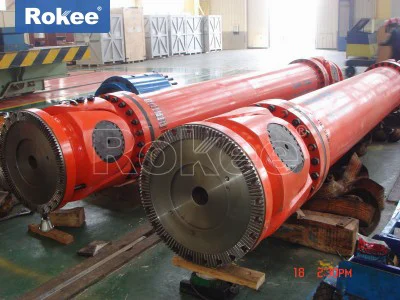
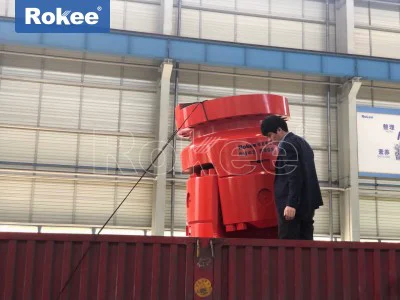
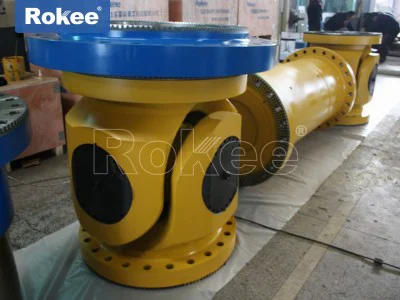
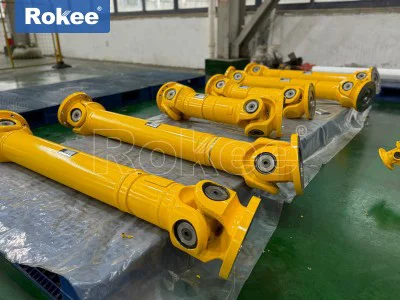
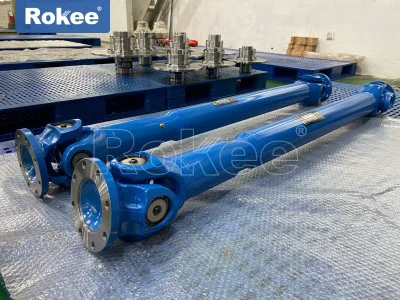
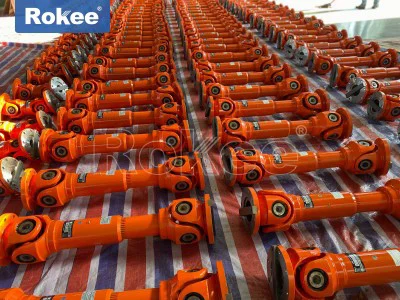
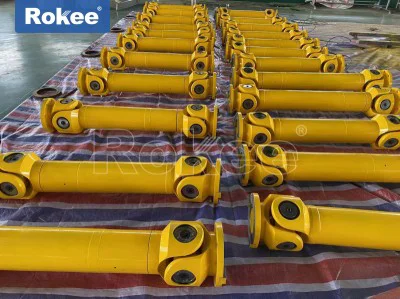
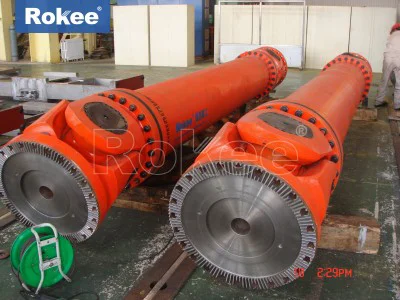
Universal Shaft Coupling For Steel Mill

Universal shaft couplings serve as indispensable core transmission components in modern steel mill production systems, undertaking the critical task of stably transferring rotational torque and mechanical power between misaligned driving and driven shafts throughout harsh metallurgical production processes. Steel manufacturing involves continuous high-load operation, frequent mechanical vibration, extreme temperature fluctuations, and complex structural displacement of rolling equipment, all of which place rigorous demands on the flexibility, durability, and transmission stability of connecting components. Unlike rigid transmission parts that struggle to adapt to shaft position deviations, universal shaft couplings feature a flexible spatial linkage structure that effectively compensates for angular, axial, and radial displacements generated during the long-term operation of rolling mills, smelting auxiliary equipment, and material conveying systems. By eliminating power transmission loss and mechanical jitter caused by shaft misalignment, these couplings prevent premature wear and structural damage to key production equipment, ensure uninterrupted operation of steel production lines, and greatly improve the overall operational reliability and production efficiency of industrial metallurgical systems.
The fundamental working mechanism of universal shaft couplings for steel mills relies on a precision-engineered flexible connection structure mainly composed of cross shafts, bearing assemblies, and paired joint forks, which enables consistent and efficient power transmission between non-coaxial shafts under dynamic operating conditions. During the steel rolling and metal forming process, the relative positional relationship between the power input shaft and the equipment working shaft is never completely fixed, as continuous mechanical vibration, thermal expansion and contraction of metal components, and long-term structural fatigue will produce varying degrees of shaft displacement and angular deflection. When the driving shaft rotates, it drives the active joint fork to perform circular motion, and the cross shaft assembly converts and transmits the rotational force to the driven joint fork through flexible pivoting and rolling movement of internal bearings. This unique structural operation mode allows the coupling to maintain stable torque output even with large-angle shaft misalignment, avoiding the transmission stagnation and mechanical impact common in rigid coupling structures. The smooth and flexible power transmission process effectively buffers instantaneous load shocks generated during steel mill equipment startup, shutdown, and load switching, protecting the entire transmission system from sudden mechanical damage and laying a solid foundation for long-term stable equipment operation.
Steel mill operating environments are characterized by extreme harshness, including sustained high temperatures from hot rolling processes, pervasive metal dust and oxide scale, splashing cooling lubricants, and continuous heavy mechanical loads, all of which test the environmental adaptability of universal shaft couplings. Professional couplings customized for steel metallurgical equipment adopt high-strength alloy materials with excellent high-temperature resistance and wear resistance, which can maintain stable mechanical properties without deformation or fatigue failure under long-term high-temperature radiation and heavy-load friction conditions. The internal bearing structures are equipped with enhanced sealing and dustproof designs that effectively isolate external dust, oxide particles, and liquid splashes, preventing abrasive wear and internal component corrosion caused by foreign matter invasion. In addition, the overall structural rigidity of the coupling is optimized to resist continuous mechanical vibration and alternating loads generated during high-speed rolling and heavy metal processing. This outstanding environmental adaptability enables the coupling to operate stably for a long time in complex metallurgical working conditions, greatly reducing the failure rate of transmission components and avoiding production downtime losses caused by component damage in continuous steel production lines.
The superior displacement compensation capability is the most prominent functional advantage of universal shaft couplings applied in steel mill equipment, distinguishing them from ordinary gear couplings and rigid connection parts. In the daily operation of steel rolling production lines, long-term mechanical operation will inevitably lead to tiny structural deformation of equipment bases and support components, resulting in cumulative angular deviation and axial offset between matched transmission shafts. Ordinary rigid couplings cannot adapt to such deviations, which will cause uneven load distribution during power transmission, aggravate local component wear, and even produce strong mechanical resonance that affects equipment operation accuracy. Universal shaft couplings, however, possess a wide-range angular compensation function and flexible axial floating capacity, which can automatically adapt to real-time changes in shaft position and angle during equipment operation. This dynamic compensation effect eliminates additional mechanical stress generated by shaft misalignment, ensures uniform and stable torque transmission, maintains the precision of steel rolling processing, and effectively extends the service life of the entire transmission system and matching mechanical equipment.
Universal shaft couplings cover a wide range of application scenarios in the full-process production of steel mills, penetrating core links from raw material processing to finished product forming. In the rough rolling and finishing rolling sections of steel production lines, the couplings connect the main drive motor and rolling mill rollers, stably transmitting high torque power to drive the rolling process of steel slabs and steel coils, adapting to the dynamic displacement of rollers during metal extrusion and deformation. In the auxiliary transmission system of smelting equipment, they are applied to the power connection of cooling conveying devices and sorting equipment, ensuring continuous and stable material transportation. Meanwhile, they also play a key role in heavy-duty shearing equipment and straightening machines in steel mills, buffering the instantaneous impact load generated during mechanical operation and maintaining the stability of equipment movement. For large-scale linked steel production units with complex transmission structures, multiple sets of universal shaft couplings can form a coordinated transmission system to adapt to multi-angle and multi-dimensional power transmission requirements, realizing seamless connection of various production links and supporting the continuous and efficient operation of large-scale steel production lines.
Reasonable structural design and precise manufacturing technology endow steel mill universal shaft couplings with high transmission efficiency and energy-saving performance, bringing significant economic benefits to industrial metallurgical production. The internal cross shaft and bearing matching structure adopts precision machining technology to minimize internal friction resistance during operation, ensuring that most of the power output by the drive system is efficiently transmitted to the working equipment without unnecessary energy loss. Compared with traditional transmission couplings with large friction loss and low stability, high-quality universal shaft couplings can effectively reduce invalid power consumption in the transmission process. In addition, the flexible transmission characteristic avoids mechanical clamping and power fluctuation caused by shaft misalignment, ensuring constant torque and speed output of rolling equipment, which not only improves the dimensional accuracy and surface quality of steel products but also reduces defective product rates caused by unstable equipment operation. The efficient and stable transmission performance optimizes the overall energy consumption structure of steel production lines, reduces long-term operating costs for enterprises, and improves the economic benefits and production competitiveness of steel manufacturing.
The maintenance convenience and long service life of universal shaft couplings make them highly suitable for high-intensity continuous production modes in steel mills. The overall structure of the coupling is modular and compact, with a simple and reasonable assembly relationship between internal components, which facilitates daily inspection, lubrication maintenance, and partial component replacement for equipment maintenance personnel. Unlike integrated transmission parts that require overall disassembly and replacement after local wear, the modular design allows targeted replacement of worn bearings, cross shafts, and sealing components, greatly reducing maintenance time and equipment shutdown cycles. The high-strength wear-resistant materials and optimized heat treatment process enhance the fatigue resistance and impact resistance of the coupling, enabling it to withstand long-term high-load and cyclic operation without rapid aging and failure. Regular standardized maintenance can further extend the service cycle of the coupling, reduce the frequency of equipment failure and replacement times, effectively lower the daily operation and maintenance costs of steel mills, and ensure the long-term stable and continuous operation of industrial production lines.
With the continuous upgrading and intelligent development of modern steel metallurgical industry, the performance requirements for universal shaft couplings are constantly improving, driving the continuous optimization and technological iteration of related products. Modern steel production is developing towards high-speed, high-precision, and large-capacity operation, putting forward higher standards for the load-bearing capacity, compensation accuracy, vibration resistance, and fatigue durability of transmission couplings. Advanced universal shaft coupling products are continuously optimized in structural design, adopting more streamlined force-bearing structures to improve torque density and transmission stability while reducing overall structural weight. At the same time, combined with advanced material technology and surface strengthening treatment processes, the high-temperature resistance, wear resistance, and corrosion resistance of the couplings are further improved to adapt to more extreme and efficient metallurgical production conditions. The continuous technological progress of universal shaft couplings not only meets the upgrading needs of modern steel mill equipment but also provides reliable core transmission support for the intelligent, efficient, and low-consumption development of the entire steel metallurgical industry.