Universal Shaft Coupling For Rolling Mill
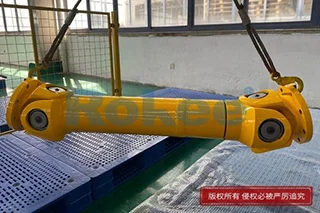
Universal shaft couplings are indispensable core transmission components in modern rolling mill systems, serving as the critical connecting medium between power drive units and rolling rolls in metal rolling production. Designed exclusively to adapt to the harsh and variable working environments of rolling mills, these flexible coupling devices differ vastly from ordinary rigid transmission parts, with prominent advantages in misalignment compensation, heavy-load torque transmission, and dynamic vibration absorption. In continuous rolling processes for steel, aluminum, and other metal materials, rolling mills frequently generate angular, axial, and radial shaft displacements due to thermal expansion, mechanical vibration, equipment wear, and rolling position adjustment. Universal shaft couplings effectively offset these deviations to maintain stable power transmission, avoid transmission jitter and equipment jamming, and ensure the continuity and precision of roughing, intermediate, and finishing rolling procedures.
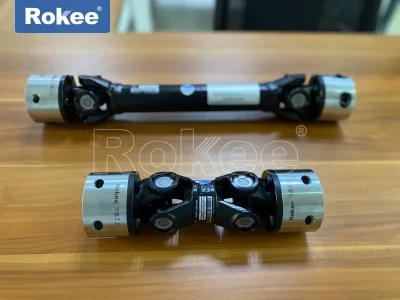
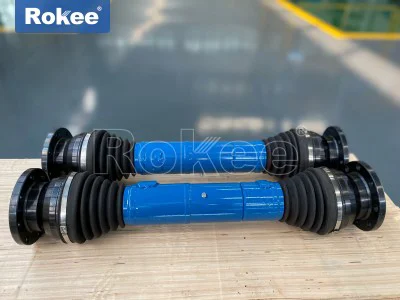
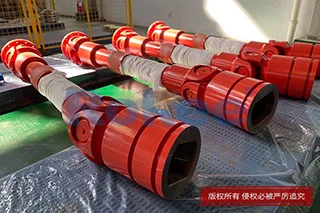
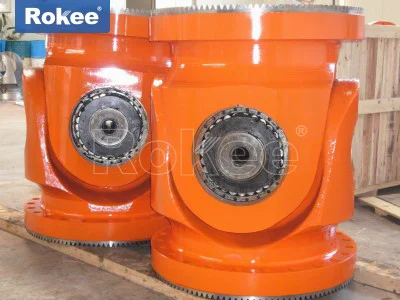
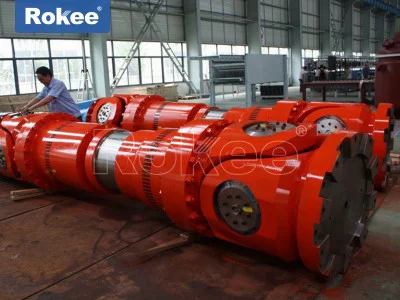
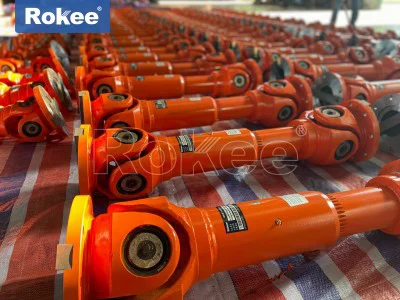
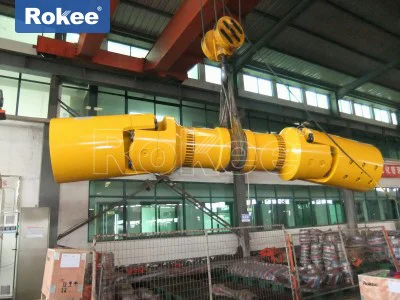
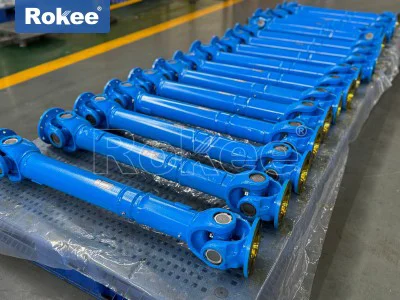
The overall structural design of rolling mill universal couplings follows a modular and high-strength integration concept, with every component optimized for heavy-load and long-cycle industrial operation conditions. The core structure mainly consists of universal joint yokes, cross shaft assemblies, precision rolling bearings, spline telescopic mechanisms, and integrated sealing protection components. The paired universal joint yokes form the basic swing connection structure, enabling multi-angle rotational deflection between the driving shaft and driven shaft, which lays the foundation for flexible misalignment compensation. The central cross shaft is the key force-bearing and transmission part, forged from high-performance alloy materials and processed through fine heat treatment and precision machining to balance surface hardness and internal toughness, resisting shear force and torsional impact generated during high-intensity rolling operation. The built-in rolling bearings reduce friction resistance during angular rotation, ensuring smooth and low-loss power transmission even under continuous deflection states. The spline telescopic structure independently realizes axial length compensation, adapting to shaft distance changes caused by equipment thermal deformation and mechanical displacement during rolling mill operation. Meanwhile, the fully enclosed sealing structure isolates internal precision components from external dust, metal debris, and cooling liquid, effectively preventing component wear and corrosion and extending the overall service life of the coupling.
The working principle of universal shaft couplings for rolling mills centers on flexible coordinated transmission under multi-dimensional misalignment conditions, realizing efficient and stable torque and rotational power output without rigid transmission constraints. In the actual operation of rolling mills, the power motor outputs rotational torque to the driving end of the coupling, and the cross shaft assembly transmits power to the paired driven yoke through the mutual pivoting action between the yoke and cross shaft. When the rolling mill produces angular deviation between the driving and driven shafts due to rolling pressure fluctuation, equipment vibration, or frame deformation, the universal joint structure can freely swing within the allowable angle range to maintain synchronous rotation of the two shafts without power interruption or transmission distortion. For axial displacement caused by thermal expansion of rolling mill parts or manual equipment debugging, the spline telescopic mechanism slides freely in the axial direction to adapt to shaft distance changes, avoiding tensile or compressive stress on the transmission system. In terms of radial deviation compensation, the cooperative deformation and swing of the double universal joint structure offset tiny radial offset errors generated by long-term equipment operation. This multi-dimensional flexible compensation mechanism fundamentally solves the defect of rigid couplings that are prone to stress concentration and structural damage under misalignment conditions, ensuring that the rolling mill maintains consistent rotational speed and torque output during variable working conditions, and providing stable power support for uniform metal rolling forming.
Universal shaft couplings for rolling mills possess unique core performance advantages that make them uniquely suitable for high-intensity metallurgical rolling production scenarios, far exceeding conventional transmission couplings in environmental adaptability and load resistance. First of all, they have excellent heavy-load impact resistance. The rolling process is accompanied by instantaneous peak load fluctuations caused by uneven metal billet hardness and unstable rolling pressure, and the high-strength integrated structure of the coupling can withstand repeated instantaneous torque impacts without structural deformation or fatigue damage, adapting to the continuous heavy-duty operation mode of rolling mills. Secondly, they feature outstanding multi-dimensional misalignment compensation capability, covering angular, axial, and radial displacements that are common in rolling mill operation, which greatly reduces the installation and operation accuracy requirements of transmission equipment and lowers the failure rate caused by shaft misalignment. In addition, the optimized friction structure achieves low energy consumption transmission. The precision bearing and polished cross shaft surface minimize rotational friction loss, improving the overall power transmission efficiency of the rolling mill system and reducing equipment operation energy consumption. Moreover, the integrated sealing and anti-corrosion design enables the coupling to stably operate in high-temperature, dusty, and humid rolling workshop environments, resisting oxidation, corrosion, and abrasive wear, and maintaining stable transmission performance in long-term continuous production.
In the hierarchical rolling process of modern rolling mills, universal shaft couplings show highly targeted application adaptability, matching the working characteristics of different rolling stages to support full-process efficient production. In the rough rolling stage, metal billets have large thickness and hard texture, requiring the rolling mill to output huge torque and withstand strong rolling impact. The high-load resistance of universal shaft couplings can fully bear the intense torque fluctuation and mechanical vibration in rough rolling, ensuring stable power output during primary metal shaping. In the intermediate rolling stage, the metal material is repeatedly rolled and thinned, and the rolling mill equipment needs frequent position adjustment and speed switching. The flexible compensation performance of the coupling can adapt to real-time changes in shaft alignment and operating state, avoiding transmission delay and jitter caused by equipment adjustment. In the finishing rolling stage that determines the final precision of metal products, the coupling’s stable and low-vibration transmission performance effectively controls rotational speed fluctuation, ensuring uniform metal plate thickness and smooth surface quality. Besides conventional hot rolling production lines, the coupling also adapts to cold rolling, profile rolling, and other diversified rolling scenarios, maintaining reliable transmission performance under low-temperature high-precision rolling and special-shaped material rolling conditions, and meeting the differentiated production needs of various metal processing industries.
Scientific daily maintenance and standardized operation are key to maintaining the long-term stable performance and extending the service life of rolling mill universal shaft couplings, forming a complete set of practical operation specifications suitable for industrial production. The core of daily maintenance lies in regular lubrication management. The internal bearing and cross shaft friction pairs need regular filling of high-performance lubricating grease suitable for heavy-load and high-temperature environments to reduce dry friction wear and avoid component ablation and clamping caused by insufficient lubrication under high-speed operation. It is necessary to regularly check the integrity of the external sealing structure, replace aging and damaged sealing parts in a timely manner, and prevent external dust, iron filings, and cooling water from entering the internal transmission structure to avoid abrasive wear and internal part corrosion. In routine equipment inspection, workers need to observe the operating state of the coupling, check for abnormal vibration, noise, and rotational jitter during operation, and judge whether there is excessive wear of the cross shaft, bearing clearance expansion, or spline structure jamming. Regular fastening of connecting parts is also essential to prevent bolt loosening caused by long-term vibration, which leads to transmission deviation and equipment failure. Meanwhile, regular disassembly and inspection of worn components and timely replacement of aging parts can effectively avoid sudden equipment shutdown failures and improve the continuous operation efficiency of the rolling mill.
The application of high-performance universal shaft couplings brings significant operational and economic value to rolling mill production systems, becoming an important guarantee for improving the overall production level of metallurgical enterprises. First, it greatly improves the operational stability of the rolling mill transmission system. The flexible compensation and vibration damping performance eliminate transmission stress concentration, reduce mechanical fatigue damage of rolling mill shafts, bearings, and other core parts, and significantly lower the overall equipment failure rate. Stable power transmission ensures consistent rolling process parameters, effectively improving the dimensional accuracy and surface quality of metal rolled products, reducing product defective rates, and enhancing product market competitiveness. Secondly, it reduces enterprise operation and maintenance costs. The durable structural design reduces the frequency of component replacement and equipment maintenance, while the stable operating state avoids production shutdown losses caused by transmission system failures, saving a large amount of manpower and material resource investment for equipment maintenance. In addition, the high-efficiency transmission characteristic reduces power energy loss in the transmission process, lowering the long-term energy consumption cost of rolling mill production. For continuous industrial rolling production, the reliable performance of universal shaft couplings also helps realize uninterrupted high-yield production, improving production efficiency and expanding the actual production capacity of enterprise production lines.
With the continuous upgrading of modern metallurgical rolling industry towards high precision, high efficiency, and intelligent operation, rolling mill universal shaft couplings are also evolving in structural optimization and performance upgrading to adapt to higher-end industrial production demands. The current development trend focuses on lightweight and high-strength structural optimization, adopting improved material processing and structural design to reduce the self-weight of the coupling while improving load-bearing capacity and fatigue resistance, reducing the extra load of the rolling mill transmission system. Intelligent adaptive design has gradually become a new development direction, with optimized structural response enabling the coupling to automatically adapt to more complex variable working conditions such as variable speed and variable load rolling. Meanwhile, the integration of wear-resistant, high-temperature resistant and anti-corrosion new materials further enhances the environmental adaptability and service life of the product, meeting the long-term stable operation needs of intelligent and unmanned rolling production lines. In the future, with the continuous progress of industrial manufacturing technology, universal shaft couplings for rolling mills will achieve higher transmission efficiency, stronger fault tolerance, and lower maintenance costs, providing more reliable core transmission support for the high-quality development of the global metal rolling processing industry.