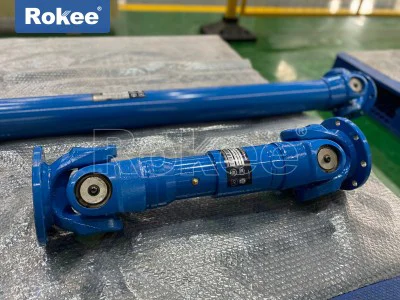
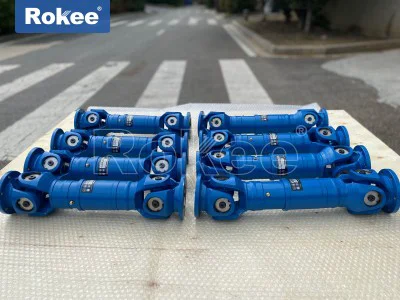
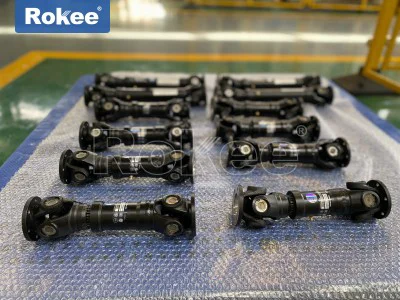
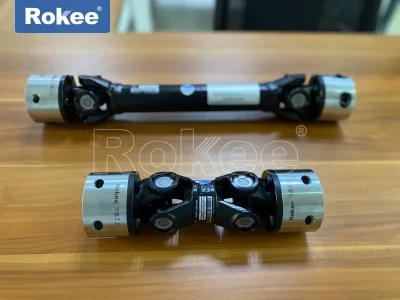
High Speed Universal Shaft Coupling

High speed universal shaft coupling is a core mechanical transmission component optimized for high-velocity operational scenarios in modern industrial systems, serving as a critical connecting medium for rotating shafts with spatial misalignment and dynamic position changes. Unlike conventional ordinary couplings that are only suitable for low-speed and stable working conditions, this specialized coupling integrates flexible displacement compensation and high-stability torque transmission capabilities, perfectly adapting to the high rotating speed, frequent dynamic vibration and complex shaft offset states of precision mechanical equipment. It mainly relies on exquisite spatial linkage structure design to realize continuous and uniform power transmission while effectively offsetting angular deviation, radial displacement and axial movement between connected shafts. Widely applied in precision automation, numerical control machinery, high-speed conveying and intelligent robotic equipment, it solves the core problem of unstable power output and component wear caused by shaft misalignment in high-speed operation, and has become an indispensable basic component for ensuring high-efficiency and long-term stable operation of high-end transmission systems.
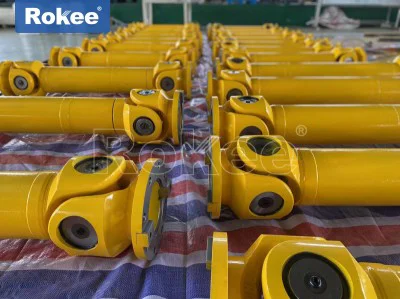
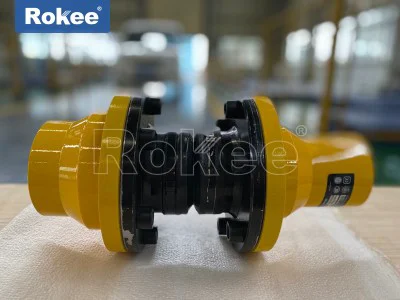
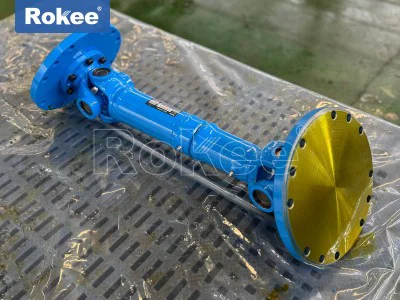
The structural design of high speed universal coupling is the fundamental guarantee for its excellent high-speed operation performance, which is elaborately optimized based on the spatial kinematic principle of mechanical transmission. The core structure is composed of cross shaft components, precision rolling bearings, high-rigidity fork heads and telescopic connecting structures, and all parts are matched with high-precision assembly processes to reduce internal running resistance during high-speed rotation. The cross shaft, as the central force-bearing and transmission unit, adopts an integrated forging structure to ensure overall rigidity, and its four vertical shaft ends form a mutually perpendicular kinematic pair with the bearing components on both sides of the fork heads. This unique structural layout enables the coupling to retain multi-dimensional motion freedom while transmitting torque, realizing real-time compensation of various misalignment errors generated during equipment operation. Different from low-speed universal couplings, the internal gap of high-speed models is strictly controlled within a tiny range, which effectively avoids eccentric rotation and additional centrifugal force caused by excessive gaps at high rotating speeds. Meanwhile, the streamlined outer contour design reduces air resistance and wind noise during high-speed operation, further improving the smoothness of the entire transmission system and preventing periodic jitter that affects equipment precision.
The working principle of high speed universal shaft coupling centers on flexible spatial motion transmission and dynamic error compensation, enabling stable power output under extreme high-speed operating conditions. When the driving shaft runs at a high speed, it drives the connected fork head to perform continuous rotary motion, and the cross shaft converts the single-plane rotary motion of the driving end into multi-dimensional spatial swing motion. This motion is then synchronously transmitted to the driven end fork head and shaft body, realizing continuous torque and power transmission between the two misaligned shafts. In this process, the precision bearings installed at the ends of the cross shaft can flexibly adapt to the angle change and position offset between the shafts, automatically eliminating the transmission dead angle and speed fluctuation that are common in ordinary couplings during high-speed operation. For working conditions with dynamic changing shaft offset, the optional telescopic structure of the coupling can freely stretch and retract in the axial direction, buffering the axial displacement generated by equipment thermal expansion and mechanical vibration. This real-time adaptive adjustment mechanism ensures that the transmission ratio remains highly consistent at high speeds, avoiding power loss and transmission accuracy attenuation caused by shaft position deviation, and maintaining the synchronization and stability of the entire transmission link for a long time.
Material selection determines the service life, high-speed stability and environmental adaptability of high speed universal shaft coupling, and professional high-performance materials are specially selected to match high-velocity working requirements. The main body and cross shaft components usually adopt high-strength alloy steel materials with excellent toughness and fatigue resistance, which can withstand long-term alternating load and centrifugal force impact generated by high-speed rotation without structural deformation or metal fatigue damage. The surface of key components is treated with precision quenching and anti-wear coating processes, which significantly improves surface hardness, reduces friction coefficient, and effectively suppresses abrasive wear and thermal wear during high-speed relative motion. The internal rolling bearings are made of high-precision bearing steel, with ultra-low friction characteristics and high-temperature resistance, ensuring flexible rotation and stable load bearing under continuous high-speed operation. In addition, the auxiliary sealing parts adopt high-elasticity and aging-resistant polymer materials, which can isolate external dust, moisture and fine impurities, prevent internal friction pairs from being polluted and worn, and avoid transmission jitter caused by component abrasion. The scientific material matching scheme greatly reduces the failure rate of the coupling in high-speed continuous operation, and realizes long-term stable operation with low wear and low energy consumption.
High speed universal shaft coupling possesses multiple unique performance advantages that distinguish it from traditional coupling products, making it highly adaptable to high-end industrial transmission scenarios. Its most prominent advantage is excellent high-speed operation stability, which can maintain smooth and vibration-free operation under long-term high rotating speed conditions, with extremely low transmission error and speed fluctuation. Compared with rigid couplings, it has superior multi-directional displacement compensation capability, which can simultaneously cope with angular, radial and axial misalignment of shafts, and adapt to position changes caused by equipment operation vibration and thermal deformation. Different from flexible couplings with limited torque bearing capacity, it balances flexibility and rigidity, ensuring both flexible error compensation and high-efficiency torque transmission without power attenuation. Moreover, the optimized internal friction structure greatly reduces operating noise and heat generation, avoiding performance degradation caused by excessive temperature rise during high-speed continuous work. The compact and integrated structural design also saves installation space, simplifies the assembly and disassembly process, and reduces daily maintenance difficulty. These comprehensive performance advantages make it far more suitable for high-precision and high-speed transmission systems than conventional coupling products.
The application scenarios of high speed universal shaft coupling cover numerous high-precision and high-speed industrial equipment fields, providing reliable transmission support for modern intelligent manufacturing systems. In numerical control processing equipment, it is applied to the high-speed feed transmission system of machine tools, ensuring precise and synchronous motion of the transmission shaft during high-speed cutting and feeding, and improving the processing accuracy and surface quality of workpieces. In automated packaging and printing machinery, the coupling adapts to the high-frequency and high-speed continuous operation state of the equipment, maintaining stable power transmission of the conveying and transmission mechanism, and avoiding product positioning deviation caused by transmission jitter. In intelligent robotic equipment, it serves the joint transmission and power output structure of robots, realizing flexible and accurate motion conversion under high-speed dynamic operation. In addition, it is also widely used in high-speed conveying equipment, precision testing instruments and semiconductor production equipment, adapting to the high-precision and high-stability operation requirements of various sophisticated mechanical systems. Its strong scenario adaptability makes it a key transmission component in the upgrading of modern industrial intelligent equipment.
Daily maintenance and reasonable application management are crucial to extend the service life and maintain the high-speed performance of universal shaft couplings, forming a complete set of standardized use specifications. In the daily operation process, regular visual inspection of the coupling’s appearance and operating state is required to check for abnormal vibration, noise and local overheating during high-speed operation, and timely eliminate hidden dangers such as loose assembly and component abrasion. It is necessary to regularly supplement and replace high-speed special lubricating grease for internal bearing and friction pairs, to ensure low-friction operation of internal components and prevent dry friction and high-temperature wear caused by insufficient lubrication. During equipment startup and operation, avoid instantaneous overload and excessive speed surge, so as to prevent the coupling from bearing instantaneous impact load and causing structural fatigue damage. In terms of storage and standby management, the coupling should be placed in a dry and dust-free environment to avoid rust and aging of components caused by humid and corrosive environments. Regular cleaning of surface dust and impurities can prevent foreign matters from entering the internal transmission structure and affecting high-speed operation stability. Standardized maintenance can effectively maintain the original precision and transmission performance of the coupling, and realize long-term reliable cycle operation.
With the continuous upgrading of modern industrial manufacturing towards high precision, high efficiency and intelligentization, the technical iteration and performance optimization of high speed universal shaft coupling are also advancing continuously. The current development trend focuses on structural lightweight and high rigidity integration, adopting optimized topological structure design to reduce the overall weight of the coupling while improving structural strength, further reducing centrifugal force and operating energy consumption during high-speed rotation. Precision manufacturing technology is also constantly upgraded, and ultra-precision machining and micro-gap assembly processes are applied to further reduce transmission backlash and improve high-speed transmission accuracy. In addition, the application of new composite materials gradually replaces traditional single metal materials, improving high-temperature resistance, wear resistance and corrosion resistance of the coupling, and expanding its adaptable extreme working conditions. Intelligent optimization has also become a new development direction, and the coupling with built-in vibration and temperature sensing functions can realize real-time monitoring of operating state, helping equipment users realize predictive maintenance. These technological innovations will further expand the application boundary of high speed universal shaft coupling and meet the increasingly stringent performance requirements of high-end industrial transmission systems.