Universal Joint Coupling For Mixer
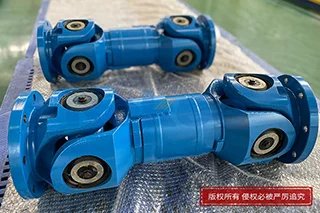
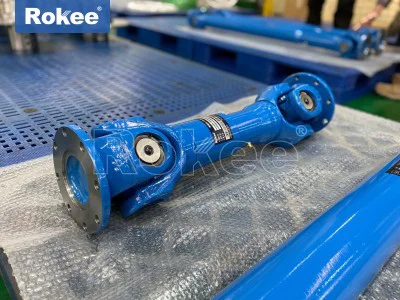
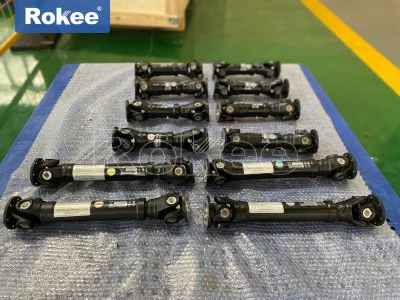
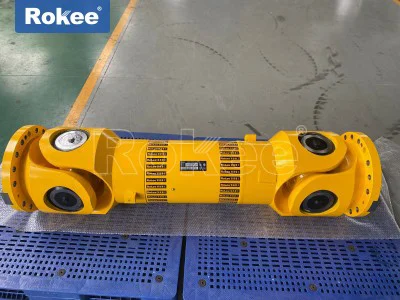
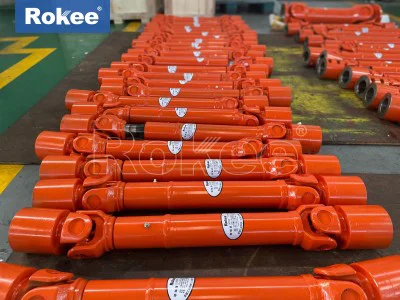
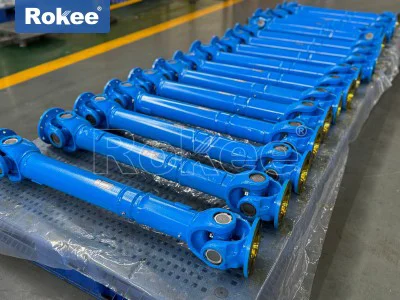
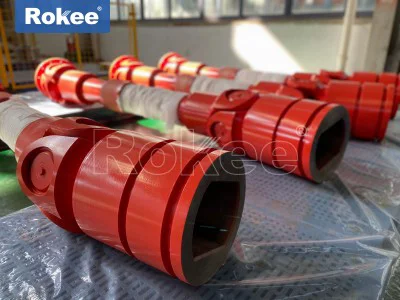
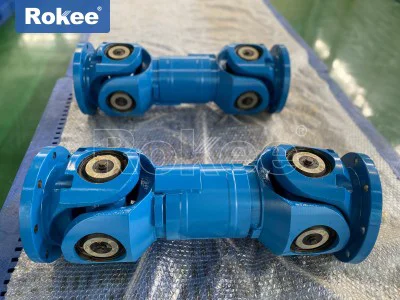
Universal joint coupling, frequently referred to as U-joint or Cardan joint, serves as a vital transmission interface between drive motors and mixing impellers in industrial mixing systems. Mixing equipment operates under complex working conditions that few conventional coupling designs can fully accommodate, and this is where universal joint couplings demonstrate unique practical value. In many mixer configurations, the vertical shaft of the mixing tank and the output shaft of the drive unit cannot maintain perfect coaxial alignment permanently. Installation deviations, structural deformation of tank shells under liquid weight, thermal expansion of metal components, and dynamic deflection caused by stirring resistance all introduce angular displacement between connected shafts. Rigid couplings cannot absorb such misalignment, which transfers extra bending stress directly onto bearings, shafts and motor housings, accelerating fatigue cracking and unexpected shutdowns. Basic elastic couplings can compensate for minor misalignment, yet their torque carrying capacity is insufficient for heavy-duty mixing processes with thick slurries, high solid content and strong stirring resistance. The universal joint coupling fills this technical gap by adopting an articulated mechanical structure, which transmits rotational torque continuously while permitting controlled angular deflection between input and output shafts. Its basic assembly consists of two yoke components fixed separately to the driving shaft and driven shaft, with a cross-shaped spider fitted between the yokes through precision bearing assemblies. As the driving yoke rotates, the cross spider carries out compound rotary and swinging movement, transferring power to the driven yoke without locking the two shafts into a fixed straight line. This mechanical characteristic makes it a preferred transmission solution for many mixer systems where shaft alignment cannot stay ideal throughout operation.
The internal working mechanism of universal joint coupling for mixers needs to be understood together with the dynamic load features of mixing operations. When a mixer starts, the impeller encounters substantial resistance from the medium, generating peak torque that passes through the coupling to the motor. During steady operation, uneven flow patterns inside the tank create periodic fluctuating loads on the impeller shaft, and these cyclic forces propagate upward along the transmission chain. A single universal joint produces periodic fluctuation in the angular velocity of the driven shaft when operating at an angular offset, which becomes more obvious as the deflection angle increases. This speed oscillation may introduce cyclic vibration and impact loads on mixer shafts, so most heavy mixing systems adopt double universal joint layouts, arranging two joint sections in series to counteract the speed variation from each individual joint. When properly phased during assembly, the acceleration and deceleration effect of the first joint offsets the fluctuation of the second one, achieving near-constant velocity transmission to the mixer impeller shaft. The cross spider and bearing trunnions bear sliding and rolling composite friction while swinging within the yoke openings. Lubricating films between bearing surfaces reduce metal contact and frictional heat generation. In mixer applications, the coupling must handle not only static installation misalignment but also dynamic angle changes that emerge as liquid levels rise and fall, altering the force distribution on the tank structure and stirring shaft. Such continuous angular adjustment capability distinguishes universal joint couplings from other transmission parts and enables stable torque delivery even when the relative position of motor and mixing shaft shifts slightly during operation.
Material selection directly shapes the service performance and durability of universal joint couplings deployed on mixing equipment. Mixing environments vary widely, from clean low-viscosity liquid blending to abrasive slurry mixing and mildly corrosive fluid processing. The primary structural components including yokes and cross spiders are usually fabricated from high-strength forged metal materials, which can withstand repeated torque shocks and bending loads without plastic deformation. Forged structures deliver uniform internal material texture and better fatigue resistance compared with cast alternatives, which is critical for mixers experiencing frequent startup and shutdown cycles. Bearing surfaces on the cross spider receive special surface treatment to enhance hardness and wear resistance against continuous oscillatory motion. Sealing structures are integrated into the coupling assembly to block foreign particles from entering the bearing cavities. Fine solid particles suspended in mixing media can drift into surrounding air space and infiltrate mechanical joints; once abrasive dust gets into bearing gaps, it scratches contact surfaces, destroys lubrication layers and accelerates clearance growth. In environments with moisture or chemical vapors, protective surface treatments reduce the risk of surface oxidation and corrosion. Material choices also balance strength and weight. Excessively heavy coupling components raise rotating inertia, increasing startup load and system vibration. Too light structures may lack sufficient rigidity and deform under heavy torque. Engineers evaluate maximum operating torque, cyclic load characteristics, environmental contaminants and temperature variation when selecting suitable material combinations for mixer universal joint couplings.
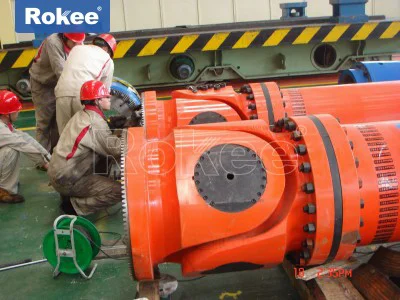
The installation process of universal joint coupling for mixers requires careful attention to alignment, phase positioning and fastening quality, which have decisive impacts on equipment service life. Before mounting, all contact surfaces of flanges, yokes and spline sections must be thoroughly cleaned to eliminate metal chips, grease residues and dirt that can affect fitting accuracy. When assembling double universal joint configurations, the phase relationship between the two yokes must be correctly oriented. Incorrect phase setting leads to superimposed speed fluctuation, obvious vibration, noise and repeated impact loads on mixer shafts and bearings. Technicians check the angular offset between shafts to ensure the working angle remains within the designed operating range. Although universal joint couplings tolerate angular misalignment, excessive deflection amplifies bearing friction, heat generation and wear rate. Shaft parallel offset and axial displacement also need evaluation, and some versions include telescopic spline segments to absorb axial movement caused by thermal expansion. After positioning the coupling, fasteners are tightened evenly following a proper sequence to avoid uneven clamping force that distorts flange faces. Once installation completes, manual rotation testing is carried out to verify smooth movement without jamming or abnormal friction. A trial run at low speed follows to observe vibration level, noise and temperature changes. Minor alignment adjustments can still be implemented at this stage. Improper installation is one of the leading causes of premature coupling failure in mixing equipment. Even high-quality coupling components will suffer early damage if installed without respecting the mechanical rules of universal joint transmission.
Comparing universal joint couplings with other coupling types helps clarify the suitable application boundaries for mixer transmission systems. Rigid couplings require extremely precise shaft alignment and cannot compensate for any angular displacement. They work well only when motor and mixing shaft maintain fixed coaxial positions permanently, a condition difficult to sustain in large mixing tanks under variable liquid load. Elastomeric couplings rely on flexible rubber or polymer elements to absorb minor misalignment and vibration, but their torque capacity is limited. Under heavy stirring torque, flexible elements may deform excessively or tear, and they are vulnerable to aging, swelling or degradation when exposed to certain solvents and high temperatures. Gear couplings offer large torque capacity and limited misalignment compensation, yet they need regular lubrication and are sensitive to contamination; gear tooth wear generates metal debris that may enter mixing vessels in some layout designs. Universal joint couplings stand out because they combine high torque transmission capacity and strong angular misalignment compensation. Still, they are not ideal for every mixer scenario. Their articulated bearing structure cannot absorb torsional vibration as effectively as elastomeric couplings. In applications where strong torsional damping is prioritized, universal joint couplings may be paired with other vibration-reducing components. Understanding these tradeoffs allows designers to select the proper coupling solution according to the specific mixing medium, load pattern and layout constraints of each mixer unit.
Vibration control is a key topic when applying universal joint couplings on mixers, because mixing systems contain multiple vibration sources that interact with coupling dynamic behavior. Fluid turbulence inside the tank creates irregular forces on the impeller, transmitting vibration upward to the stirring shaft and coupling assembly. Imbalance of rotating parts, shaft bending and misalignment also contribute to mechanical vibration. Single universal joints generate periodic excitation forces when operating at angular deflection. Double Cardan designs reduce this excitation, but they do not eliminate vibration completely if the working angle is too large. Excessive vibration loosens fasteners, damages bearing assemblies and can even resonate with the natural frequency of tank structures, causing severe damage. Operators monitor vibration amplitude at motor bearings, coupling housings and mixing shaft supports during equipment operation. Rising vibration levels often serve as an early warning sign of coupling problems, such as bearing wear, increased internal clearance or changed shaft alignment. Dynamic balancing of coupling rotating parts during manufacturing helps reduce inherent mass imbalance. Proper support for the mixing shaft also lowers lateral deflection and reduces the working angle of the universal joint. In some mixer installations, support bearings are arranged near the coupling to restrict shaft wobble and stabilize the transmission system. Managing vibration is not only about selecting the coupling itself but also optimizing the whole mechanical layout surrounding the coupling.
Lubrication and sealing systems directly determine the operating lifespan of universal joint couplings on mixing equipment. The cross spider and bearing trunnions perform continuous oscillatory motion during rotation, and lubricant forms a protective film between contact surfaces to separate metal parts, reduce friction and dissipate heat. Without adequate lubrication, dry friction quickly wears bearing surfaces, enlarges internal clearances and creates impact noise during rotation. Grease lubrication is widely adopted for mixer universal joint couplings due to its convenient sealing structure and stable performance under moderate temperature changes. Lubricant selection takes ambient temperature, operating speed and environmental contaminants into consideration. Over time, lubricant degrades, loses viscosity and becomes contaminated by fine particles, so scheduled replenishment and replacement are necessary. Seals prevent lubricant leakage and block dust, slurry droplets and chemical vapors from entering bearing chambers. Seal materials must resist erosion from surrounding substances. Damaged seals allow contaminants to infiltrate bearing cavities, accelerating wear far faster than normal operation. Inspection routines include checking for grease leakage around seal edges and verifying seal integrity. If leakage is detected, timely maintenance prevents progressive damage to internal joint components. In remote or difficult-to-access mixer installations, sealed-for-life coupling designs reduce maintenance workload, though they remain unsuitable for extreme operating conditions where seal failure risk is high.
Typical failure modes of universal joint couplings in mixer systems can be identified through regular equipment inspection, and early recognition avoids catastrophic breakdown. The most common failure occurs at bearing trunnions of the cross spider. Long-term oscillatory load causes surface wear, pitting and fatigue cracks. As bearing clearance grows, the coupling develops play, producing knocking sounds during startup and load variation. Another frequent failure happens to sealing elements, where aging or abrasion creates gaps that admit contaminants. Fastener loosening represents another risk point; cyclic vibration gradually reduces clamping force, leading to flange shifting and uneven load distribution. In severe cases, bolts may fall off and disconnect power transmission. Excessive working angle is a root cause behind many failures, which amplifies bearing stress, friction heat and cyclic loading. Improper handling during maintenance can also introduce damage, such as hitting yoke surfaces or misaligning spline sections during reassembly. Visual inspection can reveal surface corrosion, cracks and seal damage. Vibration and temperature monitoring provide indirect indicators of internal wear. Once abnormal signs appear, shutdown inspection should be arranged before small defects escalate into complete coupling fracture. Timely identification of failure precursors protects not only the coupling itself but also expensive mixer shafts, impellers and drive motors from secondary damage caused by sudden transmission interruption.
Maintenance planning for universal joint couplings on mixers should integrate routine inspection, periodic servicing and component replacement strategy. Daily observation focuses on abnormal noise, vibration and lubricant leakage. During scheduled shutdown periods, technicians disassemble protective covers to examine joint surfaces, seal conditions and bolt tension. They check the clearance of cross spider bearings and look for fatigue marks on yoke and cross components. Lubricant samples may be examined to detect solid particles, which indicate accelerated bearing wear. Maintenance intervals depend on operating hours, load severity and environmental conditions. Mixers running continuously with heavy slurry loads require more frequent checks than units operating intermittently with clean liquid media. During maintenance, components must be cleaned thoroughly before reassembly. Worn cross spiders, bearings and damaged seals are replaced rather than reused, even if visible damage seems minor. Reused worn parts often fail quickly after restarting. Maintenance records track operating hours, lubrication cycles, component replacements and abnormal events. These records help identify wear trends and adjust inspection frequency. Training for maintenance personnel is equally important, as incorrect disassembly or reassembly can damage coupling geometry and destroy phase alignment, introducing hidden risks that emerge only after equipment returns to service.
Looking ahead, universal joint coupling designs for mixer applications keep evolving to match increasingly demanding mixing processes. Design improvements focus on optimizing internal geometry to reduce friction loss and cyclic stress distribution, extending service life under heavy fluctuating torque. Advanced sealing structures are developed to handle environments with fine abrasive solids and chemical mists, lowering contamination risk. Modular construction simplifies part replacement, allowing worn internal inserts to be changed without removing the entire coupling assembly from the mixer shaft. Computational simulation tools analyze stress distribution, thermal buildup and dynamic vibration response under real mixing load cycles, supporting refined structural optimization before physical prototypes are built. While universal joint couplings maintain core mechanical principles established for a long time, material advancement and precision manufacturing continue to expand their usable range. Even with these improvements, proper selection, precise installation and disciplined maintenance remain essential. For industrial mixing systems, universal joint couplings will continue to serve as a reliable transmission solution in scenarios where shaft misalignment cannot be fully eliminated, balancing high torque capacity and angular compensation capability to support stable mixing operation across diverse industrial processes.