Cardan Drive Shaft Balancing

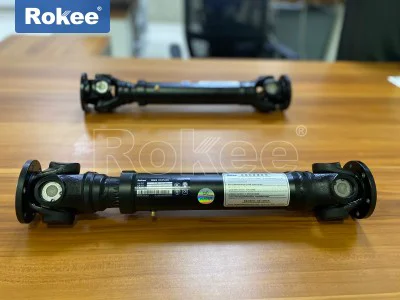
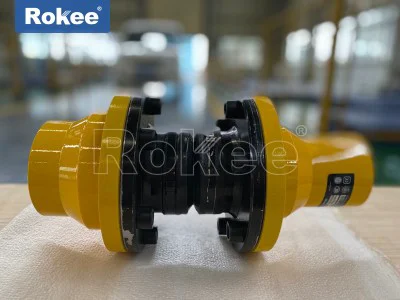
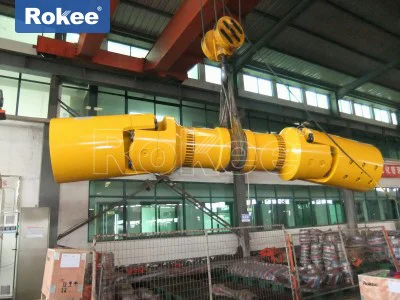
Cardan drive shaft balancing is a core mechanical optimization process designed to correct uneven mass distribution on universal joint drive shafts, ensuring stable and smooth rotational operation during power transmission. As a key component connecting power output and execution systems in mechanical transmission structures, cardan drive shafts operate under continuous high-speed rotation and alternating load conditions, where even minor mass asymmetry can generate unbalanced centrifugal forces. These subtle imbalances often remain unnoticeable at low speeds but amplify exponentially with rising rotational speed, triggering mechanical vibration, operational noise, and abnormal component wear. Professional balancing eliminates such structural defects by detecting mass offset positions and implementing precise weight correction, effectively stabilizing shaft rotation trajectories. This process not only improves the overall operational smoothness of transmission systems but also reduces additional mechanical stress on connected parts, extending the service life of the entire drive assembly and maintaining consistent mechanical operating efficiency in long-term working scenarios.
The fundamental cause of cardan driveshaft imbalance stems from inevitable structural and manufacturing deviations that occur throughout production, processing, and assembly stages. During the forging, cutting, and welding processes of drive shaft blanks, slight differences in material density and machining precision can create inconsistent mass distribution across the shaft body. Minor dimensional deviations in tube wall thickness, tiny surface irregularities from finishing processes, and subtle assembly offsets of universal joint components further accumulate to form inherent imbalance. Unlike static mass deviation, drive shaft imbalance is a dynamic problem closely linked to rotational motion. When the unbalanced shaft rotates, offset mass generates periodic centrifugal force, which acts as a continuous alternating load on bearings, supports, and universal joint structures. As rotational speed increases, the vibration amplitude caused by unbalanced forces rises sharply, leading to shaft wobble and operational jitter. Over time, these abnormal mechanical motions gradually loosen connecting structures, aggravate friction loss of moving parts, and even induce structural fatigue damage, making dynamic balancing an indispensable process before the formal service of new drive shafts and a necessary maintenance measure for in-service components.
The core working principle of cardan drive shaft balancing revolves around dynamic mass calibration and centrifugal force offset, distinguishing clearly from simple shaft alignment. Shaft alignment focuses on adjusting the installation angle and positional relationship between the drive shaft and matching components to ensure linear power transmission, while balancing targets the internal mass uniformity of the rotating shaft itself. In the balancing process, professional equipment captures the vibration frequency and amplitude generated by shaft rotation at set speeds, accurately locating heavy and light mass areas on the shaft body. Since cardan drive shafts are slender rotating structures, single-plane static correction cannot eliminate coupled torque generated by asymmetric mass at both ends, so dual-plane dynamic balancing is adopted to address both net force and torque imbalance simultaneously. By adding precision counterweights or removing excess material at detected deviation positions, the shaft’s overall mass center of gravity is aligned with its rotational axis. This calibration eliminates irregular centrifugal force output during rotation, realizing steady, low-vibration operation of the drive shaft under various speed conditions.
A complete cardan drive shaft balancing workflow follows standardized operational steps to ensure high-precision correction results, starting with pre-inspection and preparation. Before balancing, technicians conduct a comprehensive visual and structural inspection of the drive shaft assembly, checking for surface deformation, structural damage, loose universal joint parts, and abnormal shaft bending, as damaged or deformed components are excluded from balancing to avoid invalid correction. The drive shaft is then fixed on professional balancing equipment with stable clamping to ensure no positional offset during high-speed rotation testing. The equipment drives the shaft to rotate at simulated operating speeds, collecting real-time vibration data and rotational deviation signals through high-sensitivity sensors. The system analyzes the collected data to calculate the exact position and weight of unbalanced mass, forming a targeted correction scheme. Subsequent correction operations include welding fixed counterweights or installing adjustable clamping weights at designated positions, with fine material removal adopted for minor deviations. After correction, the shaft is re-tested repeatedly until the rotational imbalance index meets operational requirements.
Long-term operational wear and environmental factors are major causes of recurring imbalance in in-service cardan shafts, making regular balancing maintenance essential. During continuous mechanical operation, drive shafts bear frequent alternating loads, torsional force, and mechanical impact, leading to gradual wear of surface structures and universal joint parts. Local wear causes subtle changes in shaft mass distribution, while long-term high-speed operation may produce tiny surface scratches and material peeling that further aggravate imbalance. In addition, external environmental factors such as dust adhesion, oil dirt accumulation, and minor structural deformation caused by temperature changes can disrupt the original balanced state of the shaft. Unlike sudden mechanical failures, imbalance deterioration is a gradual cumulative process. Early-stage subtle imbalance only causes slight vibration without obvious operational impact, but prolonged uncorrected operation accelerates the wear of bearings and universal joints, increases transmission system energy consumption, and may trigger resonance under specific speed conditions, leading to severe mechanical jitter and structural damage. Regular balancing maintenance can timely eliminate cumulative imbalance faults and restore optimal transmission performance.
The performance benefits of precise cardan drive shaft balancing cover multiple dimensions of mechanical operation, component protection, and efficiency optimization. The most intuitive effect is the significant reduction of operational vibration and noise; calibrated drive shafts maintain stable rotational trajectories, eliminating jitter and resonant noise caused by unbalanced centrifugal force, thus improving the overall operational stability of mechanical equipment. Stable rotation effectively reduces abnormal friction and impact loads on bearings, supports, and universal joint components, slowing component wear and fatigue aging, and greatly extending the service cycle of the entire drive transmission system. Balanced drive shafts also achieve more efficient power transmission, as unbalanced rotation causes partial power loss in offset motion and vibration, while precise mass calibration ensures power is fully transmitted along the set axis, reducing invalid energy consumption. Moreover, eliminating periodic alternating structural stress avoids loose connection gaps and structural deformation caused by long-term vibration, reducing the probability of sudden mechanical failures and improving the safety and stability of equipment operation in complex working conditions.
In practical balancing operations, mastering key technical details and avoiding common errors is critical to ensuring correction accuracy and long-term stability. A typical operational mistake is ignoring pre-inspection of shaft structural deformation; slightly bent drive shafts cannot achieve long-term balance even after weight calibration, as structural bending will continuously generate new rotational deviation during operation. Another common error is inaccurate equipment clamping, where unstable fixation leads to vibration data distortion during testing, resulting in incorrect imbalance position judgment and ineffective correction. In addition, unreasonable counterweight installation positions and excessive or insufficient correction weight will fail to completely offset unbalanced force, or cause new mass deviation on the shaft. It is also necessary to avoid over-correction in pursuit of extreme balance data, as excessive weight adjustment may affect the structural uniformity and mechanical strength of the shaft body. Professional balancing requires combining the actual operating speed and load characteristics of the drive shaft to formulate targeted correction schemes, ensuring the balanced state can adapt to diverse working conditions and maintain stable performance for a long time.
With the continuous upgrading of mechanical transmission technology, cardan shaft balancing technology is evolving toward higher precision, higher efficiency, and wider adaptability to meet the demands of modern high-speed and high-load mechanical equipment. Traditional balancing processes rely on single fixed-speed detection and correction, while modern balancing systems adopt multi-speed dynamic detection technology, which can capture imbalance changes under different operating speeds and realize comprehensive correction of full-speed-range rotational stability. Intelligent data analysis systems can automatically identify subtle imbalance deviations that are difficult to detect manually, improving correction accuracy and operational efficiency. Meanwhile, emerging lightweight correction materials and flexible counterweight installation methods avoid damage to the shaft surface structure, maintaining the original mechanical performance of the drive shaft while achieving precise balancing. As core transmission components are widely used in various mechanical equipment, standardized and refined balancing processes will continue to optimize the reliability and durability of cardan drive shafts, providing stable technical support for the efficient and safe operation of mechanical transmission systems in diverse industrial scenarios.