Cardan Coupling for Packaging Machines

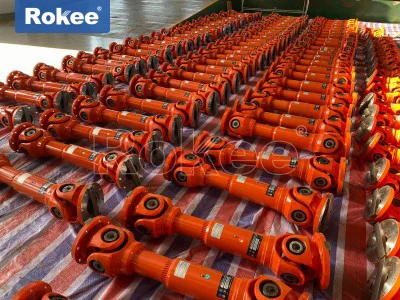
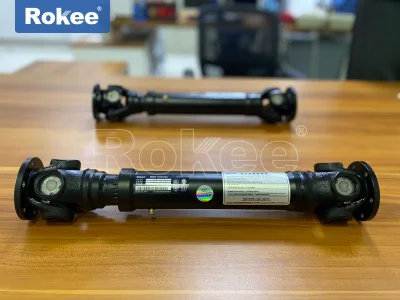
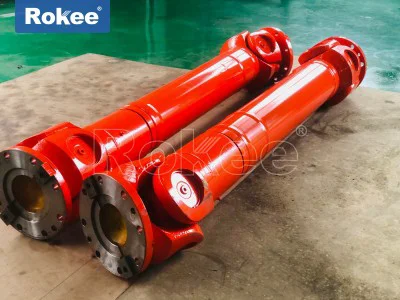
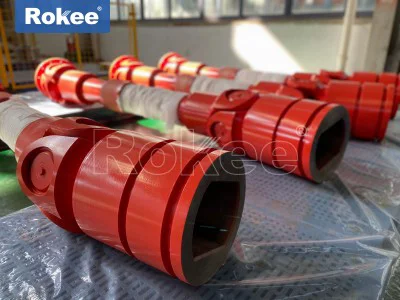
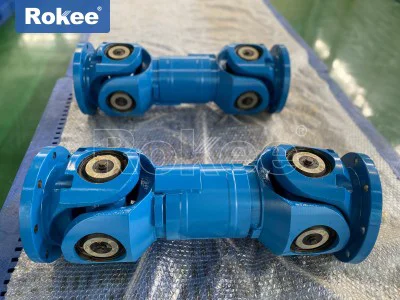
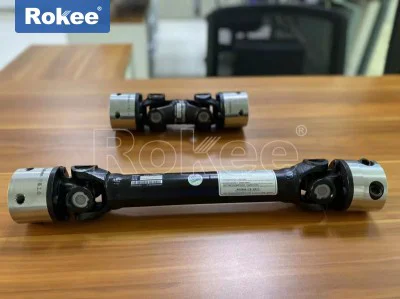
Packaging machinery operates in a dynamic environment where motor drives, conveyor rollers, film feeding assemblies, and sealing mechanisms rarely maintain perfectly collinear shaft alignment over long production runs. Even minor shifts in machine frames from vibration, thermal expansion, or routine mechanical adjustments can place heavy stress on rigid shaft connections, leading to premature bearing wear, broken shafts, and unexpected downtime. The Cardan coupling, also widely known as a universal joint, has emerged as a practical mechanical solution to resolve this challenge, enabling torque and rotary motion transfer between two shafts with controlled angular misalignment. Its basic construction relies on two fork-shaped yokes fixed separately to the driving and driven shafts, connected by a cross-shaped spider component fitted with needle roller bearings at each arm. As the driving yoke rotates, it moves the cross spider, which in turn transfers rotation to the second yoke, allowing the two shafts to rotate smoothly even when their central axes form an angle. Unlike many flexible couplings that only accommodate small parallel or axial displacement, the Cardan coupling is built specifically for angular deflection, a feature that fits naturally within the compact, multi-axis layout of packaging lines. For packaging equipment designers, this means they can arrange drive components without forcing all rotating parts into a single straight line, opening up more options for machine layout, compact frame design, and easier integration of auxiliary actuators and material transport modules. This simple yet robust mechanical concept has kept the Cardan coupling relevant across decades of packaging machine development, from intermittent motion form-fill-seal units to continuous case handling and palletizing equipment that demands dependable power transmission under fluctuating operating conditions.
The working kinematics of a single cardan coupling carry subtle characteristics that machine builders must fully understand before integration into packaging systems. A single universal joint produces periodic variation in instantaneous output speed as it rotates, meaning the driven shaft accelerates and decelerates slightly in each full rotation when operated at an angular offset. This inherent speed fluctuation generates torque pulsation and minor rotational vibration, which may disturb processes requiring extremely consistent rotary movement. In many packaging applications, this effect remains negligible because the machine’s mass inertia of rollers, film rolls, and drive components absorbs the small pulsations without disrupting packaging quality. However, when the angular working angle becomes too large, vibration grows more pronounced, introducing fluctuations in film feed length, inconsistent sealing timing, or uneven movement of product transfer arms. To mitigate this kinematic limitation, packaging machine engineers frequently deploy double Cardan coupling arrangements, where two universal joints are connected by an intermediate shaft. When properly phased, the speed variation from the first joint cancels out the fluctuation from the second, delivering near-constant rotational velocity to the output shaft. This double configuration preserves the angular misalignment capability while eliminating the pulsation that can compromise precision packaging tasks. The selection between single and double joint layouts depends heavily on the function of the machine subassembly; simpler low-speed conveyor transfers may use single joints, while film pulling systems and rotary indexing stations often require double Cardan setups to maintain stable motion throughout high-volume production cycles.
Packaging machines host a wide spectrum of operating zones, each placing unique demands on Cardan coupling performance. Vertical form-fill-seal machines rely on these couplings to connect main drive motors to film feed rollers, where frame deflection during machine cycling creates continuous small angular shifts between shafts. Case erectors and carton sealing equipment use Cardan couplings to drive side belt conveyors, whose mounting frames flex under heavy product loads and repeated impact forces from incoming packages. Palletizing and handling equipment also integrate these couplings within rotary actuator linkages, where moving mechanical arms change shaft angles dynamically during every operating cycle. Beyond static misalignment compensation, Cardan couplings tolerate transient movement between shafts as machine parts shift during acceleration, deceleration, and product impact. This distinguishes them from rigid couplings and bellows couplings that cannot accommodate large angular deflection without rapid fatigue failure. In packaging environments where space is tightly constrained, the compact profile of small-sized Cardan couplings makes them suitable for installation inside narrow machine frames and confined areas between gearboxes and driven rollers. While belt drives can also transfer power across offset axes, they introduce backlash, slip, and tension maintenance requirements, which are undesirable for positive drive packaging functions that need precise, non-slip rotation to maintain package registration and consistent cut lengths. Direct mechanical torque transmission through Cardan couplings eliminates slip, ensuring the driven component follows the drive rotation reliably even under sudden load spikes from jammed packaging materials.
Material selection forms a critical stage of cardan shaft coupling design for packaging machinery, as the operating environment can expose components to moisture, cleaning agents, fine dust, and temperature changes. Many standard Cardan couplings are fabricated from alloy steel for high torque capacity and wear resistance, suited for heavy-duty case handling and bulk packaging lines where loads remain consistently high. For equipment that processes food products and undergoes frequent washdown cycles, corrosion-resistant material options are preferred to prevent surface rust and contamination risks. The bearing assemblies inside the cross spider receive careful attention because repeated pivoting motion concentrates friction and wear at these contact points. Needle roller bearings are widely adopted in packaging-grade Cardan couplings due to their ability to support high radial loads within a compact envelope and maintain low rotational friction during continuous operation. Some variants include sealed bearing cups that block dust, liquid splashes, and fine packaging debris from entering the bearing cavity, extending service life in environments where plastic film fragments, paper dust, or cleaning sprays are commonplace. The choice of surface treatment also impacts durability; protective coatings reduce oxidation and surface abrasion for couplings operating in humid or chemically active washdown zones. Material choices must balance mechanical strength, wear performance, corrosion resistance, and cost of replacement, as over-specifying material grade adds unnecessary expense while under-specification leads to frequent component failure and unplanned production stoppages. Engineers evaluate peak torque load, operating temperature, exposure to contaminants, and cleaning routines to select the most appropriate coupling construction for each packaging machine subassembly.
Installation practices directly influence the service life and running smoothness of cardan shaft couplings fitted to packaging equipment. Before mounting, technicians inspect yokes, cross spiders, and bearing cups for damage incurred during transport, storage, or prior disassembly, checking for dents, surface scratches, or loose bearing elements that could create play after assembly. Proper alignment of the two joint yokes in double Cardan systems is especially important; incorrect phasing will fail to cancel speed fluctuations and amplify vibration rather than reduce it. Mounting fasteners must be tightened evenly and securely, avoiding uneven clamping force that can bend yoke arms or create localized stress points. During installation, operators avoid striking the cross spider or bearing cups with heavy impact tools, which can indent bearing surfaces and introduce hidden damage that progresses into premature failure under cyclic load. After securing the coupling to both shafts, the full range of motion is manually tested to verify free pivoting movement without binding or catching. The working angular deflection is adjusted to stay within the designed operating range, as excessive angles dramatically increase bearing load, heat generation, and wear rates. Once installed, a short commissioning run allows technicians to listen for unusual noise and check for excessive vibration before full-speed production begins. Even when initial alignment is perfect, packaging machine frames can shift over time, so installation procedures also define clear access routes for future inspection, lubrication, and component replacement without requiring full disassembly of surrounding machine guarding or product handling assemblies.
Maintenance routines tailored for Cardan couplings help packaging facilities reduce unexpected breakdowns and preserve consistent machine performance. The primary maintenance task involves lubrication of the internal bearings, as the sliding and rolling contact between needles and cross trunnions depends on a stable lubricant film to minimize friction and wear. Lubrication intervals are determined by operating speed, load level, and environmental exposure; couplings operating in dusty or wet areas require more frequent re-lubrication than those in clean, dry machine sections. Over-greasing can create excess pressure inside sealed bearing cups, damaging seals and trapping debris, while insufficient lubrication leads to metal-to-metal contact, overheating, bearing scoring, and eventual seizure. Regular visual inspections focus on checking for seal degradation, grease leakage, loose fasteners, and increased rotational play within the joint. Excessive play signals advanced bearing wear, and continued operation under this condition can cause shock loads to transfer to gearboxes, motors, and other expensive drive components. Maintenance teams also watch for abnormal vibration and noise during machine operation, which often appear before complete coupling failure. When cleaning packaging machinery, care is taken to prevent high-pressure fluid jets from directly forcing water and contaminants past bearing seals, which can wash away lubricant and accelerate corrosion. Simple proactive checks can identify emerging faults early, allowing component replacement during scheduled downtime rather than mid-production runs, where failures can lead to wasted packaging materials and lost throughput.
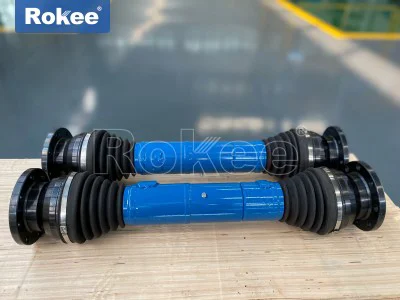
Cardan couplings deliver distinct operational advantages that keep them a preferred choice for many packaging machine power transmission tasks. Their most valuable attribute is the capacity to transmit high torque while accommodating significant angular misalignment between shafts, a capability few compact couplings can match. The mechanical connection provides rigid torque transfer without slip, which is essential for processes where precise rotational position directly controls package length, cutting timing, or product indexing. The structure remains relatively simple, with a low count of moving parts, making failure modes predictable and replacement straightforward when wear occurs. Compared with many precision flexible couplings, Cardan couplings can withstand shock loads from sudden jams or product impacts common in packaging environments, absorbing transient force spikes through the bearing assembly rather than transferring destructive stress to upstream and downstream drive components. They also support a wide operating speed range, covering low-speed intermittent carton handling and medium-speed continuous film processing applications. Modular construction allows designers to adjust coupling length and joint configuration to fit unique machine geometries, including telescopic versions that compensate for axial shaft movement in addition to angular deflection. When correctly sized and installed, these couplings maintain stable performance over thousands of operating hours, reducing the total cost of ownership by lowering the frequency of drive system repairs. All these benefits explain why Cardan couplings continue to appear in new packaging machine designs alongside newer coupling technologies, especially for drive branches where angular shaft movement is inherent to machine function.
Even with many strong attributes, Cardan couplings carry inherent limitations that must be weighed carefully during packaging machine design. The speed variation effect in single-joint configurations creates pulsating torque, which may disrupt ultra-precise motion control applications where constant angular velocity is mandatory. Increased operating angles amplify this pulsation and raise bearing loads, limiting the maximum working deflection for continuous high-speed use. The bearing and cross spider assembly contains moving contact surfaces that will wear gradually with time, meaning Cardan couplings are not maintenance-free components and require periodic attention to lubrication and wear assessment. Sealed designs reduce contamination ingress but cannot fully block fine particles forever, and seal degradation will eventually allow dirt and moisture to reach internal bearing surfaces. At extremely high rotational speeds, the rotating mass of yokes and cross components generates centrifugal forces that increase vibration and stress, requiring careful dynamic balancing for high-cycle applications. Another limitation is torsional backlash present within the bearing clearances, which may be unacceptable for closed-loop motion control systems requiring near-zero lost motion during rapid direction reversals. These constraints do not render Cardan couplings unsuitable; instead, they define clear boundaries for use. Machine designers avoid single Cardan joints on high-precision rotary cutters and register control systems unless paired with compensating mechanical arrangements, and they limit working angles to keep vibration and wear within acceptable levels. Understanding these drawbacks allows engineers to match coupling type to task accurately and avoid applying Cardan couplings in situations where alternative coupling styles would perform more reliably.
Comparative evaluation between Cardan couplings and other power transmission devices helps packaging machine designers make informed component selections. Rigid couplings are low-cost and zero-backlash but cannot tolerate any angular misalignment; even tiny misalignment forces bending stress onto shafts and bearings, which quickly causes component fatigue in packaging machines subject to vibration and frame movement. Elastomeric couplings absorb vibration well and accommodate minor misalignment, but they cannot handle large angular deflection and may degrade when exposed to cleaning chemicals, high temperatures, or aggressive packaging dust. Bellows couplings deliver excellent precision and zero backlash for high-speed positioning, yet their angular misalignment capacity remains limited and they can fracture under repeated shock loads from product jams. Gear couplings transmit high torque and accept moderate misalignment, but they are bulkier and more sensitive to lubrication contamination than sealed Cardan joints. Chain couplings offer high torque capacity but create noise and backlash, and they require regular tension adjustment while being vulnerable to dust buildup. In contrast, Cardan couplings stand out when the core requirement is reliable torque transfer across substantial angular shaft deflection, especially when shafts change their relative angle during machine operation. Where the application only needs small misalignment compensation and priority is placed on ultra-smooth constant velocity and zero backlash, other coupling types become more suitable. By mapping each machine function’s motion profile, load characteristics, and environmental conditions, designers can select the optimal coupling type, using Cardan couplings for the drive paths where their unique angular flexibility creates the greatest operational benefit.
Looking ahead, the role of Cardan couplings in packaging machinery continues to evolve alongside broader trends toward higher line throughput, automated changeover, and hygienic equipment design. Modern packaging systems demand drive components that remain stable during frequent format adjustments, where machine frames and driven shafts are repositioned to handle different package sizes. Cardan couplings adapt well to these reconfigurable layouts because they maintain power transmission after shaft angle changes, without requiring time-consuming realignment after each format swap. Advances in bearing manufacturing and sealing technology have improved the durability of compact Cardan couplings, extending service intervals in washdown and dusty packaging environments. Refined surface treatments and optimized bearing geometry reduce friction and heat generation, supporting higher continuous operating speeds while keeping noise and vibration under control. Meanwhile, machine designers combine Cardan couplings with smart condition monitoring, using vibration sensors to track wear trends within joint assemblies and trigger maintenance alerts before failure occurs. This shift toward predictive maintenance maximizes production uptime and reduces unnecessary part replacement. While new coupling technologies will continue to emerge, the fundamental mechanical principle of the Cardan coupling remains valid for the unique geometric challenges of packaging equipment. Its combination of simple architecture, high torque capacity, and angular misalignment compensation ensures it will remain a staple component in packaging drive systems for many years, supporting reliable operation from small batch semi-automatic machines to large continuous production lines that fill, seal, transport, and stack packaged goods around the clock.