Universal Joint Coupling Export

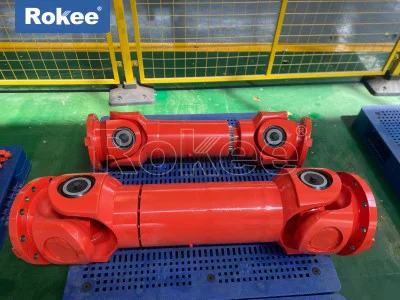
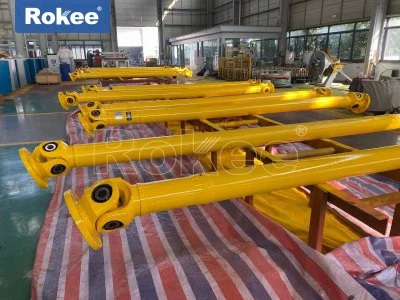
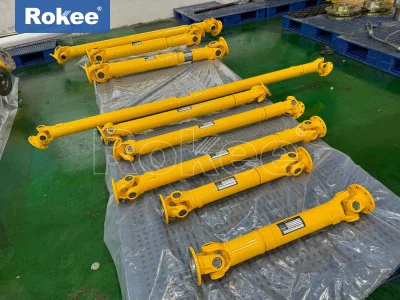
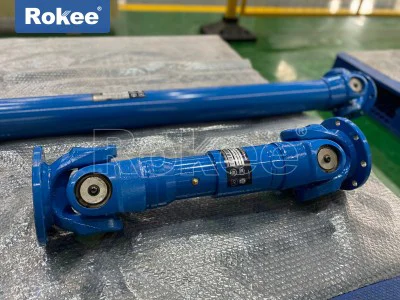
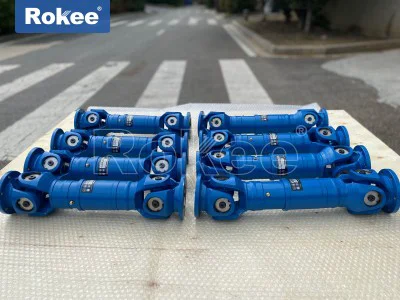
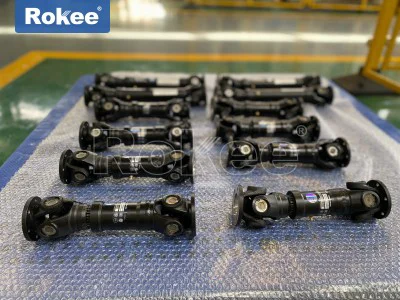
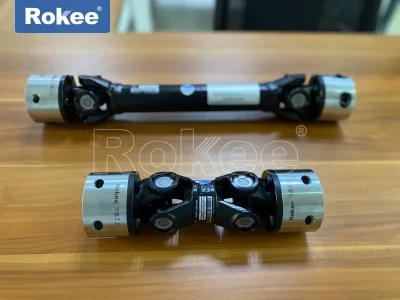
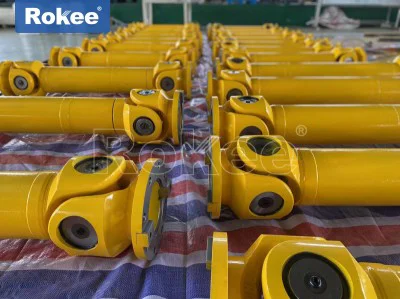
Universal joint coupling, also commonly referred to as cardan coupling, represents a foundational mechanical transmission component that serves as the core of many exported mechanical spare parts and complete drive assemblies. Its basic function is to transmit torque and rotary motion between two shafts that are not perfectly aligned, allowing for angular deflection and dynamic position changes during equipment operation. Unlike rigid couplings that demand precise shaft alignment, the hinged internal structure of universal joint coupling accommodates continuous angular movement, which explains its enduring demand across global industrial sectors. For export activities, understanding this core mechanical characteristic is the starting point for communicating product value to overseas buyers. Many overseas purchasers source these components not only for new equipment assembly but also for maintenance and replacement of existing machinery. Industrial operators in various regions frequently face situations where operating vibration, thermal expansion, or structural deformation creates persistent shaft misalignment, and universal joint coupling offers a practical solution to avoid overload damage to transmission systems. The export market for this component maintains steady long-term demand because nearly all heavy-duty mobile and stationary mechanical systems require reliable torque transfer under variable working angles. As global industrial infrastructure investment continues and older equipment fleets need regular overhaul, the international trade flow of universal joint coupling remains stable, with orders ranging from small batch sample purchases to large-volume bulk shipments for end-user assembly lines.
The diverse application scenarios of universal joint coupling shape the segmented needs of the global export market, as different industrial environments impose distinct requirements on structural design, material selection and load capacity. Construction machinery represents one major consumption area, where universal joint couplings deliver power for loaders, excavators, road rollers and cranes. These machines operate on uneven ground, and the frequent relative movement between power units and working mechanisms creates constant angular changes in drive shafts, putting high impact and fatigue loads on the couplings. Agricultural machinery forms another important export segment, with universal joint couplings widely fitted on farm tractors, harvesters and rotary tillers. Farm equipment works in dusty, humid fields and often encounters sudden torque spikes when cutting through dense crops, so buyers in agricultural regions prioritize wear resistance and stable performance under intermittent heavy loads. Mining equipment, marine deck machinery, papermaking rollers, oilfield auxiliary equipment and conveyor systems also rely heavily on universal joint couplings. Each application environment raises unique expectations: marine buyers pay attention to anti-corrosion performance under humid and salt-laden air, while mining users focus on structural robustness against shock and abrasive particles. Export sellers must map these application differences clearly during communication, helping overseas customers select suitable configurations rather than simply providing generic products, which reduces the risk of improper selection and early component failure after delivery.
Material selection and manufacturing processes directly determine the service life and operating stability of universal joint coupling, and these technical attributes become key evaluation criteria for international buyers during export procurement. Most universal joint coupling bodies adopt forged alloy steel, while internal cross shafts and bearing assemblies use precision heat-treated materials to improve surface hardness and fatigue resistance. Forging processes enhance the internal grain structure of metal parts, eliminating voids and internal defects that may appear in cast alternatives, which is essential for components enduring repeated torsional and impact loads. Subsequent machining operations include turning, milling, grinding and drilling to ensure matching accuracy between yokes, cross shafts and bearing sleeves. Heat treatment steps such as quenching and tempering balance surface hardness and core toughness, preventing surface wear while avoiding brittle fracture under sudden torque impact. Some customized versions use modified material formulas to cope with extreme ambient temperatures or corrosive atmospheres, tailored for special industrial environments. During export quality control, manufacturers conduct dimensional inspection, torque testing and fatigue cycle testing on finished units. These testing procedures verify that the coupling can sustain rated rotation angles and load cycles without excessive backlash, deformation or heating. Buyers across different markets pay close attention to processing consistency, because inconsistent manufacturing quality leads to uneven service life among batches, which creates extra maintenance costs and production downtime for end users. Reliable manufacturing consistency therefore becomes a core competitive advantage in universal joint coupling export trade.
Customization capability has gradually become a decisive competitive factor in universal joint coupling export business, as a large share of overseas demand cannot be fully satisfied by standard off-the-shelf models. Many international customers have existing equipment with unique installation dimensions, special space constraints or non-standard torque requirements, so they request modifications to shaft diameters, flange sizes, overall lengths and maximum working angles. Some buyers provide original sample parts or engineering drawings, requiring exporters to reverse-engineer matching universal joint couplings to replace discontinued legacy components. Others propose functional adjustments such as enhanced sealing structures to block dust, mud and moisture from entering internal bearing assemblies, which is especially valuable for construction and agricultural machinery operating in harsh outdoor conditions. Customization projects require close technical communication between both parties, including confirmation of load spectrum, operating speed, working temperature range and installation layout. The process usually involves preliminary design review, prototype production, performance verification and batch production arrangement. Although customized orders have longer lead times compared with standard product exports, they help exporters establish deeper long-term cooperation with equipment manufacturers and system integrators. When handled properly, customized universal joint coupling export builds technical barriers against low-end homogeneous competition and attracts buyers who prioritize precise fit rather than basic product availability.
Quality inspection and pre-shipment verification procedures play an irreplaceable role in universal joint coupling export, because defective goods will trigger costly returns, customs delays and damage to long-term trade trust. Inspection activities start from incoming raw material checks, verifying material properties before machining begins. Semi-finished parts are checked after each processing stage to monitor dimensional tolerance, surface finish and heat treatment quality. Once assembly is completed, finished universal joint couplings go through a series of functional tests. These tests assess rotational smoothness, backlash magnitude, maximum allowable deflection angle and torque transmission stability. Visual inspection removes products with surface scratches, machining burrs, rust spots or assembly misalignment. Random sampling is commonly applied for bulk orders to confirm batch consistency, while full inspection is adopted for high-value customized shipments. All inspection records are retained for reference in case overseas customers raise technical inquiries after receiving goods. Pre-shipment inspection also includes checking accessory completeness, such as sealing rings, retaining rings and lubrication fittings that accompany universal joint coupling assemblies. If these small accessories are missing or mismatched, overseas end users cannot complete installation on schedule. Thorough pre-shipment quality management reduces the probability of product failure after arrival, shortens dispute resolution time and protects the reputation of exporters operating in global universal joint coupling markets.
Packaging design for universal joint coupling export must account for long-distance intercontinental transportation, multiple loading and unloading transfers, and variable environmental conditions during ocean or land transit. As precision metal components, universal joint couplings are vulnerable to surface corrosion, thread damage, deformation and impact scratches if poorly protected. Individual components are first cleaned and coated with anti-rust oil or anti-corrosion compound, then wrapped with moisture-proof barrier film to isolate humid air. Smaller units may be placed into sealed plastic bags before being packed into inner cartons, while larger heavy-duty assemblies are fixed with cushioning materials to prevent shifting inside outer containers. Bulk export shipments often use sturdy plywood cases reinforced with metal strapping, and internal fixtures secure each coupling to avoid collision and friction during vessel vibration. Desiccant packs are added inside closed packaging to absorb residual moisture and suppress rust formation during long sea voyages. Outer packaging is clearly marked with shipping marks, part identification numbers, weight information and handling reminders. Proper packaging also considers container loading efficiency, stacking safety and easy identification by customs officers and logistics operators. Poor packaging is one of the common hidden risks in export trade, even for mechanically sound universal joint couplings. Damaged coatings or deformed connection yokes caused by rough transit can render products unusable, creating unnecessary claims and disrupting delivery schedules for international buyers.
Logistics arrangement and documentation preparation form another critical segment of universal joint coupling export operations, determining whether goods can smoothly reach destination ports and clear customs without hold-ups. Exporters select transport modes based on order volume, delivery urgency and destination geography. Sea freight remains the primary choice for large-volume universal joint coupling shipments because of its cost advantage for heavy mechanical components. Air freight is reserved for emergency small orders or spare parts that overseas buyers urgently need to restore halted production. Multimodal transport combining ocean shipping and inland trucking is frequently used for deliveries to inland industrial zones. During logistics planning, the weight and dimension characteristics of universal joint coupling packages are calculated to optimize container space utilization and control transport expenses. Complete trade documentation must be prepared accurately, including commercial invoices, packing lists, transport contracts and other supporting papers required by destination customs authorities. Each document must maintain consistent information on product descriptions, quantities and shipping marks. Minor discrepancies between documents may trigger customs examinations, which extend clearance time and generate extra storage fees. Exporters also coordinate with freight forwarders to track cargo movement, notify buyers of vessel departure and estimated arrival dates, and respond quickly to unexpected events such as port congestion or temporary inspection requests. Reliable logistics and precise documentation management directly improve the overall reliability of universal joint coupling export services.
Market demand variation across different regions creates diverse opportunities and challenges for universal joint coupling export. Regions with well-established manufacturing industries maintain stable replacement demand for universal joint couplings, as large installed bases of machinery require regular component renewal. Buyers in these markets often have clear technical specifications and high expectations for product consistency and after-sales technical support. Regions experiencing rapid industrialization show strong demand for new machinery supporting components, with orders growing alongside construction, mining and agricultural equipment investment. Buyers in these markets may focus more on balanced performance and flexible delivery schedules to match fast-expanding assembly lines. Some markets have strong demand for compact universal joint couplings used in light industrial machinery and transport auxiliary systems, while other markets mainly require heavy-duty large-size couplings for metallurgical and mining equipment. Cultural differences, purchasing habits and local maintenance practices also influence buyer preferences. Some overseas purchasers prefer to source complete coupling assemblies, while others only buy separate cross shaft and bearing repair kits. Successful universal joint coupling exporters continuously monitor regional demand shifts, adjust product portfolios and communication strategies accordingly, rather than applying a single sales approach to all international markets. Understanding regional demand patterns helps allocate production capacity reasonably and capture emerging export opportunities.
Technical after-sales support serves as a value-added pillar in universal joint coupling export trade, extending beyond physical product delivery to assist overseas buyers in proper installation, maintenance and troubleshooting. Many overseas purchasing teams and maintenance technicians require guidance on correct assembly procedures, lubrication intervals and operating limit parameters. Incorrect installation angles, insufficient lubrication or overload operation can shorten the service life of universal joint couplings, even if the product itself meets all technical requirements. Exporters provide technical guidance through illustrated manuals, data sheets and remote consultation, explaining how to measure shaft alignment, set working angles and carry out routine inspections. When customers encounter abnormal vibration, noise or temperature rise during equipment operation, technical support teams help analyze possible root causes, distinguishing between product quality issues, improper installation or unsuitable operating conditions. Some buyers request training materials for their maintenance teams to improve on-site fault diagnosis capability. Timely technical communication prevents minor operational mistakes from escalating into major equipment shutdowns. For long-term export partnerships, after-sales support also includes spare parts supply planning, helping customers build local inventory of wearing components. By offering consistent technical assistance, exporters strengthen buyer loyalty and generate repeat orders in the competitive global universal joint coupling trade.
Looking forward, the long-term outlook for universal joint coupling export is shaped by ongoing industrial evolution, material innovation and changing global manufacturing patterns. The continuous development of mobile machinery, automated production lines and new types of power systems creates new application scenarios for universal joint couplings, which drives fresh export demand. Advances in metallurgy and surface treatment technologies enable the development of universal joint couplings with lighter weight, higher torque density and better resistance to corrosion and fatigue. These upgraded designs can meet stricter requirements from next-generation machinery and open up new export market segments. Meanwhile, global industrial cycles and supply chain adjustments will continue to reshape trade flows. Buyers will keep balancing factors such as product performance, delivery reliability and comprehensive technical service when selecting suppliers. Exporters participating in universal joint coupling trade need to maintain investment in manufacturing precision, custom design capability and quality control systems, while optimizing packaging, logistics and documentation workflows. Sustained focus on understanding end-user working conditions will remain essential, because the fundamental value of universal joint coupling lies in stable torque transmission under complex dynamic misalignment. With persistent attention to technical improvement and customer service, universal joint coupling export will continue to serve global industrial operations and maintain its position in international mechanical component trade for years ahead.