Rokee@Rokee.com
+0086 135-0528-9959
Rokee

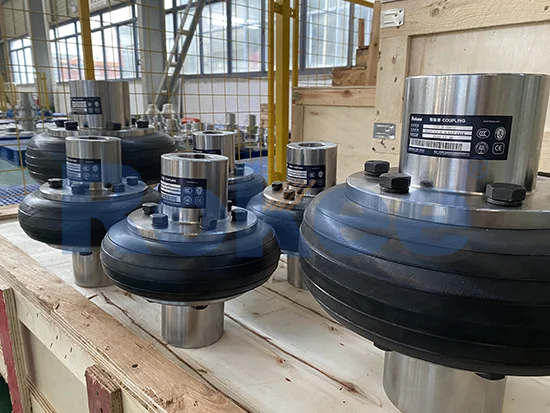
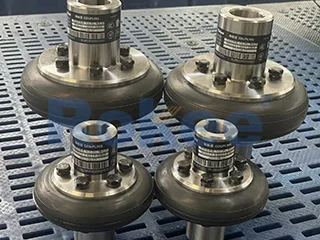
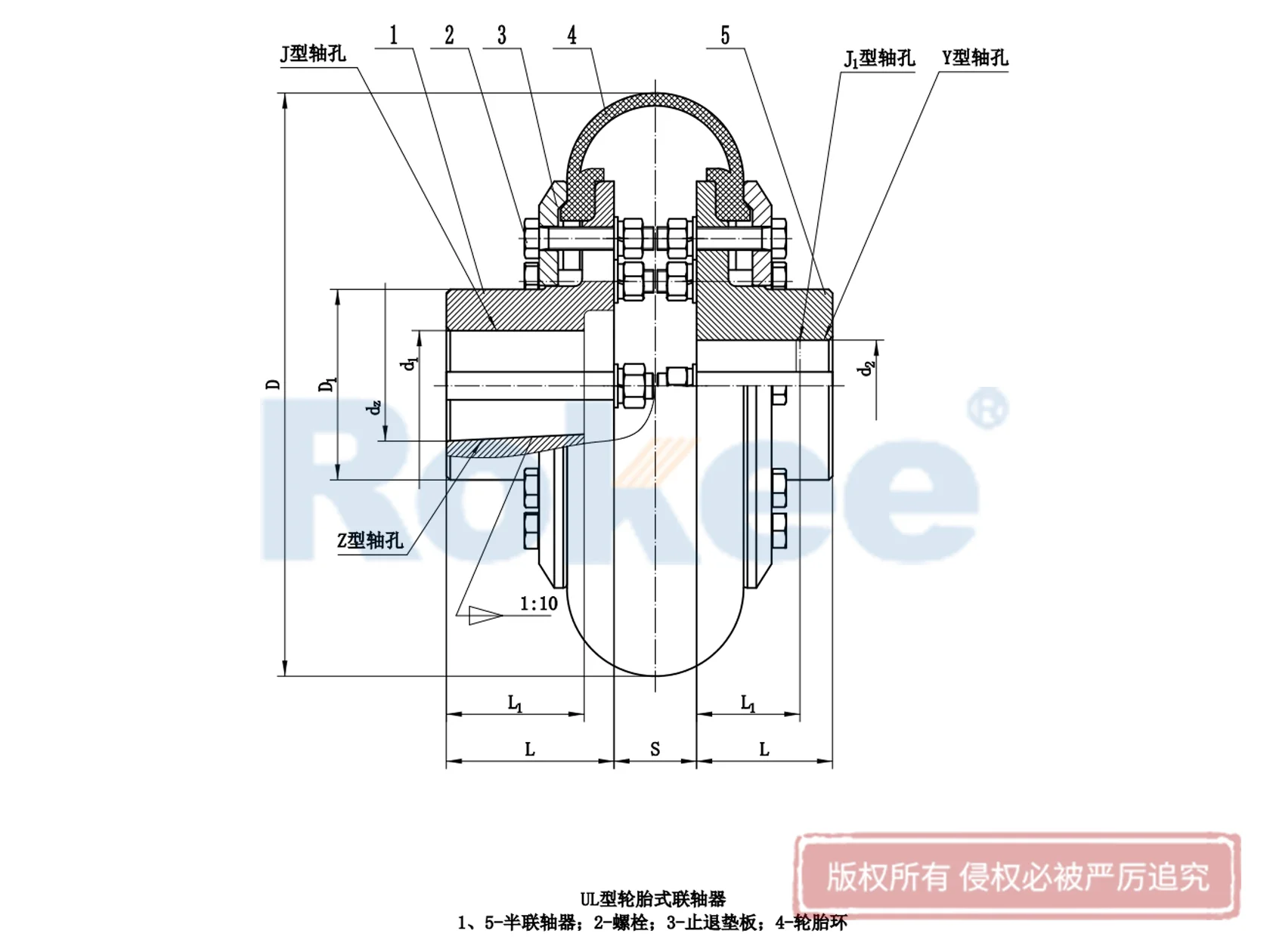
The flexible tyre coupling adopts tyre body-shaped rubber elements, which are connected with two semi-couplings through bolts to realize torque transmission and displacement compensation. Rubber tire coupling has high elastic performance, small torsional rigidity, strong damping capacity, large axial compensation capacity, and good damping performance.

Flexible Tyre Couplings,Rubber Tire Couplings

Elastic Tire Coupling is a type of coupling that connects two shafts through the tire body and transmits torque and motion. It is mainly used to connect two axes for joint rotation, while compensating for the relative displacement of the two connected axes and improving the transmission dynamics of the system.

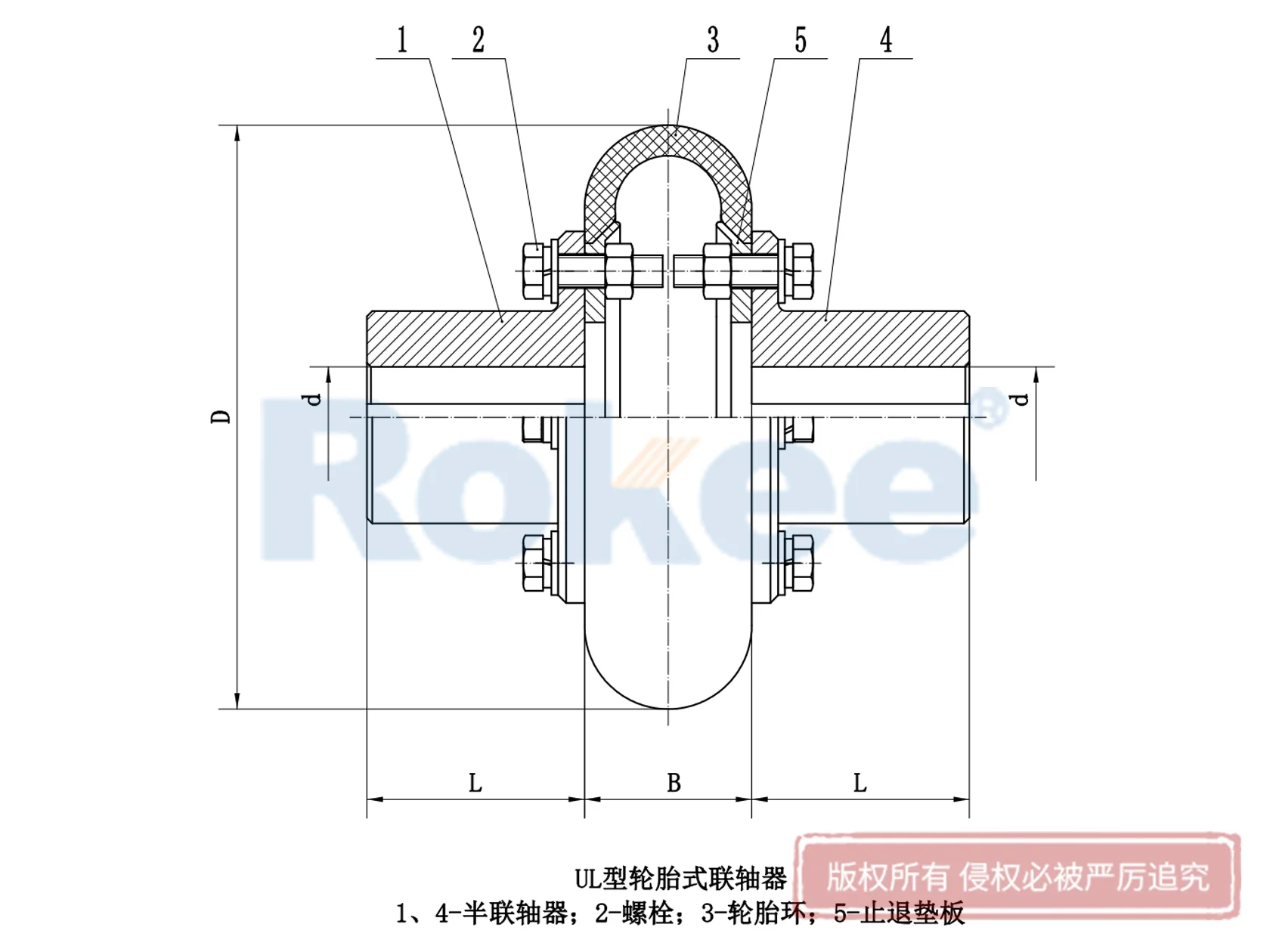
Flexible Tire Couplings are mainly divided into two categories: convex and concave. Among them, convex couplings are further divided into three types: integral couplings with skeleton, integral couplings without bone, and radial cut couplings. The tire body is a key component of tire couplings, which can be classified into UL, LA, LB, and other types according to different models. These tire bodies are bonded to the steel frame through vulcanization, and nuts are welded to the bolt holes on the frame for connecting with the flanges of the two half couplings during assembly.

Flexible Tyre Couplings,Rubber Tire Couplings

The working principle of Elastic Tyre Couplings mainly relies on the frictional force generated between the tire ring and the flange end face to transmit torque. When the tire ring is in operation, torsional shear deformation occurs, which makes the Tire Shaft Coupling highly elastic and capable of compensating for relative displacement between the two axes. At the same time, tire couplings also have good damping performance, simple structure, no need for lubrication, and easy installation, disassembly, and maintenance.

However, Rubber Tyre Couplings also have some drawbacks, such as low load-bearing capacity and large external dimensions. As the relative twist angle between the two axes increases, the tire shape will twist and the axial dimension will slightly decrease, which will generate significant additional axial force on the two axes and reduce the bearing life. In addition, during high-speed operation, the outer edge of the tire will expand outward due to centrifugal force, further increasing the additional axial force.

Flexible Tyre Couplings,Rubber Tire Couplings

When selecting, it is necessary to consider factors such as the transmission torque, allowable speed, shaft hole diameter, and length of the tire coupling to ensure that it meets the usage requirements. Tire couplings are widely used in various mechanical equipment, especially suitable for working conditions such as humidity, dust, impact, vibration, variable forward and reverse rotation, and frequent starting.

When installing Rubber Tire Couplings, measures should be taken to ensure that the stress direction in the tire is opposite to the stress direction generated during operation, in order to offset some additional axial forces and improve the working conditions of the coupling and two bearings. At the same time, it is necessary to regularly check the wear of tire couplings and replace damaged components in a timely manner to ensure their normal operation.

Flexible Tyre Couplings, as an important mechanical transmission component, play a crucial role in various types of mechanical equipment. Understanding its structure, working principle, selection and application, as well as installation and maintenance knowledge, can help to better use and maintain tire couplings, ensuring their long-term stable operation.
Contact Us
Email: Rokee@Rokee.com
Call: +0086 135 0528 9959
Add:High-tech Industrial Development Zone, Zhenjiang, China