Rokee@Rokee.com
+0086 135-0528-9959
Rokee

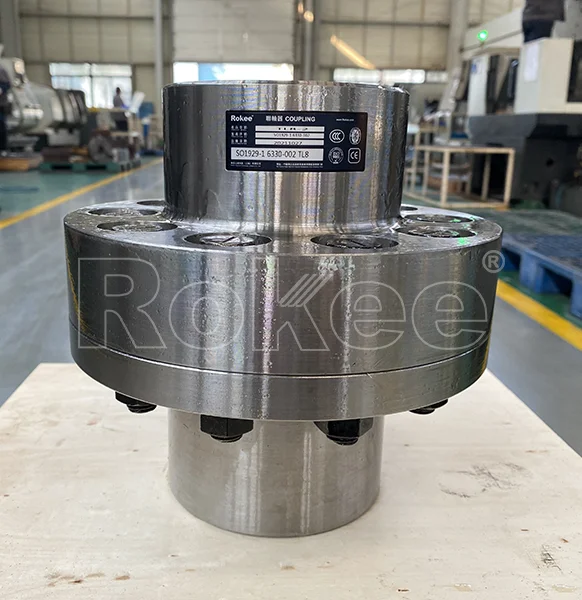
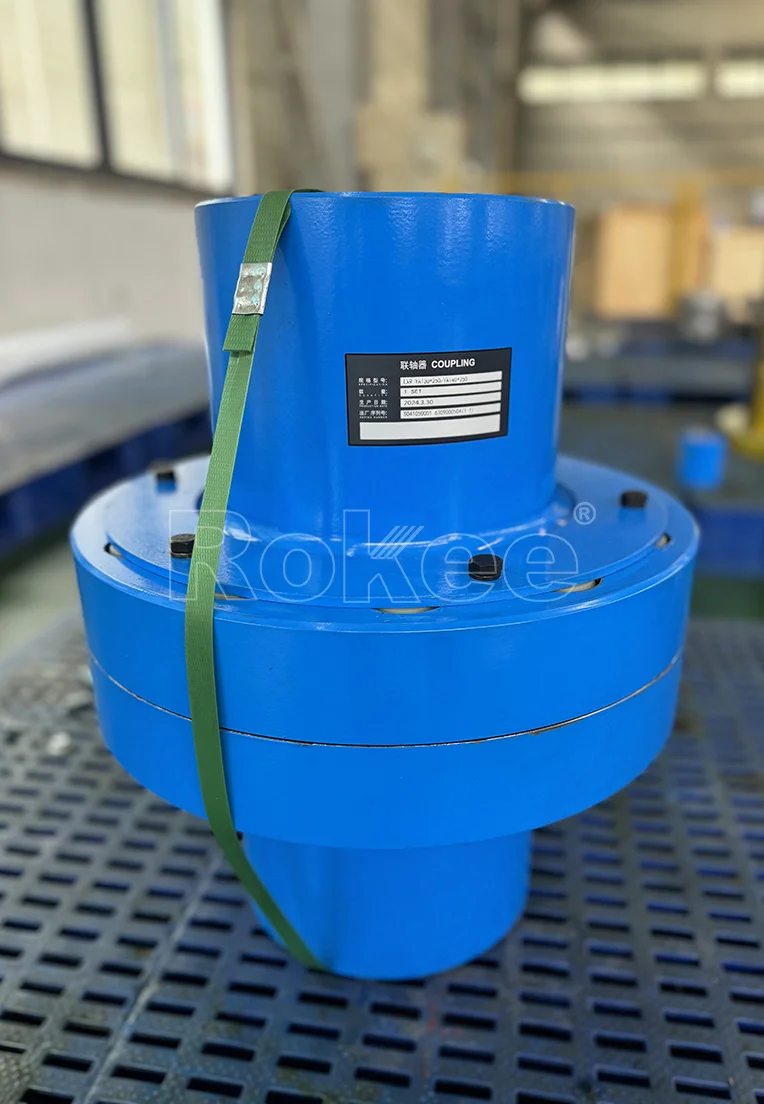
The crown pin coupling is designed with non-metallic flexible pin, two toothed semi-couplings and a toothed sleeve ring with an outer ring. It uses non-metallic flexible deformation to transfer torque and cushion shock and compensate angular displacement.

The flexible pin coupling is a basic transmission parts that has simple structure, needs no lubrication, and is easy to manufacture, install and disassemble the flexible pin. Elastic pin coupling uses two semi-couplings with flange holes and a non-metallic flexible pin for crane to transmit torque, suitable for low-to-medium speed and low-to-medium torque occasions.

The design of the elastic sleeve pin coupling is simple and clever in design and has wide applicability. Pin bush coupling uses the pin with elastic sleeve to connect two semi-couplings with pin holes to realize torque transmission and larger angular compensation. At the same time, flexible bush coupling has good shock absorption and buffering performance, which can be used in high-speed occasions without lubrication and requiring easy pin sleeve replacement.

Elastic Pin Couplings, Flexible Bush Couplings

Pin coupling is a common mechanical transmission component, mainly used to connect two shafts so that they can rotate together and transmit torque.

The Pin Type Flexible Coupling mainly uses column pins (which can be elastic sleeve column pins or cylindrical pins) to connect the two halves of the coupling together. According to the material and structural characteristics of the column pin, Elastic Pin Couplings can be divided into various types, such as elastic sleeve column pin couplings and cylindrical pin couplings.

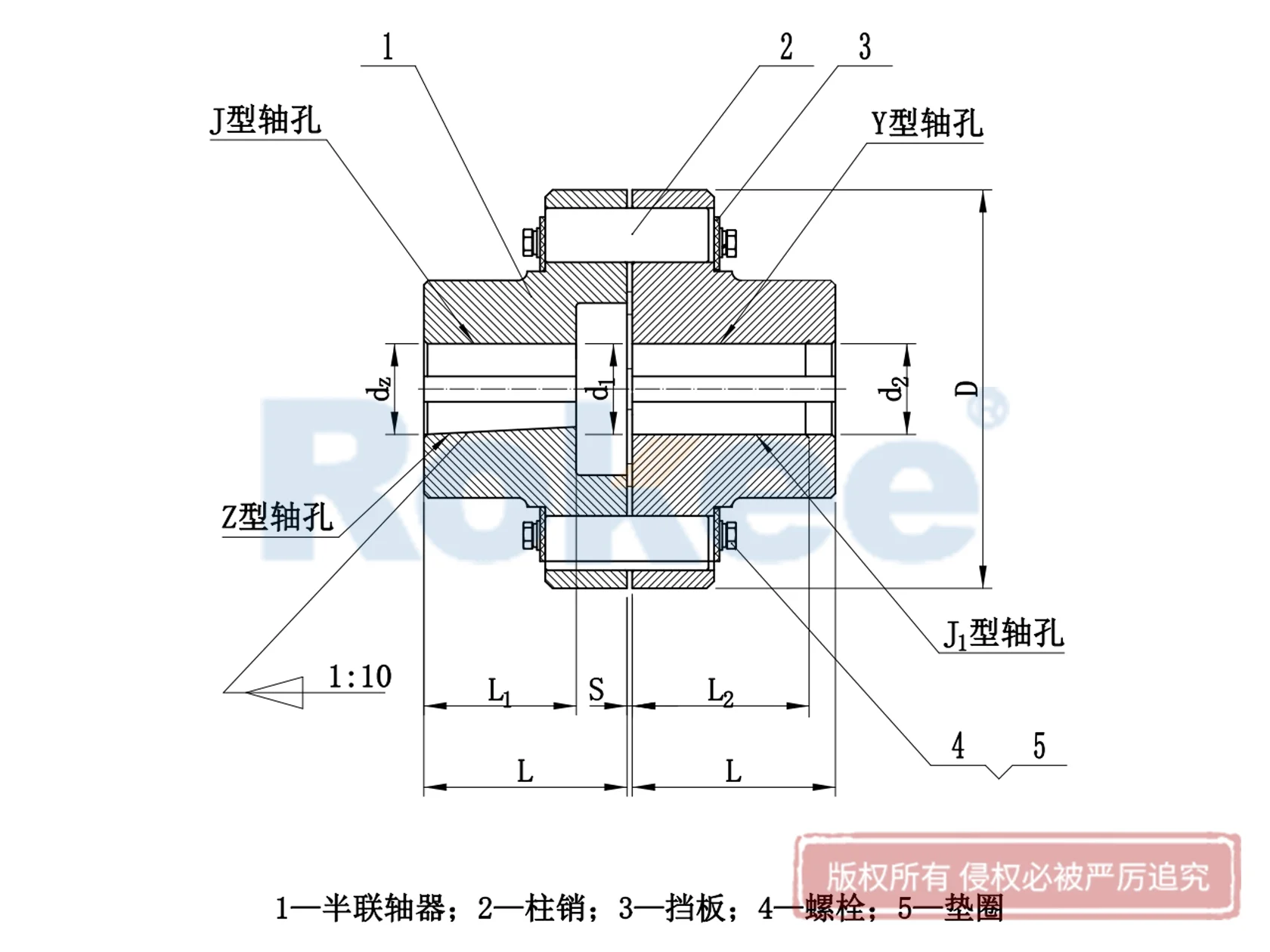
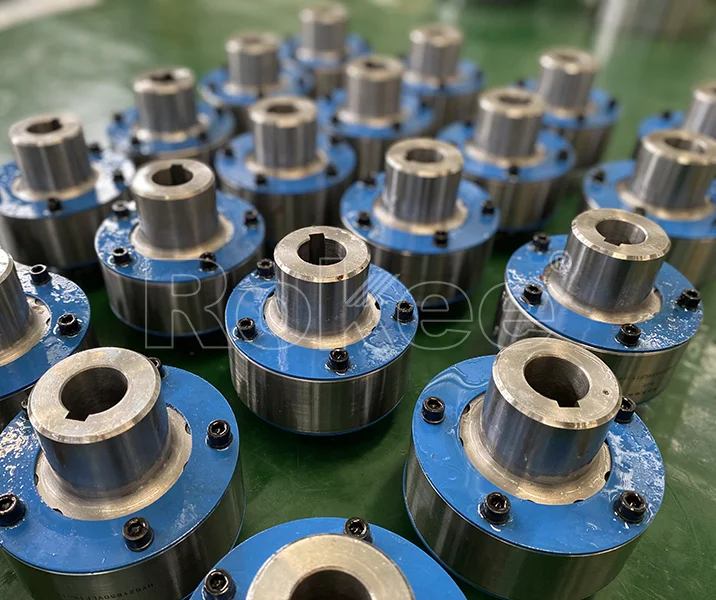
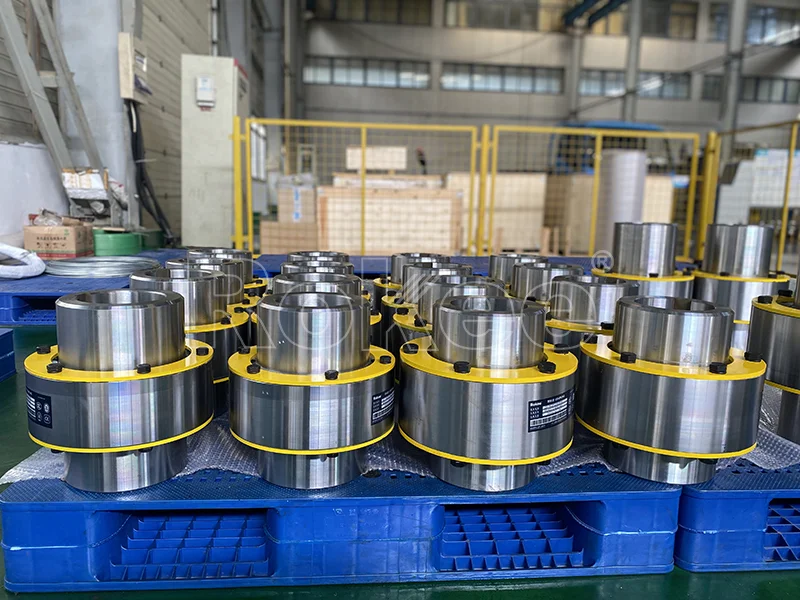
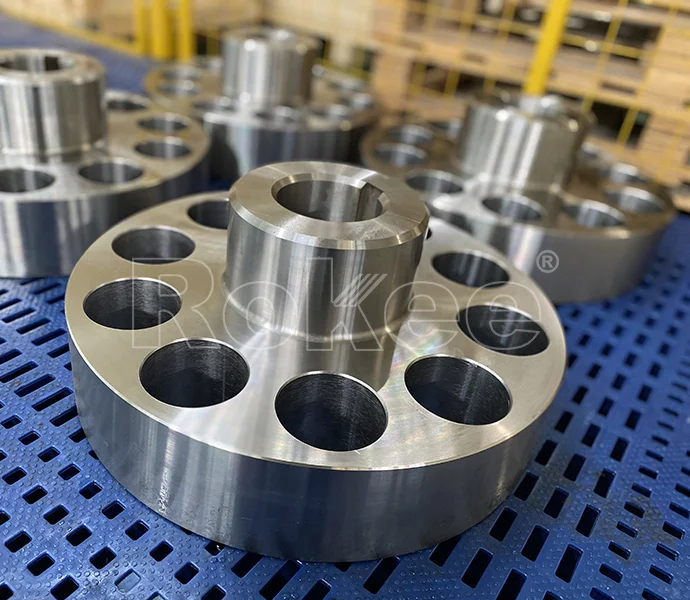
Column pin couplings are usually composed of two halves of couplings, column pins, and elastic elements (such as elastic sleeves). The two halves of the coupling are installed on two shafts respectively, and the column pin passes through the flange holes of the two halves of the coupling to connect them together. Elastic components (such as elastic sleeves) are fitted onto the column pins to provide cushioning and shock absorption.

Elastic Pin Couplings, Flexible Bush Couplings

When two shafts rotate, the Crown Pin Coupling transmits torque through the column pin. At the same time, elastic elements can absorb and compensate for changes in the relative position of the two shafts caused by manufacturing and installation errors, load deformation, and temperature changes, thereby maintaining the stability and transmission efficiency of the coupling.

Characteristics:
Easy to manufacture, simple in structure, and easy to maintain.
No lubrication is required, reducing operating costs.
Has a certain degree of axial, radial, and angular compensation capability, and can adapt to certain shaft system deviations.
It has certain damping and buffering performance, which can improve the working performance of the transmission system.

Elastic Pin Couplings, Flexible Bush Couplings

Shear Pin Couplings are widely used in various mechanical transmission systems, especially in small and medium power shaft systems. It is suitable for situations where the installation base has good rigidity, high centering accuracy, low impact load, and low requirements for vibration reduction.

When selecting, it is necessary to determine the appropriate type of coupling based on the specific requirements of mechanical transmission, such as torque transmission, stiffness requirements, vibration and impact conditions, acid and alkali resistance, and transmission accuracy. At the same time, necessary calculations are required to ensure that the selected coupling meets the requirements of the transmission system. When calculating, it is usually necessary to consider factors such as theoretical torque, working condition coefficient, and allowable torque.

Elastic Pin Couplings, Flexible Bush Couplings

In order to ensure the normal operation and extend the service life of the column pin coupling, regular maintenance and upkeep are required. This includes checking the wear of the coupling, replacing damaged parts, cleaning dirt and grease, and re lubricating. In addition, care should be taken to avoid impact and damage to the coupling during transportation and storage.

Flexible Pin Coupling is a mechanical transmission component with a simple structure, easy manufacturing, and convenient maintenance. It has a certain degree of compensation ability and vibration damping performance, suitable for various small and medium power shaft transmission scenarios. During the selection and use process, it is necessary to calculate and select according to specific requirements, and conduct regular maintenance and upkeep to ensure its normal operation.

A Bush Coupling is a special type of coupling that combines the functional characteristics of a sleeve and a coupling. It is used to connect two shafts to transmit torque and speed, while adjusting the relative position between the two shafts to some extent, absorbing vibration and impact, and protecting the transmission system from overload damage.

Elastic Pin Couplings, Flexible Bush Couplings

A Pin Bush Type Flexible Coupling usually consists of two wheel hubs, a connecting element in the middle, and a sleeve. The wheel hubs are fixed on two shafts, and the connecting elements are responsible for transmitting torque, while the bushings are installed between the connecting elements or the wheel hubs to reduce wear, friction, and compensate for tolerances. There are various material options for bushings, including metals (such as bronze, stainless steel, etc.), polymers (such as nylon, polytetrafluoroethylene, etc.), and composite materials, to meet the needs of different working conditions.

Functional advantages
Transmitting torque and speed: The bushing coupling can reliably transmit torque and speed between two shafts, ensuring the normal operation of the transmission system.
Adjusting relative position: Due to the elasticity or adjustability of the bushing and connecting components, the bushing coupling can adjust the relative position between the two shafts to a certain extent, including parallelism, angle, or comprehensive offset, improving the flexibility of installation and use.
Absorption of vibration and impact: The bushing coupling is equipped with elastic elements or specially designed bushings, which can effectively absorb vibration and impact, reduce the vibration and noise of the transmission system, and extend the service life of the equipment.
Overload protection: Some bushing couplings have overload disengagement or torque limiting functions. When the transmission system is subjected to excessive load, it can automatically disconnect to prevent damage to the transmission system.

Elastic Pin Couplings, Flexible Bush Couplings

Pin Bush Type Couplings are widely used in various mechanical equipment, especially in situations where large torque and speed need to be transmitted, while also requiring vibration absorption, damping, and offset compensation functions. For example:
Pump equipment: used to connect the motor output shaft and the pump shaft, ensuring synchronous rotation of both, while reducing the impact of vibration on the pump body and improving work efficiency.
Fan: Used to connect the motor output shaft and the fan shaft, ensuring synchronous rotation between the two and absorbing impact during start-up or shutdown, protecting the transmission system.
Blender: Used to connect the drive shaft and mixing shaft of the blender, ensuring that they can operate synchronously while reducing wear and friction, and extending equipment life.
Transmission devices: such as reducers, gearboxes, etc. The bushing coupling can connect the input shaft and output shaft, transmit torque and speed, and adapt to various complex working conditions.

Elastic Pin Couplings, Flexible Bush Couplings

When choosing a Flexible Pin Bush Coupling, the following factors need to be considered:
Torque and speed requirements: Select the appropriate bushing coupling model and specification based on the torque and speed requirements of the transmission system.
Operating conditions: Consider factors such as the operating environment, temperature, humidity, and corrosiveness of the equipment, and select appropriate lining materials and coupling types.
Installation accuracy: Select the appropriate bushing coupling according to the installation accuracy requirements of the equipment to ensure the stability and reliability of the transmission system.
Maintenance cost: Consider the maintenance cost and replacement cycle of the bushing coupling, and choose models and specifications that are easy to maintain and replace.

Elastic Pin Couplings, Flexible Bush Couplings

Meanwhile, when using a Bush Pin Type Flexible Coupling, the following points should be noted:
Regular inspection: Regularly check the wear condition, connection tightness, and lubrication status of the bushing coupling to ensure the normal operation of the transmission system.
Timely replacement: When the bushing coupling is severely worn or damaged, it needs to be replaced in a timely manner to avoid transmission system failures or safety accidents.
Correct installation: Install the bushing coupling correctly according to the manufacturer's installation guidelines, ensuring that the fitting accuracy and installation position of the connecting components and bushings meet the requirements.

Bush Pin Type Flange Coupling is a versatile and widely used transmission component that plays an important role in mechanical equipment. The correct selection and use of bushing couplings are crucial for ensuring the normal operation and efficient performance of equipment.

Contact Us
Email: Rokee@Rokee.com
Call: +0086 135 0528 9959
Add:High-tech Industrial Development Zone, Zhenjiang, China