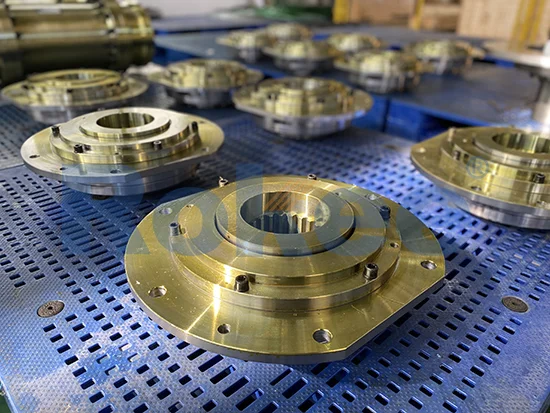
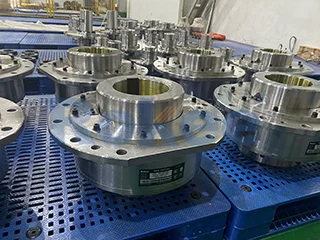
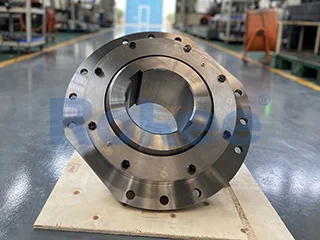
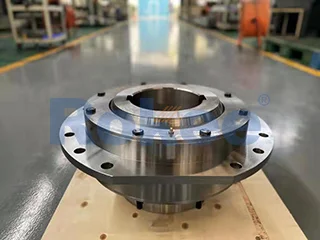
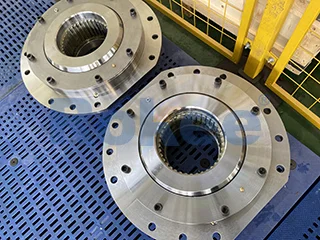
The drum coupling is an important part in the transmission system of crane equipment. It connects the power input shaft of the reducer with the drum, transmits torque and restricts the axial movement of the drum at the same time. Barrel coupling also has mechanical or electronic wear alarm, and is one of the core parts of the drum crane mechanism.
Drum coupling is a new type of flexible coupling that plays a crucial role in lifting equipment.
The barrel coupling is mainly used for connecting the output shaft of the reducer of the lifting mechanism of the lifting equipment with the wire rope drum. It can not only transmit torque but also withstand radial loads, making it an important component in the transmission system of lifting equipment. By connecting the power input shaft of the reducer to the drum, torque is transmitted while limiting the axial movement of the drum. It also has mechanical or electronic wear alarms and is one of the core components of the drum type lifting mechanism. In addition, it can also be used in other mechanical equipment that requires torque transmission and radial load bearing.
Structural composition:
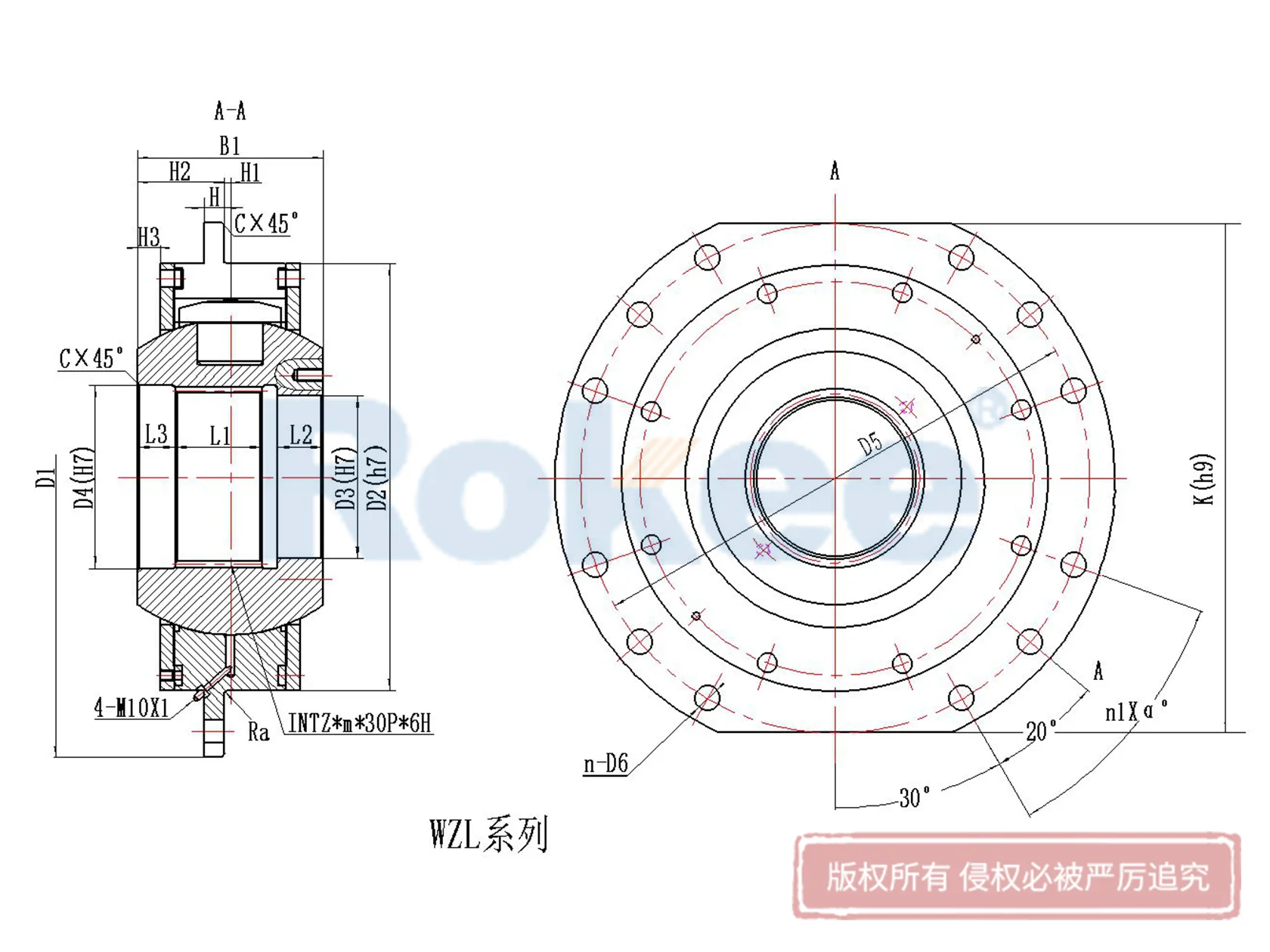
The barrel coupling consists of an outer gear shaft sleeve with drum shaped teeth, a flanged outer sleeve, a bearing ring, and a sealing component. Some types also have positioning wear indicators, lubricating oil holes, and ventilation holes.
The external gear shaft sleeve and outer sleeve transmit torque through drum shaped teeth.
The outer spherical surface of the bearing ring and the inner bearing surface of the outer sleeve form an automatically adjustable spherical bearing to withstand radial loads.
Characteristics:
Stable and reliable work, able to withstand large radial loads and transmit large torques, with high overload capacity.
Compact and sturdy structure, series design, can simplify the overall structure and reduce equipment weight.
Good positioning performance, easy installation and adjustment, and simple maintenance.
Equipped with a positioning wear indicator, safe and reliable.
Can be used with ordinary shaft extension reducers to reduce equipment costs.
performance parameter
The working temperature range is -25 ° C to+80 ° C.
The nominal torque transmission range is 16~560 kN · m.
The allowable radial load is 18~355 kN.
Installation precautions:
Before installation, the mating surface of the connection should be checked, and rust proof grease, burrs, and oil stains should be cleaned off.
Couplings are generally interference fit and should be disassembled for heating. The heating temperature needs to be calculated and determined based on the size of its interference fit and the ambient temperature.
During installation, it is necessary to ensure that the position of the wear indicator is correct and that the coupling cannot withstand axial loads. The additional axial load generated during the operation of the drum must always be borne by the fixed support seat of the drum.
The connection between the coupling and the drum, as well as the fastening of the end cover, should use bolt groups with a strength performance level greater than or equal to 8.8.
Maintenance requirements:
Regularly check the relative position between the positioning wear pointer and the positioning wear mark of the coupling, as well as the tightening of the connecting bolts.
The lubrication condition of the gear surface of the coupling directly affects its service life and safety reliability, so the lubrication condition should be checked at least every 3 months and lubricating grease should be added. After a prolonged period of equipment shutdown, all lubricating grease should be replaced.
If the relative displacement between the positioning wear pointer and the positioning wear mark of the coupling exceeds the specified value, it indicates that the drum teeth of the coupling have worn to the limit thickness and are about to fail, and the coupling should be replaced in a timely manner.
There are various types of barrel couplings, such as WJA cylindrical shaft hole connected spherical roller couplings, WZL drum couplings, DC toothed drum couplings, etc. When selecting, comprehensive consideration should be given to the specific requirements, working environment, and performance parameters of the lifting equipment to ensure that the selected coupling can meet the operational requirements of the equipment.
As an important component in lifting equipment, the barrel coupling has the characteristics of compact structure, stable and reliable operation, and good positioning performance. During installation and maintenance, it is necessary to strictly follow the relevant requirements to ensure its normal operation and extend its service life.